Top 10 CNC Machine Fabrication Suppliers Worldwide
Choosing a CNC partner is rarely just a matter of comparing machine lists. The right supplier must turn drawings into dependable parts, communicate clearly, and maintain consistent quality across production runs. CNC machine fabrication can involve milling, turning, cutting, and assembly, so each project calls for a close match between equipment and requirements.
This guide to the Top 10 CNC Machine Fabrication Suppliers Worldwide compares providers by practical factors: manufacturing capabilities, materials, quality systems, inspection methods, delivery options, and technical support. Details matter. A supplier’s stated tolerances should be checked against the needs of the actual part, not treated as a guarantee for every job. Buyers may also want to ask about sample inspection, traceability, and how design changes are handled.
The companies highlighted serve different markets and production needs. Some may suit complex, low-volume components; others may offer advantages for repeat orders or broader manufacturing programs. No single ranking can account for every drawing, budget, or timeline. That limitation is worth remembering. Use the list as a starting point, then verify certifications, recent project experience, and communication practices directly with each supplier. A careful review can reduce surprises, though no supplier relationship is perfect from day one.
Define CNC Fabrication: 3-, 4-, and 5-Axis Milling and Turning
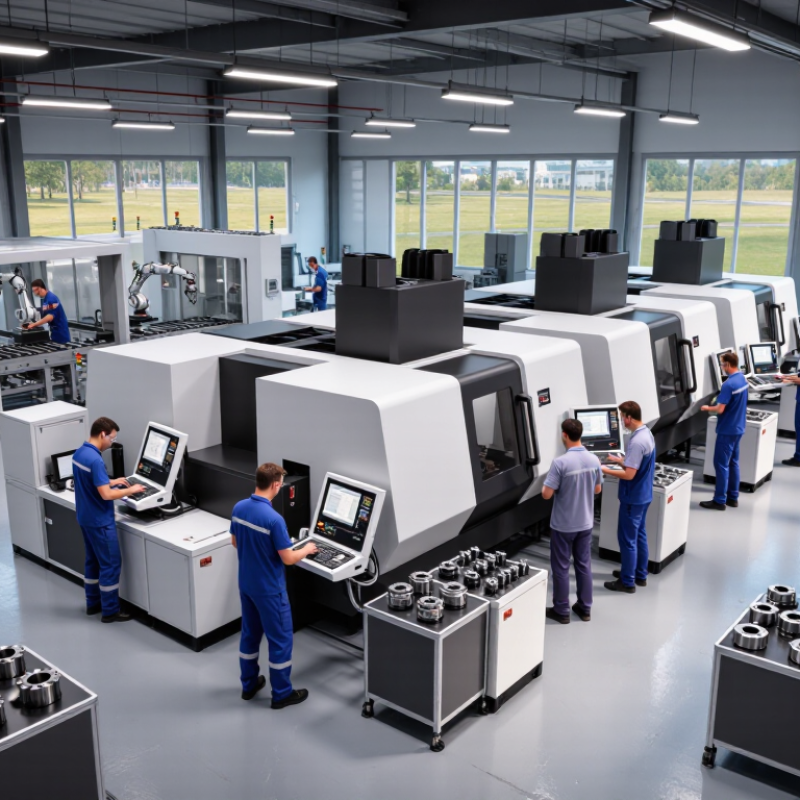
CNC fabrication uses computer-controlled cutting to turn digital designs into precise metal or plastic parts. The process may combine milling, turning, drilling, and finishing, depending on the part’s geometry. Axis count describes how the cutting tool or workpiece can move. It does not, by itself, guarantee accuracy or quality.
A three-axis mill moves along the X, Y, and Z directions. It works well for plates, pockets, and many prismatic parts.
Four-axis milling adds rotation, letting a component present another face to the cutter without manual repositioning.
A five-axis machine can tilt and rotate the tool or part, reaching angled surfaces and complex contours in fewer setups. Fewer setups can reduce alignment errors. Still, five-axis work requires careful programming and verification; extra motion is not automatically an advantage.
Turning rotates the workpiece against a cutting tool, making it suitable for shafts, sleeves, and other round components. Some machines combine turning and milling, creating features such as cross-holes or flats in one cycle. That can simplify handling, but it may also increase setup complexity. When comparing fabrication suppliers, ask how they inspect critical dimensions, manage tolerances, and verify programs. A clear drawing helps, yet real parts can expose assumptions that looked harmless on screen. Planning deserves time.
Benchmark Supplier Quality: ±0.01 mm Tolerances and ISO 9001 Certification
For CNC machine fabrication suppliers worldwide, a ±0.01 mm tolerance is meaningful only when the drawing, material, and inspection method are clearly defined. A tight number on a quote is not proof of a stable process. Ask which features can hold that tolerance, and whether it applies after finishing or heat treatment. Details matter.
ISO 9001 certification indicates that a supplier follows a documented quality management system. It does not, by itself, confirm that every machined part meets specification. Request recent inspection records, calibration details, and a sample report tied to the part’s critical dimensions. A coordinate measuring machine may verify complex geometry; calibrated micrometers can suit accessible features. The method should fit the part.
Look for evidence across production, not just a polished first article. Ask how tool wear, temperature changes, and material variation are monitored during a run. Small parts can drift. That is easy to miss. A useful supplier will explain limits plainly, flag ambiguous tolerances, and agree on an inspection plan before production starts. Even then, paperwork cannot replace a clear drawing and consistent communication.
Compare 10 Global Suppliers by Capacity, Materials, and Lead-Time Metrics
A useful comparison of ten global CNC fabrication suppliers starts with capacity, not machine counts alone. Ask for available spindle hours per month, typical batch size, shift pattern, and current utilization. A facility with 40 mills may have less room for new work than one with 18. Numbers need context. Confirm whether quoted capacity includes inspection, finishing, and assembly, or only machining.
Materials can change both price and schedule. Compare each supplier’s experience with the exact alloy and grade, such as 6061-T6 aluminum or 304 stainless steel. Ask how they manage material certificates, lot traceability, and stock availability. A supplier may machine a material well but rely on outside vendors for anodizing or heat treatment. That dependency matters. It can add days, and sometimes the handoff gets messy.
Lead-time figures need the same definition across all ten suppliers. Separate quotation time, first-article approval, production, and shipping; request typical and peak-period ranges. A stated two-week lead time may begin only after drawings are approved and material arrives. For a fair comparison, send every supplier the same drawing, quantity, tolerance requirements, and finish specification. Track on-time delivery alongside quoted lead time, and ask for recent performance data. Small sample sizes can mislead, but they are still more useful than a confident estimate with no basis.
Match Certifications to Industries: AS9100, IATF 16949, and ISO 13485
Top 10 CNC Machine Fabrication Suppliers Worldwide
Match Certifications to Industries: AS9100, IATF 16949, and ISO 13485
Choosing a CNC fabrication supplier starts with the part’s risk, not its machine list. Aerospace work may require AS9100, with controls for traceability, inspection, and configuration changes. Ask how operators record tool offsets and verify a tight-tolerance feature. A certificate alone cannot show whether those checks fit your drawing.
Automotive programs often look for IATF 16949 and evidence of repeatable production controls. Request process-capability results, inspection plans, and examples of how nonconforming parts are contained. For medical-device components, ISO 13485 supports documented quality processes across production and inspection. The ISO Survey 2022 recorded 31,984 valid ISO 13485 certificates worldwide; that count reflects certificates, not a ranking of supplier quality.
Match the certification scope to the actual facility and process. A supplier may hold the right certificate, yet outsource a critical finishing step. Verify who performs it and how records follow the part. Small detail, big consequence. I would also ask for a sample inspection report, including measured values, equipment identification, and revision history. This takes time. It can reveal gaps before production begins. Certifications narrow the search; direct evidence should decide the shortlist.
Top 10 CNC Machine Fabrication Suppliers Worldwide
Match Certifications to Industries: AS9100, IATF 16949, and ISO 13485
Primary industry alignment of three widely recognized quality-management standards for CNC fabrication suppliers.
Each bar marks a standard’s primary industry alignment; it is not a supplier count or market-share measure. AS9100 is for aviation, space, and defense quality management; IATF 16949 is for automotive quality management; and ISO 13485 is for medical-device quality management. Certification alone does not establish a supplier’s capability or suitability for a specific project.
Evaluate Supplier Fit by Batch Size, Inspection Methods, and Production Needs
A CNC supplier should fit the production plan, not just list impressive machines. Ask whether the shop regularly handles prototypes, repeat orders, or both. A supplier geared toward hundreds of aluminum brackets may find a five-piece run inefficient. It may still be the right fit. Compare minimum quantities, setup fees, and lead times at different volumes. Small batches reveal hidden costs. For larger programs, check how the supplier manages machine capacity and material availability when demand changes. A quoted delivery date matters only if it reflects a realistic schedule.
Inspection should match the part’s function and risk. Request sample reports showing measured dimensions, tolerances, and equipment, such as calibrated micrometers or a coordinate measuring machine. For a mating bore, ask how concentricity is checked, not only whether its diameter passes. Clarify who approves first articles and how out-of-tolerance parts are recorded. A tidy report is not proof of a stable process. Ask how often checks occur during production and whether results link to the correct drawing revision. Packaging, material documentation, and response time for engineering questions also affect fit. These details are easy to overlook. I would not assume a supplier’s standard process suits every part; ask for evidence tied to a similar job.
Related Posts
-
The Best 10 CNC Precision Machining Techniques You Should Know?
-
How to Choose a Precision CNC Machining Supplier
-
Choosing the Right Manufacturer: A Comprehensive Comparison for the Best CNC Metal Products
-
10 Best Large CNC Machines for Precision Engineering in 2023
-
How to Choose Precision CNC Machining Services in 2026?
-
How to Choose a Precision CNC Machining Supplier?
Let's Build Together

Contact Us: Call 435-563-3503
-OR- Fill in the form below and we will call you back.