How to Choose Precision CNC Machining Services in 2026?
Choosing precision cnc machining services in 2026 requires more than comparing hourly rates. Quality depends on process control, engineering judgment, inspection discipline, and dependable communication.
Grand View Research estimates that the global CNC machine market reached approximately USD 86.83 billion in 2023. It also forecasts a 7.3% compound annual growth rate from 2024 to 2030. This expansion reflects rising demand for tighter tolerances, automation, and complex components across aerospace, medical, automotive, and energy industries. Deloitte’s 2024 Smart Manufacturing and Operations Survey adds useful context. It reports that 92% of surveyed manufacturers expect smart manufacturing investments to improve competitiveness during the next three years. Technology matters, but execution matters more.
Begin with the part itself. A supplier should explain its achievable tolerances, preferred materials, surface finishes, and inspection methods. Ask for capability studies, calibration records, material certificates, and sample inspection reports. ISO 9001 certification can support process consistency, but it does not guarantee every dimension will be correct. That distinction is easy to miss.
Look for practical evidence. Can the shop control a 0.01 mm feature after repeated production cycles? Can it show how tools, temperature, and measurement uncertainty are managed? A clean facility, labeled gauges, and traceable records often reveal more than polished marketing language. Lead time and price still matter, yet an inexpensive first batch can become costly after rework, delays, or field failures.
No scorecard is perfect. Requirements may change after testing. Leave room for technical review, honest questions, and documented corrections. The strongest precision cnc machining partner is not always the largest supplier. It is the one that can repeatedly prove its promises.
Define Tolerance Targets: ±0.01 mm Accuracy for Critical Features
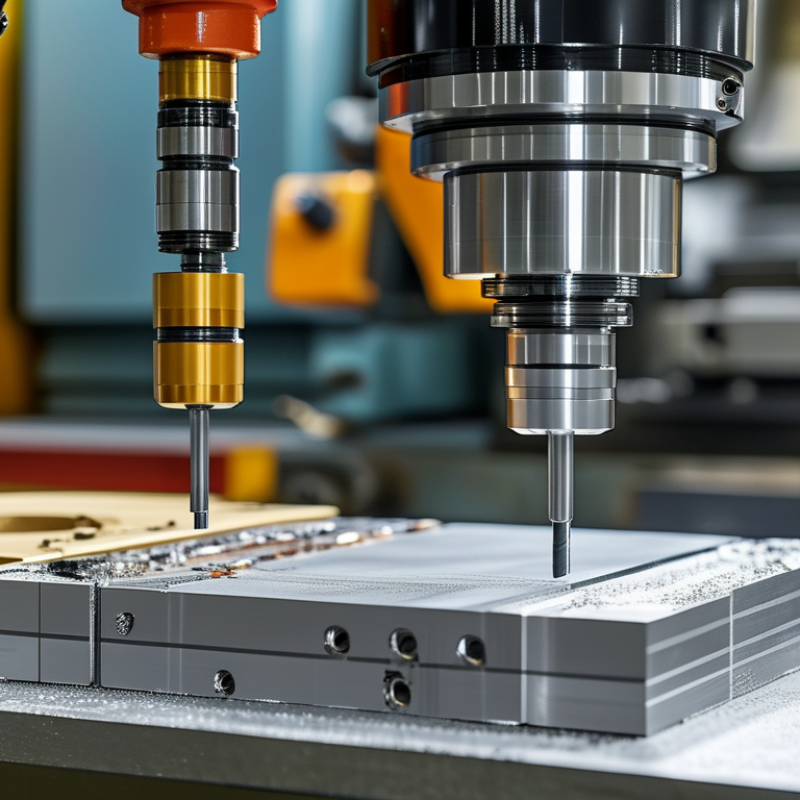
When selecting precision CNC machining services in 2026, define the tolerance before comparing prices. For critical bores, sealing faces, and alignment holes, specify ±0.01 mm accuracy clearly. Avoid writing “high precision” alone. It invites different interpretations.
I would request a capability study for every critical feature. A process capability index, or Cpk, of at least 1.33 is a practical industrial target. The inspection method also matters. A ±0.01 mm tolerance creates a 0.02 mm total band, so measurement uncertainty should remain far below that range.
ISO 17025 supports competence in calibration and testing laboratories, while ASME Y14.5 helps control datum references and geometric tolerances. A coordinate measuring machine report should show actual readings, not only pass-or-fail results. Check temperature control, tool wear records, and sampling frequency.
Small details decide large assemblies.
The 2024 Smart Manufacturing and Operations Survey reported that 86% of manufacturers viewed smart manufacturing as a major competitiveness driver. That pressure makes traceable production data increasingly important.
Still, automation does not guarantee ±0.01 mm results. I have seen excellent machines produce poor parts after an incorrect work offset. It happens. Ask whether the supplier validates the first article, monitors drift, and separates critical dimensions from cosmetic ones.
A clear drawing, stable material, and realistic datum scheme often matter more than a dramatic machine specification.
Match 3-, 4-, or 5-Axis CNC Capacity to Part Geometry
Choosing precision CNC machining services in 2026 starts with part geometry, not machine count. A three-axis mill suits flat plates, pockets, drilled patterns, and open prismatic parts. It often reduces programming effort and hourly cost. However, every hidden face may require another setup. That can introduce alignment errors. A 2024 manufacturing technology report from AMT recorded more than $5 billion in U.S. machine-tool orders, showing continued investment in advanced capacity.
Four-axis machining adds controlled rotary positioning. It is useful for parts with features around one cylinder or several indexed faces. Think of a valve body, shaft component, or compact housing. It can reduce fixtures without requiring continuous multi-axis motion. Ask the supplier about rotary-axis accuracy, workholding limits, and probing routines. The wrong fourth-axis assumption can create expensive rework.
Five-axis machining moves and rotates the part simultaneously. It reaches deep cavities, angled ports, impellers, and complex medical or aerospace-style surfaces with fewer setups. A 2024 report from the International Federation of Robotics noted that global industrial robot installations remained above 500,000 units annually, reflecting broader factory automation and process-control investment. Still, five-axis is not automatically better. It may increase programming time, inspection demands, and collision risk. I would request sample inspection data, toolpath simulation evidence, and demonstrated positional accuracy. One overlooked detail matters: the machine must access the feature without stretching tools or weakening thin walls. Geometry decides the axis count. Not marketing language.
Compare Lead Times, Minimum Orders, and Cost per Part
How to Choose Precision CNC Machining Services in 2026?
When comparing CNC machining services in 2026, examine lead time beyond the advertised delivery date. Ask whether it includes programming, material purchasing, machining, inspection, and shipping. A realistic supplier should explain each stage clearly. For example, a five-day machining promise may become three weeks when aluminum stock is unavailable. Request a sample production schedule, not just a sales estimate. Past delivery records can reveal more than confident promises.
Minimum order quantity also affects your decision. Some suppliers accept one prototype, while others require ten or more parts. A low minimum order reduces inventory risk and supports design testing. However, the cost per part may rise because setup, tooling, and inspection fees are spread across fewer pieces. Compare the full quotation. Include surface finishing, packaging, dimensional reports, and revision charges. Cheap was not cheap.
Tips: Ask for separate prototype and production prices. Confirm the inspection method and tolerance report. Calculate cost per usable part, including rejected pieces and freight. A supplier offering the shortest lead time may not be the best choice if quality checks are rushed. I once underestimated fixture changes; the parts arrived quickly but needed rework. That mistake changed my purchasing checklist. Leave room for uncertainty. Precision work rarely follows a perfect schedule.
Validate Results with CMM Reports and First-Article Inspection
Choosing a precision CNC machining service in 2026 requires more than comparing hourly rates. Deloitte’s 2023 Smart Manufacturing and Operations Survey found that 86% of manufacturers expect smart manufacturing to drive competitiveness within five years. That expectation makes digital quality evidence essential. Request a CMM report for every critical feature, not only a final pass statement. Check the drawing revision, datum alignment, temperature, probe calibration, measurement uncertainty, and actual values against tolerances. A clean PDF is not proof by itself.
First-article inspection adds process confidence. Require a ballooned drawing, material certificates, special-process records, and traceable inspection results. For aerospace-related work, AS9102 provides a practical structure for documenting product, material, and characteristic verification. ISO 14253-1 also reminds buyers to consider measurement uncertainty when judging conformity. Ask how the supplier handles borderline results. “Within tolerance” may still deserve review. I have seen reports that looked complete but lacked fixture details or sampling logic. That is a weakness worth exposing before production. Compare the CMM report with the first article, then inspect later lots for drift. A capable supplier should explain deviations plainly, preserve raw data, and repeat measurements when results appear unusual. Do not accept unexplained averages. Precision is demonstrated through repeatable evidence, not confident language.