Why Is Switchgear Protection Important for Global Buyers?
For global buyers, Switchgear Protection is not a minor specification. It is the barrier between a manageable fault and a costly shutdown. Inside a metal-clad switchgear panel, a relay may detect abnormal current within milliseconds. A circuit breaker then isolates the affected feeder. Nearby lights may flicker, but the plant can continue operating.
J. Lewis Blackburn, a respected protection engineer and author, stated, “The purpose of protective relaying is to detect faults and abnormal operating conditions, and to initiate corrective action.” This principle remains practical today. Buyers must examine relay settings, short-circuit ratings, insulation levels, arc-flash performance, and coordination studies. They should also review factory acceptance tests, calibration records, and service support. Paper compliance alone is not enough.
Field experience often reveals small weaknesses. A poorly labeled terminal can delay troubleshooting. An incorrect CT ratio can compromise relay sensitivity. A missing test report can create uncertainty months after delivery. These details matter across different grids, climates, and maintenance practices. Global purchasers should compare IEC and ANSI requirements carefully. They should also confirm compatibility with local voltage systems and communication protocols.
A perfect checklist does not exist. Even experienced engineers can overlook installation conditions or future load changes. That is why buyers need traceable documentation, competent suppliers, and independent technical review. Reliable Switchgear Protection is built through design discipline, verified testing, and honest risk assessment. The right equipment should not merely satisfy a specification. It should protect people, assets, and business continuity when conditions become unpredictable.
What Is Switchgear Protection and How Does It Work?
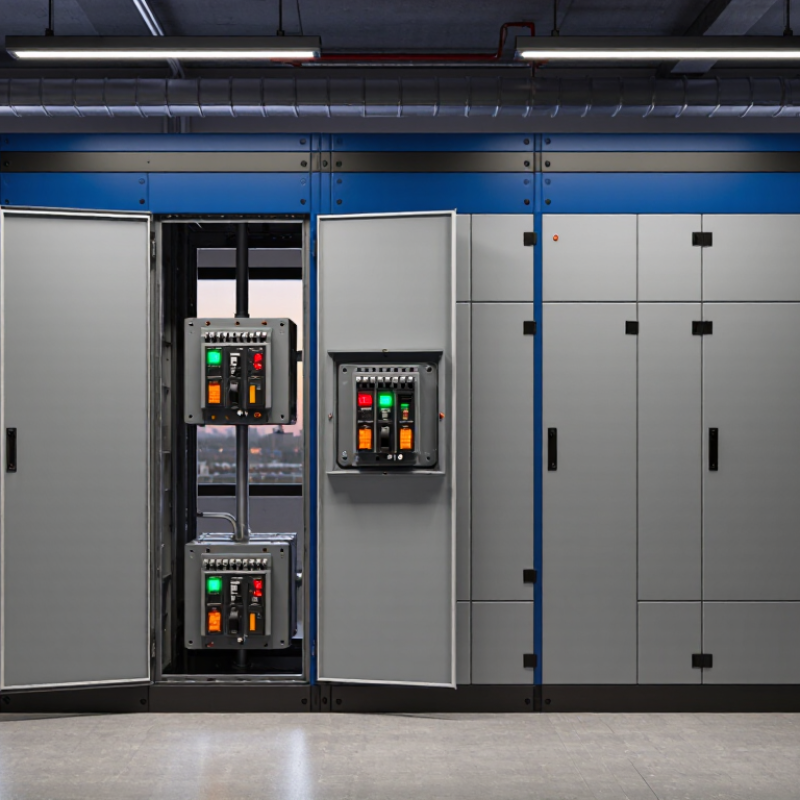
Switchgear protection is the coordinated system that detects abnormal electrical conditions and limits their damage. It works around circuit breakers, relays, current transformers, voltage transformers, fuses, and grounding paths. In practical installations, these devices must respond within milliseconds. A fault may begin as insulation failure, a loose connection, or moisture inside a cabinet. Small warning, serious result.
Protection relays continuously compare measured current and voltage with configured limits. During a short circuit, current rises sharply, and the relay sends a trip signal to the circuit breaker. The breaker opens its contacts and separates the faulted section from the energized network. Overcurrent, earth-fault, undervoltage, and differential functions address different risks. Interlocking can prevent unsafe switching sequences, while arc-flash sensors may accelerate tripping when light and pressure change suddenly. Proper coordination matters. An upstream breaker should not disconnect an entire facility when a downstream device can isolate one feeder.
Global buyers should examine test reports, wiring diagrams, protection settings, enclosure ratings, and maintenance access. Site conditions matter too. Dust, salt air, high altitude, and temperature can change performance. Factory testing is useful, but commissioning tests reveal installation mistakes that documents may miss. I have seen protection plans look complete until a mislabeled terminal delayed verification. That uncomfortable detail matters. Settings should be reviewed by qualified engineers and checked against the actual network study. No protection system is perfect; poor calibration, aging components, or incomplete records can weaken an otherwise robust design.
Why Is Switchgear Protection Essential for Electrical Safety?
Switchgear protection keeps faults from becoming fires, arc flashes, or widespread outages. It detects abnormal current and disconnects the affected circuit quickly. Modern systems use circuit breakers, protective relays, earth-fault sensors, and mechanical interlocks. These devices help protect workers, transformers, cables, and downstream equipment. Small detail. Big consequence.
The U.S. Bureau of Labor Statistics recorded 145 workplace fatalities involving exposure to electricity in 2022. This figure shows why electrical protection cannot depend on operator attention alone. Correct coordination also matters. A poorly selected relay may trip too late, while an overly sensitive setting can interrupt essential loads unnecessarily. IEC 62271-200 addresses metal-enclosed switchgear requirements, including internal arc classification and tested construction. Buyers should request verified test records, clear protection curves, and documented short-circuit ratings.
Protection continues after installation. NFPA 70B emphasizes documented electrical maintenance, inspection, and testing programs. In practice, technicians should check contact wear, insulation condition, relay settings, cable terminations, and battery health. Dust inside a cabinet can become a serious risk in humid or polluted environments. Yet protection is not magic. Human error, weak maintenance, and incorrect settings can still defeat good equipment. Global buyers should evaluate local grid conditions, ambient temperature, installation skills, and applicable safety standards before approving a switchgear package. Relying only on a catalogue rating is tempting, but it is not enough.
Which Hazards Can Switchgear Protection Prevent?
Switchgear protection is critical because electrical faults develop faster than people can react. A short circuit may create an explosive arc flash, intense heat, and metal fragments within milliseconds. Proper relays and circuit breakers detect abnormal current and isolate the damaged section. This limits injury risks, fire damage, and costly production stoppages. In a real plant, even a loose connection can leave burn marks around a busbar joint. Small warning signs deserve professional attention.
Protection also helps prevent overloads, phase failure, and ground faults. An overloaded feeder can heat cable insulation for hours before failure becomes visible. A ground fault may energize a cabinet surface, creating a severe shock hazard. Surge protection reduces damage from lightning and switching events, especially where outdoor substations face unstable weather. Correct coordination keeps the nearest breaker operating first, so one fault does not shut down an entire facility.
No protection scheme is perfect. A rushed setting review can cause nuisance trips or, worse, delayed isolation. Global buyers should request tested performance data, maintenance guidance, and evidence of compliance with applicable local standards. Engineers should verify fault levels, ambient temperatures, enclosure ratings, and available spare parts before acceptance. Dust matters. Moisture matters. Regular inspection remains essential, even when commissioning tests look excellent.
How Do Global Buyers Evaluate Switchgear Protection Systems?
Global buyers evaluate switchgear protection by measuring risk, not only purchase price. The IEA’s Electricity 2024 report estimates that 80 million kilometres of grids must be added or refurbished by 2040. This pressure makes dependable protection a purchasing priority. Buyers examine short-circuit ratings, breaking capacity, relay accuracy, and coordination between upstream and downstream devices. A protection system must isolate faults quickly without shutting down healthy feeders.
Evidence matters. Buyers commonly request IEC 62271 type-test records, routine test reports, protection settings, and verified arc-resistant performance. They also compare response times under realistic fault conditions. CIGRE technical guidance stresses validated protection studies, proper instrument-transformer selection, and dependable circuit-breaker operation. A polished brochure is not enough. Engineers may ask for event records from comparable installations, although these records are not always available.
Global projects also require practical resilience. Buyers inspect enclosure ratings, temperature limits, humidity protection, insulation coordination, and maintenance access. They review spare-part availability and technician training for the expected service life. The Uptime Institute’s 2024 Global Data Center Survey shows that power-related failures remain a major operational concern, reinforcing the value of selective coordination and tested redundancy. Still, redundancy can be misunderstood. Two breakers do not guarantee continuity if both depend on one weak control circuit. No checklist is perfect. Unclear local grid data can also distort protection settings. Careful buyers therefore require independent studies, witnessed factory tests, clear documentation, and commissioning records before accepting the system.
What Standards and Features Should Buyers Compare?
Why Is Switchgear Protection Important for Global Buyers?
When comparing switchgear, buyers should begin with the standards required in the installation country. IEC 62271 is widely used for medium- and high-voltage equipment. IEEE C37 standards may apply in North American projects. Local grid rules can add stricter requirements. A familiar certificate is not always sufficient.
Compare rated voltage, continuous current, short-circuit withstand, and breaking capacity. These figures must match the actual network, not only the purchase specification. Check internal arc classification, enclosure protection, temperature rise, altitude limits, and corrosion resistance. In coastal or dusty locations, small enclosure weaknesses become expensive problems.
Protection relays should support accurate fault detection, selective tripping, event recording, and communication with control systems. Mechanical and electrical interlocks also deserve close inspection. Ask for type-test reports, routine-test records, material traceability, and calibration evidence. Factory acceptance testing can reveal wiring errors before shipment. It is practical experience, not paperwork alone.
Look closely at maintenance access. Can technicians safely isolate a feeder? Are replacement parts available locally? Does the supplier explain service intervals clearly? Buyers sometimes focus on the lowest initial price and overlook training, downtime, or obsolete components. That mistake is common. Still, no comparison method is perfect; operating data and site conditions may change after installation. Reliable purchasing means checking assumptions, questioning unclear claims, and matching every feature to a real operating risk.
Why Is Switchgear Protection Important for Global Buyers? - What Standards and Features Should Buyers Compare?
| Comparison Dimension | Why It Matters to Global Buyers | Relevant Standard or Reference | Key Data to Compare | Recommended Verification Evidence |
|---|---|---|---|---|
| Rated voltage | Ensures the equipment is suitable for the electrical system and its insulation requirements. | IEC 62271-1; IEC 62271-200; IEEE C37.20.2 or C37.20.3, where applicable. | System voltage, highest equipment voltage, power-frequency withstand voltage, and lightning impulse withstand voltage. | Type-test report, nameplate data, insulation coordination study, and project voltage schedule. |
| Short-circuit withstand capability | Limits thermal and mechanical damage during faults and supports system safety and continuity. | IEC 62271-100 for circuit breakers; IEC 62271-200 for metal-enclosed switchgear; IEEE C37 series where required. | Rated short-circuit breaking current, short-time withstand current, peak withstand current, and fault duration. | Certified short-circuit test results and coordination with the available fault current at the installation point. |
| Internal arc protection | Helps protect personnel from hot gases, pressure, and ejected particles if an internal fault occurs. | IEC 62271-200, including internal arc classification requirements. | IAC classification, access sides such as AFL or AFLR, test current, test duration, and enclosure configuration. | Independent internal-arc test report matching the proposed cubicle arrangement and access conditions. |
| Protection relay performance | Accurate and selective fault detection reduces equipment damage and unnecessary outages. | IEC 60255 series; IEEE C37.90 series may apply to protection and control equipment. | Overcurrent, earth-fault, differential, under-voltage, over-voltage, frequency, and breaker-failure functions. | Protection-setting file, functional test record, relay test certificate, and coordination study. |
| Current transformer accuracy | Incorrect CT performance can cause relay maloperation or failure to trip during high-current faults. | IEC 61869-2; IEEE C57.13 for installations using the applicable IEEE measurement-transformer requirements. | Ratio, burden, insulation level, protection class, saturation characteristics, and knee-point voltage where applicable. | CT test report, excitation curve, wiring diagram, polarity test, and calculated relay burden. |
| Enclosure protection | Controls the risk of dust, water, and accidental contact according to the installation environment. | IEC 60529 for IP codes; NEMA enclosure classifications may be specified for North American projects. | Required IP rating, indoor or outdoor use, dust exposure, water exposure, corrosion conditions, and ventilation design. | Enclosure test documentation, installation drawings, gasket details, and environmental design data. |
| Isolation and interlocking | Prevents unsafe switching sequences and reduces the risk of energizing accessible compartments. | IEC 62271-200; IEC 62271-1; applicable local electrical safety rules. | Earthing-switch interlocks, breaker racking interlocks, key interlocks, shutter operation, and compartment segregation. | Mechanical operation test, interlock matrix, single-line diagram, and factory inspection record. |
| Segregation and accessibility | Improves maintenance safety and can limit the impact of a fault between functional sections. | IEC 62271-200 internal separation classifications. | Form of separation, busbar compartment access, cable compartment access, and live-part accessibility. | General arrangement drawing, sectional drawings, classification declaration, and maintenance procedure. |
| Circuit-breaker operating mechanism | Reliable operation is essential for fast fault clearing and dependable switching over the equipment lifecycle. | IEC 62271-100; IEEE C37.09 test procedures where specified. | Opening and closing time, operating sequence, mechanical endurance, trip-coil supervision, and anti-pumping function. | Routine test report, timing test, mechanical endurance data, and control-circuit schematic. |
| Arc-flash and personnel safety features | Reduces injury risk during switching, inspection, and fault conditions. | IEC 62271-200; NFPA 70E or local occupational-safety requirements where applicable. | Remote racking or switching, arc-resistant construction, light and pressure sensors, barriers, and warning labels. | Risk assessment, operating procedure, arc-flash study, and verified safety-feature documentation. |
| Environmental and seismic suitability | Temperature, altitude, humidity, vibration, and seismic conditions can affect insulation and mechanical reliability. | IEC 62271-1 environmental conditions; project-specific seismic and climatic specifications. | Ambient temperature range, installation altitude, humidity, pollution level, corrosion category, and seismic acceleration. | Environmental design declaration, derating calculations, seismic qualification, and coating specification. |
| Automation and communications | Enables remote monitoring, event analysis, faster fault response, and integration with substation control systems. | IEC 61850 for substation communication; IEC 60255 for protection equipment performance. | Protocol support, time synchronization, disturbance recording, event logs, cybersecurity requirements, and I/O capacity. | Communication architecture, interoperability test, configuration files, cybersecurity checklist, and FAT records. |
| Routine testing and documentation | Complete documentation supports approval, commissioning, maintenance, and future troubleshooting across different jurisdictions. | Applicable IEC or IEEE product standards, contractual inspection requirements, and local regulations. | Insulation tests, wiring checks, contact resistance, mechanical operation, relay injection, and functional interlock tests. | Approved drawings, inspection and test plan, factory acceptance test report, manuals, certificates, and spare-parts list. |
Note: The applicable standard depends on system voltage, installation location, governing regulations, and the purchaser’s project specification. Buyers should confirm the complete standard edition and conformity requirements before comparing quotations.
Article Source:
Let's Build Together
Contact Us: Call 435-563-3503
-OR- Fill in the form below and we will call you back.