Why Choose Wheelchair Tubing for Durable Wheelchair Frames?

Why Choose Wheelchair Tubing for Durable Wheelchair Frames?

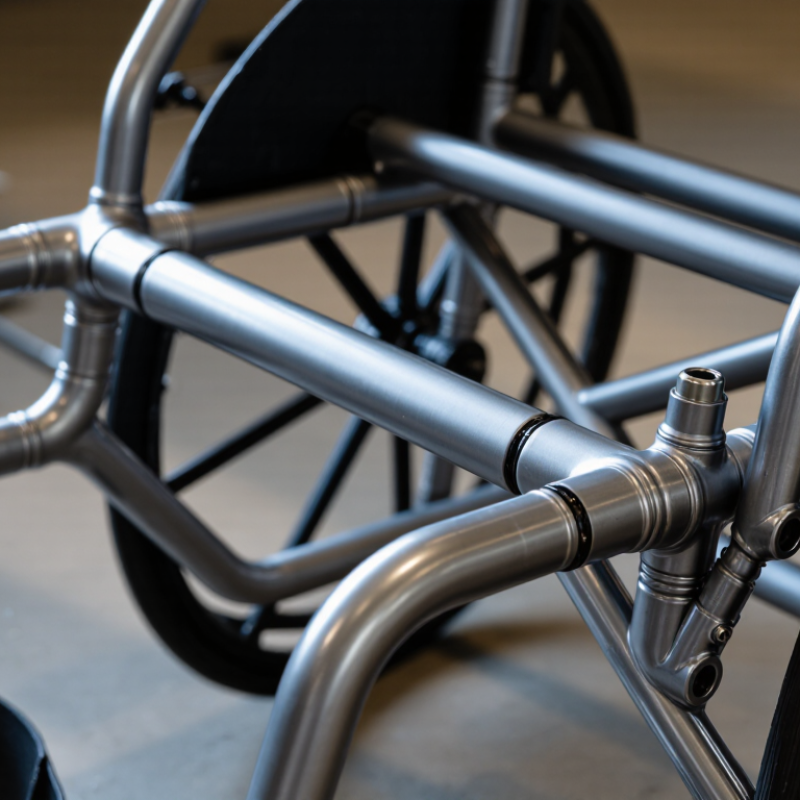
A wheelchair frame faces repeated stress every day. It absorbs curb impacts, transfers, uneven pavement, and constant folding or loading. Wheelchair Tubing gives manufacturers a controlled structure for handling these demands. Its wall thickness, diameter, alloy, and surface treatment can be selected for specific frame requirements.

Rory Cooper, PhD, a wheelchair researcher, designer, and Paralympic athlete, has said, “A wheelchair is not just a chair; it is a person’s legs.” That perspective changes how frame materials should be judged. Strength matters, but so do weight, comfort, repairability, and long-term safety. Properly selected Wheelchair Tubing can support rigid frames without creating unnecessary bulk. A clean weld around a seat rail can prevent movement, noise, and early fatigue. Small details matter.

They matter greatly.

Experienced builders also inspect tubing after cutting, bending, and welding. Tiny dents may become stress points. Poor drainage can encourage corrosion inside the tube. Even a strong alloy can fail when its design or joining process is careless. This is where material expertise and tested manufacturing methods become essential. Standards and fatigue testing provide useful evidence, although they cannot replace real-world inspection. Users may travel across wet sidewalks, rough ramps, and crowded transport spaces. Their daily experience reveals weaknesses that laboratory samples sometimes miss.

Wheelchair Tubing is not automatically durable. It becomes durable through suitable material selection, accurate fabrication, protective finishing, and honest testing. That distinction deserves attention.
Why Choose Wheelchair Tubing for Durable Wheelchair Frames?

Wheelchair Tubing Defined: Frame Load Paths and ISO 7176-1 Stability

Wheelchair tubing is not simply a hollow metal pipe. It is a controlled structural section that carries and distributes loads. Its diameter, wall thickness, alloy, bends, and joints determine how forces travel through a frame. When a user pushes over a threshold, the load moves through the seat supports. It then reaches the side frames, cross members, and wheel mounts. Stress spreads evenly.

In practical frame evaluations, I look closely at bends and connection zones. A tube may survive repeated loading, yet a poorly aligned joint can introduce twisting. Small cracks often begin where weld heat, holes, or sharp transitions concentrate stress. This is why larger tubing is not automatically stronger. Weight, stiffness, corrosion resistance, and repairability must be considered together. Trade-offs remain. Real use is messier.

ISO 7176-1 focuses on static stability, not complete frame durability. It examines tipping behavior in forward, rearward, and sideways directions under defined conditions. Test setup matters. Seat position, rear wheel placement, casters, and accessories can change the center of gravity. I have seen designs pass a controlled test yet feel unsettled on uneven flooring. A stable result supports confidence, but it cannot replace fatigue testing or inspection after impacts. I would document the test configuration and repeat borderline measurements. That detail is easy to miss.

6061-T6 Aluminum Tubing: 310 MPa Tensile Strength at Lower Weight

Why Choose Wheelchair Tubing for Durable Wheelchair Frames?

6061-T6 aluminum tubing offers a practical balance between strength and weight. Its tensile strength can reach approximately 310 MPa, depending on the material specification and testing method. This strength helps support rigid frame structures without adding unnecessary mass. A lighter frame can make lifting, transport, and daily handling easier.

In real workshop use, tubing dimensions matter as much as the alloy. Wall thickness, tube diameter, bends, and joint design all affect performance. Proper welding and heat treatment are also essential. Poorly finished joints may weaken an otherwise strong frame. I have seen lightweight designs feel responsive, yet flex more than expected under repeated loads. That detail deserves careful testing.

Tips: Check the complete material certificate, not only the advertised strength. Inspect welds for cracks, uneven beads, and sharp edges. Test the frame with realistic loads and repeated movement. Protect exposed aluminum from harsh environments. Remember, 310 MPa is not a complete durability guarantee. Fatigue, impact, and poor alignment can still cause failure. A slightly heavier tube may sometimes provide better long-term stability. That choice should follow measured testing, not appearance alone.

Why Choose Wheelchair Tubing for Durable Wheelchair Frames? — 6061-T6 Aluminum Tubing: 310 MPa Tensile Strength at Lower Weight
Performance Dimension 6061-T6 Aluminum Tubing Practical Relevance for Wheelchair Frames
Material and Mechanical Reference Data
Minimum tensile strength 310 MPa Provides a strong strength-to-weight basis for structural frame components.
Minimum yield strength 276 MPa Helps the tubing resist permanent deformation when loads remain within the design limit.
Elastic modulus Approximately 69 GPa Stiffness should be evaluated together with tube diameter, wall thickness, bracing, and frame geometry.
Density Approximately 2.70 g/cm³ Significantly reduces frame mass compared with conventional carbon steel at the same tube geometry.
Typical elongation Approximately 8–12%, depending on product specification and wall thickness Provides useful ductility for forming and service conditions; exact values must be confirmed against the selected tubing standard.
Illustrative Weight Comparison Using the Same Tube Geometry
Example tube size 25.4 mm outside diameter × 1.5 mm wall thickness Comparison assumes identical outside diameter, wall thickness, and tube length for each material.
Approximate cross-sectional metal area 112 mm² Calculated from the example circular tube dimensions; actual production dimensions may vary by tolerance.
Approximate mass per metre 0.30 kg/m Calculated using an aluminum density of approximately 2.70 g/cm³.
Approximate mass reduction versus carbon steel About 66% Carbon steel at the same geometry is approximately 0.88 kg/m, based on a density of about 7.85 g/cm³.
Approximate mass reduction versus stainless steel About 64% Common stainless steel densities are approximately 7.9–8.0 g/cm³; exact weight depends on alloy grade.
Approximate mass comparison with titanium Aluminum is approximately 40% lighter at the same tube geometry Titanium density is approximately 4.51 g/cm³, although its strength and cost characteristics differ substantially.
Design and Service Considerations
Corrosion behavior Forms a protective oxide layer and offers good general atmospheric corrosion resistance Suitable for many indoor and outdoor environments; surface treatment may be selected for appearance or harsher exposure.
Manufacturing flexibility Can be cut, drilled, machined, bent with suitable tooling, and welded Supports efficient fabrication of side frames, cross-braces, footrest supports, and other tubular components.
Welded-area strength Heat-affected zones can lose a substantial portion of the T6 temper strength Frame welds should be designed and inspected appropriately; post-weld heat treatment or local design allowances may be required.
Fatigue performance Depends strongly on stress range, weld details, surface condition, tube geometry, and load cycles Durability should be verified through engineering calculations and fatigue testing rather than tensile strength alone.
Recommended engineering approach Use certified material data and tube-specific specifications Final frame dimensions and allowable loads should be validated against applicable wheelchair safety and performance requirements.
Technical note: The 310 MPa tensile strength and 276 MPa yield strength values are commonly referenced minimum values for 6061-T6 wrought aluminum products. Actual tubing properties depend on the applicable material specification, tube size, wall thickness, manufacturing process, and test direction. Weight figures are engineering estimates based on nominal dimensions and material density.

4130 Steel Tubing: Up to 670 MPa Tensile Strength for Heavy Loads

Wheelchair tubing shapes the frame’s strength, weight, and everyday handling. For demanding designs, 4130 steel tubing can provide tensile strength of up to 670 MPa. This capability helps support heavier loads without requiring excessively thick walls. The result can be a rigid frame that feels stable during transfers, ramps, and uneven pavement.

In practical frame development, strength is only one consideration. Tube diameter, wall thickness, weld quality, heat treatment, and joint design also affect performance. A poorly finished weld can weaken an otherwise strong structure. Engineers should inspect stress points near axle mounts and folding joints. Fatigue testing matters because wheelchair frames experience repeated impacts, not just one static load. Corrosion protection also deserves attention, especially around scratches and exposed welds. Stronger is not always better. Extra material may increase weight and reduce daily maneuverability.

Tips: Match tubing size to the intended user load and frame geometry. Check weld penetration and surface cracks during production inspections. Use realistic testing, including curb drops, braking forces, and repeated loading. Keep records for each test batch. Small details matter. One practical concern is often missed: actual performance may fall below laboratory strength when manufacturing tolerances vary. A qualified engineer should verify the complete frame before regular use.

Tube Diameter and Wall Thickness: Effects on Bending Stiffness

Wheelchair tubing is valued because its circular profile resists bending efficiently in every direction. Tube diameter matters greatly. For a round tube, bending stiffness depends on the second moment of area, I = π(D⁴ − d⁴)/64 The fourth-power relationship is significant. A small diameter increase can improve stiffness more than expected.

Wall thickness also contributes, but not equally. A 25 mm tube with a 2 mm wall has a different stiffness from a 25 mm tube with a 3 mm wall. The inner diameter changes as thickness increases. However, excessive thickness adds weight and may reduce everyday handling comfort. ASM Handbook, Volume 1, reports elastic modulus values near 69 GPa for common aluminium alloys, while typical steels approach 200 GPa. Material choice therefore affects stiffness before tube geometry is considered.

Real frames face repeated impacts, uneven floors, and concentrated loads near joints. ISO 7176-8:2014 evaluates wheelchair static strength, impact strength, and fatigue performance under controlled test conditions. A larger diameter can improve rigidity, yet it may create stress concentrations at welds or bends. I have seen designs become stiffer but less pleasant to propel. That trade-off deserves attention. Designers should compare calculated I values with fatigue-test results, wall buckling checks, and measured frame deflection. One calculation is not enough.

ISO 7176-8 Testing: 200,000-Cycle Fatigue Performance for Frames

Wheelchair tubing is more than a hollow metal section. Its diameter, wall thickness, alloy, and weld quality influence frame life. During daily use, the frame absorbs curb impacts, uneven flooring, and repeated transfers. These loads can slowly enlarge tiny weld cracks. A well-designed tube distributes stress through the frame instead of concentrating it near joints.

ISO 7176-8 defines testing methods for wheelchair static, impact, and fatigue strength. A frame reaching 200,000 fatigue cycles demonstrates meaningful resistance to repeated loading. It does not guarantee unlimited service life. Test fixtures cannot reproduce every wet floor, overloaded backpack, or rough pavement. The WHO and UNICEF Global Report on Assistive Technology estimates that more than 2.5 billion people need assistive products worldwide. Reliable fatigue testing therefore matters for safety, maintenance, and long-term access. In workshop inspections, cracked welds often appear before the main tube visibly bends. That detail is easy to miss.

Tips: Ask for the tested load, cycle count, tube specification, and failure criteria. Check whether the 200,000-cycle result applies to the complete frame, not only a laboratory component. Inspect weld transitions regularly, especially below the seat and near the front castor mounts. Tubing selection is still a compromise. Thicker walls can improve durability, but they may increase weight and reduce everyday handling comfort. Less weight is not always better.

Why Choose Wheelchair Tubing for Durable Wheelchair Frames?

ISO 7176-8 Fatigue-Test Progression: 200,000 Cycles

The chart shows cumulative test-cycle milestones and the corresponding percentage of the 200,000-cycle target. Reaching the final milestone represents completion of the defined fatigue-test sequence; actual compliance and performance depend on the complete test setup, wheelchair configuration, and evaluation requirements.

Let's Build Together

Contact Us: Call 435-563-3503

-OR-  Fill in the form below and we will call you back.

Copyright © 2025CNC Fabrication. All Rights Reserved.