
Why Choose a Commercial EV Charger for Your Business?
Choosing a Commercial Ev Charger is a practical decision, not merely a sustainability statement. It affects customer experience, operating costs, fleet productivity, and your site’s future readiness. A busy hotel may need reliable overnight charging, while a logistics depot may require several high-power units before dawn. The right system must match real traffic patterns.
Claas Bracklo, a recognized EV-charging specialist and former CharIN chairman, has said, “Interoperability is the key to mass adoption of electric vehicles.” That principle matters for businesses. Your charger should communicate smoothly with different vehicles, payment platforms, energy systems, and management software. It should also provide clear status information when a driver is standing beside a vehicle in the rain.
Reliability comes from more than charging speed. Installation quality, load management, maintenance access, weather protection, and responsive support all matter. An inexpensive unit may look attractive, but downtime can quickly damage trust and revenue. A faster charger is not always better. It may increase electrical demand without improving daily operations.
There is room for honest doubt. Some businesses install chargers before studying actual usage. That can leave expensive equipment underused. Others underestimate future demand and face disruptive upgrades later. Careful site assessment, professional installation, and measurable performance targets create a stronger foundation. This guide explores how a Commercial Ev Charger can support business growth, where common planning mistakes appear, and which practical questions deserve attention before purchase.
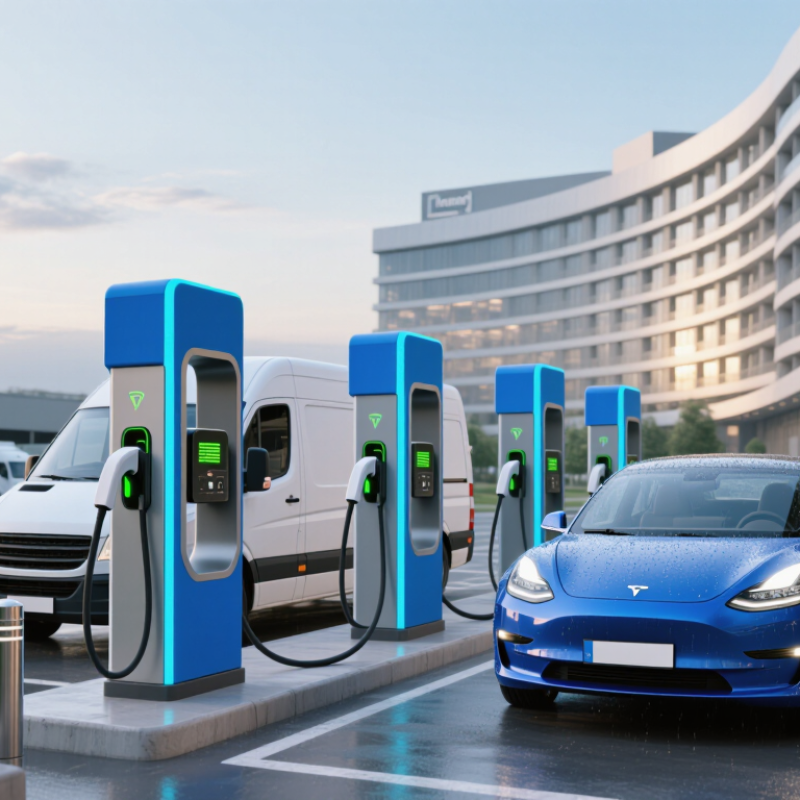
What Is a Commercial EV Charger?
A commercial EV charger is charging equipment designed for workplaces, retail sites, hotels, fleets, and public parking areas. Unlike a home unit, it supports heavier daily use, controlled access, payment functions, and professional monitoring. Its enclosure is usually stronger, while internal systems manage heat, current, and communication.
Most commercial sites use AC Level 2 chargers for employees and visitors who stay for several hours. DC fast chargers deliver energy much faster, but they require greater electrical capacity and careful site planning. Power output, connector compatibility, parking time, and local grid limits all affect the right choice. A larger charger is not always better.
In practice, reliable operation depends on more than the charger itself. Electrical inspections, weather protection, cable placement, lighting, and clear parking markings matter every day. Load management can prevent several vehicles from overwhelming a building’s power supply. Remote diagnostics also help maintenance teams identify failed sessions before drivers complain.
The first site plan may look perfect. Then traffic patterns reveal a problem. A cable may stretch across a walking route, or a charger may sit too far from the main panel. These details deserve another review. Businesses should compare expected demand with installation costs, service access, and future vehicle growth. That evidence creates a more dependable charging experience.
How Commercial EV Chargers Support Business Operations
Why Choose a Commercial EV Charger for Your Business?
Commercial EV chargers support daily operations in practical ways. They can attract drivers who need reliable charging near offices, shops, hotels, and service sites. The International Energy Agency reported over 14 million electric cars sold globally in 2023, representing nearly 18% of new car sales. That growing customer base creates more charging demand during working hours.
A well-planned charger can extend customer visits. A shopper may spend 40 minutes inside while their vehicle charges outside. Employees can also charge during shifts, reducing interruptions caused by separate charging trips. The IEA recorded more than four million public charging points worldwide by the end of 2023. However, installation alone does not guarantee value. Electricity capacity, parking turnover, maintenance, and pricing need careful review. A charger can become an expensive parking obstacle if usage remains low.
Tips: Study traffic patterns before installation. Place chargers near visible entrances, but avoid blocking short-stay spaces. Track sessions, energy use, downtime, and repeat users every month. Use clear signage and simple payment instructions. The U.S. Department of Energy’s Alternative Fuels Data Center provides useful planning references for site assessment. Still, every location behaves differently. That is where many plans need honest adjustment.
Key Benefits of Installing EV Charging at Your Business
Installing commercial EV charging can turn a parking space into a useful business asset. The International Energy Agency reported nearly 14 million electric car sales worldwide in 2023. Public charging networks also expanded by more than 40% that year. Demand is no longer theoretical.
For retailers, restaurants, hotels, and offices, charging can increase customer dwell time. A driver may spend 30 minutes inside while the vehicle charges nearby. Employees gain a practical workplace benefit, especially where home charging is limited. The U.S. Department of Energy notes that workplace charging can support daily commuting and reduce dependence on public infrastructure. Fleet operators may also improve vehicle availability by charging during scheduled stops.
Good results require more than installing hardware. A qualified electrical assessment should review panel capacity, peak demand, cable routes, drainage, lighting, and accessibility. Clear pricing prevents uncomfortable surprises. Reliable software can track energy use, session duration, and charger availability. Maintenance matters too. An idle charger creates frustration and wastes a valuable parking space.
The International Council on Clean Transportation has identified charging access as a major factor in wider EV adoption. Still, every site is different. A rural hotel may need fewer, faster chargers, while an urban office may benefit from slower overnight charging. Some early projects overbuild capacity before measuring demand. That mistake is expensive. Start with realistic traffic data, monitor usage, and expand carefully when evidence supports it.
How to Choose the Right Commercial Charging System
Choosing a commercial EV charger starts with your actual parking routine, not a glossy power rating. Watch how vehicles arrive, stay, and leave for one week. A delivery fleet may need fast charging at dawn. Office drivers may remain parked for eight hours. This difference changes the right system. It also changes installation costs. Good decisions begin with measured demand.
Check available electrical capacity before selecting hardware. A site assessment should review panel space, cable routes, ventilation, and future expansion. Ask whether the charger supports your vehicles, including connector compatibility and charging speeds. Load management can share power across several ports. That may cost less than upgrading the entire service. Choose weather-resistant equipment for outdoor bays, with clear screens and simple emergency controls. Safety matters more than impressive numbers. Use qualified electrical professionals and follow applicable local requirements.
Software deserves equal attention. Look for reliable usage records, user access controls, remote fault alerts, and energy reports. Test the dashboard with real staff before signing a long contract. Support response times should be written clearly. I have seen teams underestimate cable wear and winter performance. Small maintenance details become expensive when ignored. A spare cable is not always necessary, but a repair plan is. Consider total cost over several years, including demand charges, servicing, downtime, and future expansion. No forecast is perfect. Review the assumptions honestly, especially when employee demand remains uncertain.
Why Choose a Commercial EV Charger for Your Business?
A commercial charging system can serve more vehicles in less time, support different parking durations, and scale with future demand. The chart compares representative charging power levels commonly used in business, workplace, retail, and fleet applications.
Typical nominal power levels: AC Level 2 chargers commonly operate around 7–19 kW, while commercial DC fast chargers commonly range from 50–350 kW. Actual charging speed depends on vehicle capability, site capacity, temperature, and power sharing.
What Businesses Need to Plan Before Installation
Why Choose a Commercial EV Charger for Your Business?
What Businesses Need to Plan Before Installation
Installing a commercial EV charger requires more than choosing charging speed. The real planning begins with your property, vehicles, and daily schedule. A site walk should identify parking patterns, cable reach, drainage, lighting, and pedestrian routes. Check the electrical panel, available capacity, and distance to each charging bay. Small details matter.
Before selecting equipment, estimate how many vehicles will charge during the busiest period. Review fleet mileage, employee demand, visitor access, and expected growth. Ask a qualified electrician to assess load management and connection requirements. Leave room for inspection. An experienced installer can also identify trenching needs, protective barriers, and safe mounting heights. Assumptions can be expensive.
Plan how drivers will use the chargers at 8 a.m. and during shift changes. Place signs where drivers can see them before turning into the parking area. Consider payment methods, access control, maintenance response, and winter weather exposure. Keep records. Installation drawings, inspection reports, and maintenance logs support safer operations and future upgrades.
In practice, the first layout is rarely perfect. A charger may block a delivery path or create awkward reversing movements. Walk through the site with drivers, facilities staff, and an electrical professional before construction begins. Their feedback may challenge the original plan. That is useful. A short trial with temporary parking controls can reveal problems that drawings miss.
Why Choose a Commercial EV Charger for Your Business? - What Businesses Need to Plan Before Installation
| Planning Dimension | Typical Data or Benchmark | Why It Matters | Information to Confirm Before Installation |
|---|---|---|---|
| Primary Business Objective | Employee, customer, fleet, workplace, hospitality, retail, or mixed-use charging | The objective determines charger power, operating hours, pricing, parking rules, and required availability. | Identify who will charge, when they will charge, expected dwell time, and whether charging is a service or a revenue-generating facility. |
| Charger Type | AC Level 2: commonly about 3.7–22 kW. DC fast charging: commonly about 24–350 kW, depending on the vehicle, site, and equipment. | AC charging is generally suitable for longer parking periods, while DC charging is designed for faster vehicle turnover. | Match charging speed with average parking duration, vehicle requirements, electrical capacity, and budget. |
| Charging Time | Approximate time = energy required in kWh ÷ effective charging power in kW. Actual time is affected by battery state, temperature, and vehicle limits. | A vehicle requiring 40 kWh at an effective 11 kW charging rate may need roughly 4 hours, excluding charging losses and power tapering. | Review vehicle battery capacity, maximum AC/DC input, average daily mileage, and the time vehicles remain parked. |
| Number of Charging Ports | The required number depends on simultaneous demand, parking duration, fleet size, and desired service level. | More ports improve access, but each additional port can increase electrical, civil, networking, and maintenance requirements. | Estimate peak simultaneous demand rather than only total daily vehicles. Allow space for future expansion where practical. |
| Electrical Capacity | A site assessment should compare existing service capacity, peak building load, charger load, and available spare capacity. | Insufficient capacity may require load management, a larger service connection, a transformer upgrade, or phased installation. | Obtain utility information, review the main switchboard, check spare breaker capacity, and calculate the expected coincident load. |
| Load Management | Dynamic load management can adjust charging power according to the building’s real-time electrical demand. | It can reduce peak demand and help avoid unnecessary electrical infrastructure upgrades, although charging may take longer during high-load periods. | Define minimum charging power, priority vehicles, charging schedules, and whether the system must integrate with building energy controls. |
| Energy Consumption | Energy use is measured in kWh. A vehicle traveling 250 km at an efficiency of 18 kWh per 100 km requires approximately 45 kWh before charging losses. | Energy estimates support electricity budgeting, pricing decisions, solar-storage analysis, and emissions reporting. | Estimate annual charging sessions, average kWh per session, charging losses, local electricity tariffs, and demand charges where applicable. |
| Parking and Site Layout | The layout should accommodate charger equipment, cable reach, vehicle circulation, accessible routes, drainage, lighting, and protection from impact. | Poor placement can create trip hazards, blocked parking spaces, difficult maintenance access, or unsafe vehicle movements. | Prepare a scaled site plan showing parking bays, cable paths, bollards, pedestrian routes, accessible spaces, signage, and emergency access. |
| Permits and Compliance | Requirements vary by jurisdiction and may include electrical permits, construction approval, planning review, accessibility rules, fire-safety requirements, and utility approval. | Approval requirements can affect project timing, equipment selection, installation cost, and site design. | Consult the local authority, electrical inspector, utility, property owner, and qualified electrical contractor before ordering equipment. |
| Network and Payment Functions | Commercial systems may support user authentication, remote monitoring, usage records, tariff configuration, roaming, and contactless or app-based payment. | These functions support access control, billing, utilization tracking, fault notification, and operational reporting. | Decide whether charging is free, paid, or restricted; confirm cellular or wired connectivity, data ownership, cybersecurity, and transaction requirements. |
| Installation Cost Categories | Total project cost may include equipment, design, permits, electrical work, trenching, foundations, networking, signage, commissioning, and utility upgrades. | The charger purchase price is only one part of the total installed cost. | Request an itemized quotation that separates equipment, labor, civil works, utility fees, software, taxes, and ongoing service charges. |
| Operating and Maintenance Plan | Routine requirements may include visual inspection, cleaning, cable and connector checks, software updates, electrical testing, and fault response. | Reliable service improves user satisfaction and reduces downtime, especially for fleet and public-facing locations. | Set response targets, spare-parts responsibilities, remote diagnostics procedures, warranty terms, and preventive-maintenance intervals. |
| Safety and Accessibility | Installations should address electrical protection, residual-current protection where required, grounding, weather exposure, vehicle impact, cable management, lighting, and accessible use. | Safety measures protect users, equipment, buildings, and the business from avoidable operational and legal risks. | Use qualified installers and confirm applicable electrical codes, accessibility standards, emergency isolation, signage, and protective barriers. |
| Renewable Energy and Storage | Solar generation and battery storage can offset some grid energy use or reduce peak demand, but charging availability depends on system size and operating schedules. | Energy integration may support sustainability objectives and demand management, but it requires additional design and capital investment. | Compare solar production, battery capacity, charging demand, export rules, backup requirements, and the expected financial payback. |
| Success Metrics | Useful metrics include port utilization, sessions per day, kWh delivered, peak demand, uptime, revenue, charging cost, and user satisfaction. | Measured performance shows whether the installation is meeting operational, financial, and sustainability objectives. | Set baseline targets, review data monthly, and use the results to adjust pricing, access rules, maintenance, or future expansion. |
Note: Charging power, installation requirements, electrical rules, tariffs, accessibility standards, and permitting procedures vary by country, utility, site, and vehicle. Final specifications should be confirmed by a qualified electrical professional and the relevant local authorities.
Let's Build Together
Contact Us: Call 435-563-3503
-OR- Fill in the form below and we will call you back.