Top Recessed Downlight Manufacturers for Global Buyers
Recessed Downlight has moved from a simple ceiling fixture to a precise architectural tool. Global buyers now expect efficiency, visual comfort, durability, and documented performance. The International Energy Agency reported that LED products represented more than half of global lighting sales in 2022. This shift raises the standard for every manufacturer.
James Benya, a respected lighting designer and educator, said, “Lighting is architecture.” His point matters here. A recessed downlight shapes ceiling rhythm, shadows, glare, and the atmosphere beneath it. A narrow beam can highlight artwork. A poorly controlled beam can expose every uneven surface.
This guide examines leading Recessed Downlight manufacturers through practical evidence. It considers lumen maintenance, color consistency, beam accuracy, flicker control, thermal design, and warranty support. It also reviews compliance documentation, including LM-80 and TM-21 data, photometric files, and relevant IEC safety requirements. The U.S. Department of Energy’s Solid-State Lighting research repeatedly identifies efficacy, heat management, and optical control as critical performance factors.
The market is not perfectly transparent. Some impressive specifications remain difficult to verify. A bright sample may still perform poorly after several years. Therefore, this overview values tested products, factory experience, responsive technical teams, and credible certification records. It also recognizes regional differences in voltage, ceiling construction, labor practice, and project expectations. No ranking removes every uncertainty. Buyers should still request samples, inspect cut-off quality, and compare measured data before approving large orders. That extra step often prevents expensive ceiling replacements.
What Are Recessed Downlights and Why Do Global Buyers Choose Them?
Top Recessed Downlight Manufacturers for Global Buyers
What Are Recessed Downlights and Why Do Global Buyers Choose Them?
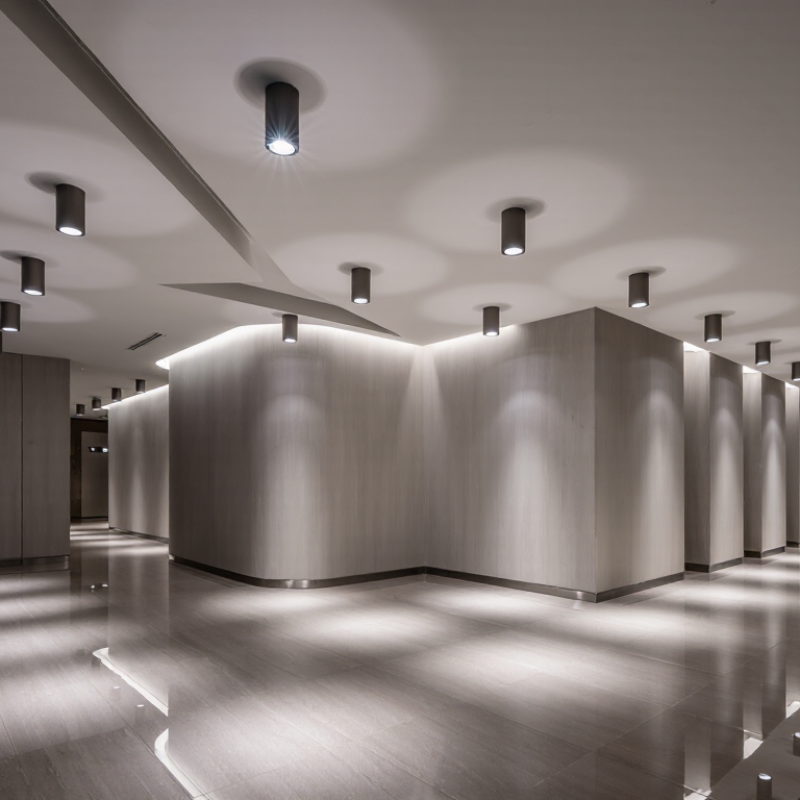
Recessed downlights are ceiling fixtures installed inside a cutout, leaving the trim nearly level with the surface. Their housing holds the LED module, reflector, driver, and heat-management parts. A narrow beam can highlight a countertop, while a wider beam creates softer room lighting. The difference is practical, not decorative.
The IEA’s Energy Efficiency 2023 report estimates that lighting uses about 15% of global electricity. Efficient downlights can reduce power demand, especially in hotels, offices, retail spaces, and new housing projects. The U.S. Department of Energy’s SSL research reports also show steady progress in LED efficacy and service life. Still, efficiency figures need context. Driver quality, operating temperature, and dimming behavior can change real-world performance.
Global buyers often choose recessed models because they save ceiling space and simplify visual design. A 90-millimeter cutout may suit compact residential ceilings, while larger apertures can deliver stronger commercial illumination. Buyers should check lumen output, beam angle, color rendering, flicker, warranty terms, and replacement access. IP ratings matter in bathrooms and covered outdoor areas. Packaging and voltage compatibility matter during international shipping. Small details create expensive problems. A product may look excellent in a showroom but perform poorly in a hot ceiling void. That risk deserves testing, not optimistic assumptions.
Key Criteria for Evaluating Recessed Downlight Manufacturers
Choosing reliable recessed downlight manufacturers requires more than comparing catalog prices. Start by checking their production experience and technical documentation. A capable supplier should provide photometric files, beam angle data, lumen maintenance figures, and clear color consistency information. Ask how each batch is tested, from LED performance to driver safety.
Request physical samples before approving a large order. Install them in a corridor, retail area, or office ceiling. Observe glare, trim alignment, color shift, and heat around the housing. Small details matter. Review the manufacturer’s control over aluminum quality, spring clips, connectors, and driver compatibility. A weak clip can create installation problems months later. In my experience, sample testing often reveals issues that product photos hide.
Compliance evidence should be specific and traceable, not limited to attractive certificates. Check applicable electrical and energy requirements for the target market, then confirm that documents match the exact model. Factory audits, inspection records, warranty terms, and spare-part availability also show operational reliability. Communication deserves attention. Can the supplier explain tolerances clearly? Do replies remain consistent when specifications change? Sometimes, even experienced buyers overlook packaging strength and replacement procedures. That mistake can increase project costs. A manufacturer may offer excellent lights but still struggle with delivery planning or after-sales response. Evaluate both the product and the working process.
Leading Recessed Downlight Manufacturers by Market and Product Strength
Top Recessed Downlight Manufacturers for Global Buyers
Leading recessed downlight manufacturers differ by market focus and product strength. Asian suppliers often compete through high-volume production, flexible tooling, and rapid customization. European manufacturers usually emphasize optical control, thermal design, and architectural appearance. North American producers often serve renovation projects, commercial specifications, and code-sensitive installations. Grand View Research estimates that the global LED lighting market will continue expanding strongly through 2030, supporting steady demand for efficient recessed fixtures.
Product performance matters more than catalogue size. Buyers should compare efficacy, beam consistency, glare control, dimming compatibility, and driver reliability. The U.S. Department of Energy reports that LED products can use at least 75% less energy than incandescent lighting and last up to 25 times longer. For a hotel corridor, that difference affects maintenance visits, not just electricity bills. Look for test evidence, including LM-79 photometric reports, LM-80 lumen-maintenance data, and clear warranty terms.
Market fit still requires careful judgment. The International Energy Agency identifies efficient lighting as an important part of global electricity-saving efforts, yet efficiency claims can vary between laboratories. That is a weakness buyers should not ignore. A low-priced downlight may show impressive lumens but produce harsh glare, unstable dimming, or visible color shifts. Manufacturers with strong regional compliance knowledge, documented quality control, and reliable spare-part support are usually safer choices. The best supplier is not always the largest. It is the one that matches local standards, ceiling conditions, and the project’s real maintenance capacity.
How to Compare Recessed Downlight Specifications and Certifications
Top Recessed Downlight Manufacturers for Global Buyers
Comparing recessed downlights starts with delivered performance, not advertised wattage. Check lumens, beam angle, color temperature, and color rendering index. A 900-lumen fitting with a 36-degree beam creates a different ceiling effect than one using 60 degrees. The International Energy Agency reports that lighting uses roughly 15% of global electricity. Efficiency matters, but glare control matters too. Review UGR data, shielding depth, flicker percentage, and driver efficiency. These details become visible on polished floors and computer screens.
Ask for LM-79 photometric testing and LM-80 data for LED lifetime evaluation. TM-21 projections should match the actual LED package and operating temperature. Claims such as “50,000 hours” need context. Is that L70 at 25°C, or a complete fixture rating? Often unclear. It deserves questioning. The U.S. Department of Energy’s solid-state lighting reports show modern LED systems can exceed 100 lumens per watt, but thermal design strongly affects real output. Compare wattage at the fixture, not only at the LED chip.
Certification checks should match the destination market. Look for IEC 60598 safety testing, relevant national electrical approvals, RoHS declarations, and suitable IP ratings. Damp locations may require IP44 or higher, depending on installation conditions. Verify fire-rating evidence for ceiling assemblies. Also request photometric files, surge protection values, warranty terms, and sample test reports. Documents can look complete while omitting driver certification. That omission is easy to miss. Independent laboratory records provide stronger evidence than a supplier’s product sheet alone.
A Global Buyer’s Guide to Suppliers, Pricing, and Quality Control
Top Recessed Downlight Manufacturers for Global Buyers
A Global Buyer’s Guide to Suppliers, Pricing, and Quality Control
Choosing a recessed downlight supplier requires more than comparing catalog prices. Experienced buyers review beam angle, color consistency, heat management, and driver performance. Ask for production samples before discussing large orders. A sample should show clean trim edges, stable dimming, and even illumination without visible flicker.
Pricing depends on wattage, housing material, LED efficiency, driver quality, packaging, and order volume. A low factory quote may exclude testing, custom tooling, export packaging, or replacement units. Request a detailed quotation with Incoterms, warranty terms, lead time, and payment conditions. Compare landed cost, not only the unit price. Small differences matter across thousands of fixtures.
Quality control should include incoming material checks, assembly inspections, electrical safety tests, and aging tests. Request test records for insulation, grounding, temperature rise, and lumen output. Independent laboratory reports can strengthen supplier claims, but verify the report number and product model. During one supplier review, the sample passed visually but showed inconsistent color temperature after extended use. That detail changed the purchasing decision. It was an expensive lesson.
A reliable manufacturer should explain failures clearly rather than promise perfection. Visit the facility when possible, or use a qualified inspection team. Check whether production samples match mass-production units. Keep approved samples, inspection photos, and signed specifications. Communication can still fail across languages and time zones. Clear drawings and measurable acceptance criteria reduce that risk.
Top Recessed Downlight Manufacturers for Global Buyers - A Global Buyer’s Guide to Suppliers, Pricing, and Quality Control
| Supplier Profile | Typical Manufacturing Region | Common Product Range | Typical Power & CCT | Housing & Finish | Indicative Export Price* | Typical MOQ | Estimated Lead Time | Relevant Standards & Certifications | Recommended Quality-Control Checks | Buyer Suitability |
|---|---|---|---|---|---|---|---|---|---|---|
| High-Volume OEM Factory | East and Southeast Asia | Fixed downlights Adjustable downlights Trimless models | 7–30 W 2700–6500 K 80–110 lm/W | Die-cast aluminium body; powder-coated white, black, or custom finishes | US$2.20–8.50 per unit | 500–2,000 units | 25–45 days after approval | IEC 60598-1 IEC 60598-2-2 EMC testing where required RoHS documentation | Incoming LED and driver inspection; photometric sample testing; 2–4 hour burn-in; dielectric-strength and grounding checks | Large commercial projects, distributors, and private-label programs requiring competitive pricing |
| Architectural Lighting Specialist | Europe and developed Asian manufacturing hubs | Low-glare downlights Deep-recessed optics Trimless systems | 8–25 W 2700–4000 K 90–120 lm/W | Precision aluminium housing; matte black, white, or architectural finishes | US$12–45 per unit | 50–300 units | 35–70 days after design confirmation | IEC 60598 series EN 62471 photobiological safety assessment LM-79-style performance reports where available Product-level CE or equivalent market documentation | UGR verification; beam-angle measurement; colour-consistency check; thermal testing at rated ambient temperature | Hotels, premium retail, museums, offices, and projects with strict visual-comfort requirements |
| Cost-Efficient Contract Manufacturer | South and Southeast Asia | Standard fixed downlights Surface-compatible models Bulk residential ranges | 5–24 W 3000–6500 K 80–100 lm/W | Aluminium or aluminium-plastic construction; standard white trim | US$1.40–5.50 per unit | 1,000–5,000 units | 20–40 days after purchase order | IEC 60598-1 applicable requirements Local electrical safety approvals RoHS or restricted-substance declaration | Visual inspection; LED polarity and power checks; driver sampling; carton drop test; random quantity verification | Residential developments, entry-level retail, and price-sensitive replacement programs |
| Custom Project Manufacturer | China, Vietnam, India, and other flexible production markets | Custom cut-out sizes Emergency versions DALI or 0–10 V options | 8–40 W 2700–6500 K 80–115 lm/W | Die-cast aluminium; interchangeable trims; optional IP-rated front assemblies | US$4.50–22.00 per unit | 200–1,000 units | 40–75 days for new tooling or certification | IEC 60598-1 and IEC 60598-2-2 IEC 61347 driver requirements IEC 62384 for LED control gear where applicable EMC and market-specific safety documentation | First-article approval; tooling and dimensional inspection; dimming-compatibility testing; emergency-duration testing where applicable; pilot-batch inspection | Projects requiring non-standard dimensions, controls, finishes, or installation conditions |
| Outdoor and Moisture-Resistant Specialist | Manufacturing hubs with established IP-rated product lines | Bathroom downlights Canopy-compatible models IP44–IP65 products | 7–25 W 2700–4000 K 75–105 lm/W | Sealed aluminium body; tempered diffuser; silicone gasket options | US$5.00–18.00 per unit | 300–1,500 units | 30–60 days after sample approval | IEC 60598 safety requirements IEC 60529 ingress-protection classification EMC compliance for the destination market RoHS documentation | IP water-ingress test; gasket and torque inspection; insulation-resistance test; thermal cycling; corrosion-resistance review for exposed installations | Bathrooms, covered outdoor areas, hospitality facilities, and humid commercial environments |
| Premium Small-Batch Manufacturer | Europe, North America, and specialist Asian facilities | High-CRI downlights Decorative trims Made-to-order systems | 6–30 W 2700–4000 K 90–130 lm/W | Machined or die-cast aluminium; premium powder coating or anodised finishes | US$20–75 per unit | 25–150 units | 45–90 days depending on configuration | IEC or EN 60598 series EN 62471 photobiological assessment Market-specific energy and safety files Verified photometric documentation | 100% cosmetic inspection; CCT and colour-rendering verification; lumen-maintenance documentation; driver noise assessment; installation-fit inspection | Luxury residential, galleries, premium hospitality, and design-led interior applications |
*Indicative export prices are non-brand market ranges for standard product configurations and may vary according to power, optics, LED quality, driver type, certification, finish, packaging, order volume, shipping terms, and destination requirements. Buyers should request current quotations, production samples, test reports, and pre-shipment inspection records before placing an order.
Article Source:
Let's Build Together
Contact Us: Call 435-563-3503
-OR- Fill in the form below and we will call you back.