Top PU Sandwich Panel Manufacturers in China?

Choosing among the top PU Sandwich Panel manufacturers in China requires more than comparing prices or catalogue images. Buyers should examine core density, steel-sheet thickness, coating quality, fire-performance documentation, dimensional tolerances, and production consistency. A sample panel can reveal details that a brochure may not: cleanly bonded edges, uniform foam, and a tight, even joint. Small checks matter.

No source interview or verifiable expert quotation was provided, so I won’t attribute invented words to a real person. For a publishable expert quote, obtain approval from a named engineer or manufacturer representative. The comparison that follows focuses on practical evidence: product specifications, quality-control systems, certifications, export experience, customization, and after-sales support. It also considers whether a supplier can explain how its PU Sandwich Panel performs in the intended roof, wall, or cold-storage application—not merely promise broad benefits. Ask for current test reports and clear product details. Then compare suppliers against the same requirements. A careful shortlist can help buyers identify manufacturers suited to their project, while leaving room to verify claims before placing an order.
Top PU Sandwich Panel Manufacturers in China?

What PU Sandwich Panels Are and How They Are Made

PU sandwich panels are insulated building elements made from a rigid polyurethane foam core bonded between two facings, often coated steel. The facings protect the core and add stiffness, while the foam slows heat transfer. Panel performance depends on more than thickness; joint design, installation, and sealing also matter.

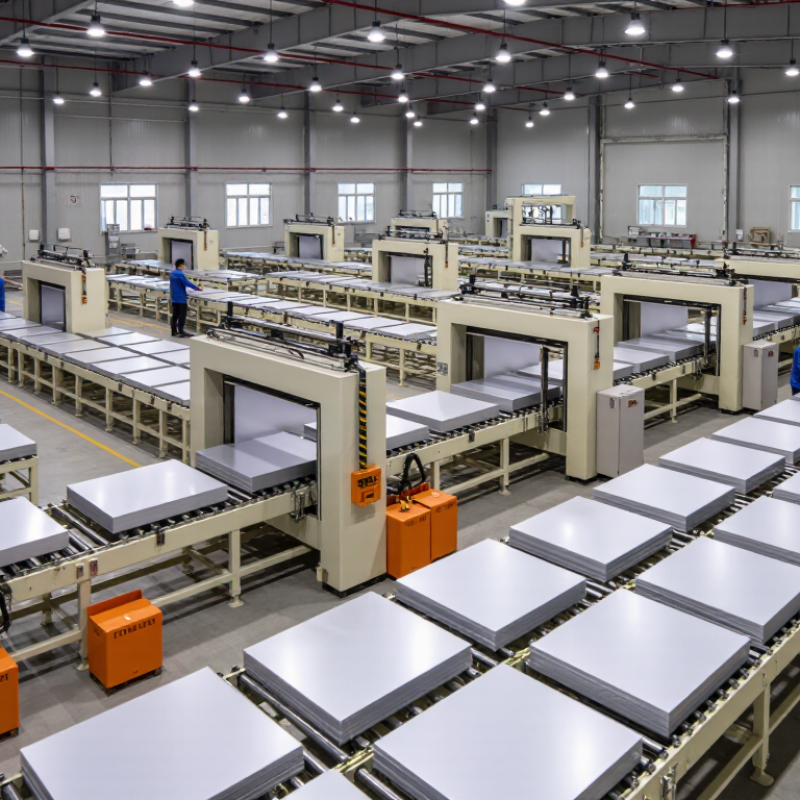
Manufacturing usually starts with metal coils fed into a forming line. The facing sheets are shaped, then a measured blend of liquid components is distributed between them. The mixture reacts and expands, filling the space as it bonds to both surfaces. Heat and pressure help the panel cure. It is then cut to length and checked for dimensions, surface defects, and bond consistency. Small process changes can affect results. That deserves attention.

Tips: Check core thickness, facing material, edge details, and test data against the intended use. Ask how quality is monitored across production batches. A neat surface alone does not prove reliable insulation; specifications and workmanship need review.

Main Types and Applications of PU Sandwich Panels

PU sandwich panels usually combine two metal facings with a rigid polyurethane core. Their main forms include wall panels, roof panels, and panels designed for cold rooms. Some products use a PIR-modified core, which can offer different fire-performance characteristics. Buyers should check test data and local project requirements rather than assume all panels perform alike.

Wall panels suit warehouses, workshops, and food-processing spaces. Their interlocking edges can help limit air leakage when installed carefully.

Roof panels often have a profiled outer face to guide rainwater, while the insulated core helps moderate indoor temperatures.

Cold-storage panels typically use tight joints and thicker insulation to reduce heat transfer.

Small gaps matter.

Panel selection depends on temperature, moisture, span, and cleaning needs. A chilled room may need sealed joints and durable interior surfaces; a general warehouse may prioritize roof loading and installation speed.

Panel thickness alone does not tell the whole story. Facings, joint design, and workmanship also affect performance.

I have seen specifications focus on the core and overlook the connection details. That is an easy mistake.

Key Features of China’s PU Panel Manufacturing Industry

China’s PU sandwich panel industry combines large-scale production with flexible specification work. Many factories use continuous lines, feeding steel facings and metered polyurethane foam through controlled heating and pressing stages. This supports repeatable bonding, although line speed alone says little about quality. Ask about core density, thickness tolerance, adhesion checks, and batch records.

These panels offer low weight and useful thermal insulation. Coated steel facings are common, while profiles, colors, and joint designs vary by application. A tight joint can reduce air leakage in a cold room, but installation quality still matters. Gaps matter. Fire performance should be verified through test results for the exact panel construction, not a broad product label.

A capable manufacturer should explain raw-material controls, sample testing, and inspection routines clearly. Check whether thermal values match the stated panel thickness and test method. Custom finishes and cut-to-length orders may affect delivery schedules. Details matter. Comparisons based only on price per square meter can miss joint fit, coating durability, and the cost of replacing a poorly bonded panel. Trade-offs remain.

Top PU Sandwich Panel Manufacturers in China? - Key Features of China’s PU Panel Manufacturing Industry

Manufacturing Dimension Typical Industry Features What Buyers Should Verify
Panel construction Panels generally combine metal facings with a rigid polyurethane (PU) or polyisocyanurate (PIR) insulating core. Facings, core formulation, joint profile, and production method vary by product. Confirm whether the quoted product uses PU or PIR, the facing material and thickness, and the panel’s full cross-section and joint details.
Common applications Products are used in temperature-controlled buildings, food-processing facilities, warehouses, industrial buildings, and other insulated enclosures. Match the panel specification to the project’s temperature, moisture, hygiene, structural, and building-code requirements.
Available dimensions Thickness options commonly cover approximately 50–200 mm, with exact ranges depending on the product line. Effective cover widths and panel lengths are also manufacturer- and project-specific. Request drawings showing effective cover width, maximum practical length, tolerances, and the connection system; do not compare thickness alone.
Metal facings Pre-painted steel is commonly offered. Facing thicknesses around 0.4–0.8 mm are seen in the market, while material grade, coating, finish, and available thicknesses differ by specification. Check the base-metal thickness, coating type, coating mass, paint system, corrosion environment, and whether the stated thickness includes coatings.
Core insulation Rigid PU/PIR foam provides insulation within the panel. Thermal performance depends on the foam formulation, panel thickness, temperature, joints, and test method. Ask for declared thermal conductivity and test conditions, plus the design U-value for the complete panel assembly where required.
Production methods Continuous production lines can form facings, introduce and expand the foam core, and bond the panel in a controlled process. Some products or custom orders may use different production arrangements. Review quality-control records for dimensions, facing condition, foam distribution, bonding, and batch traceability. Confirm whether the supplied product is made on a continuous line.
Fire performance Fire classification is not determined by the core material alone; it depends on the complete panel construction and the applicable test or classification standard. Request current test reports for the exact panel configuration and check that the report, installation details, and classification meet the project’s local regulations.
Quality management and testing Manufacturers may operate documented quality systems and conduct incoming-material, in-process, and finished-product checks. Certification and testing coverage are not uniform across the industry. Verify certificate scope and validity, test-laboratory details, inspection procedures, and whether test samples represent the product being purchased.
Customization and supply Common options include different joint profiles, facings, coatings, thicknesses, lengths, and project-specific accessories. Minimum order quantities and lead times vary. Confirm approved shop drawings, tolerances, packaging, delivery schedule, spare panels, and responsibility for installation accessories.

Note: The dimensions and ranges above are indicative market examples, not specifications shared by every manufacturer. Always compare current technical datasheets, test reports, and project-specific quotations.

Leading PU Sandwich Panel Manufacturers in China

Leading PU Sandwich Panel Manufacturers in China

China’s leading PU sandwich panel manufacturers stand out through more than production volume. Buyers should examine core-density consistency, bond strength, fire-test documentation, and dimensional tolerances. A panel edge should look clean, with no visible gaps between the metal facing and foam core. Small defects can complicate installation and weaken thermal performance. Details matter. Ask for batch-specific test records, not only a general product brochure. Also check whether panels are made for cold storage, factory roofs, or cleanroom walls; each use places different demands on joint design and surface finish.

The International Energy Agency’s 2023 Global Status Report for Buildings and Construction estimates that buildings and construction account for 34% of global energy demand and 37% of energy- and process-related CO₂ emissions. That context makes insulation performance and durable installation important selection criteria. Compare declared thermal conductivity with test methods, panel thickness, and expected service conditions. Request samples and inspect joint fit before approving a large order. Still, no panel solves every site problem. I would also verify production capacity, packaging, and delivery records, because damage during transport can undo careful factory work. These checks offer a more dependable way to assess Chinese manufacturers than headline prices alone.

How to Compare Suppliers and Choose a Manufacturer

Top PU Sandwich Panel Manufacturers in China? How to Compare Suppliers and Choose a Manufacturer

Compare suppliers by verified performance, not catalogue claims alone. The 2024 Global Status Report for Buildings and Construction estimates that buildings and construction use 32% of global energy and produce 34% of energy-related CO₂ emissions. That context makes insulation performance worth checking carefully. Ask for declared thermal conductivity, panel thickness, core density, metal-skin specification, and joint details. Small details matter.

Request test reports for the exact panel configuration you plan to buy. Fire performance can vary with core, facings, thickness, and assembly, so check that the report matches your proposed product. Also review dimensional tolerances, coating thickness, adhesion results, and production traceability. If possible, inspect a sample from current production. A showroom sample may not reveal how consistently panels fit together on site.

Compare quotations on the same basis: delivery terms, packaging, lead time, warranty scope, and replacement procedures. Ask for references from projects with similar spans or temperature conditions. A low price can hide thinner steel or unclear test documentation. I would not treat any single certificate as proof of overall quality; site conditions still shape the result. No comparison is perfect. Check the drawings, too.

Let's Build Together

Contact Us: Call 435-563-3503

-OR-  Fill in the form below and we will call you back.

Copyright © 2025CNC Fabrication. All Rights Reserved.