Top Barite Drywall Radiation Shielding Manufacturers
Choosing the right Barite Drywall Radiation Shielding manufacturer requires more than comparing product prices. It demands careful attention to material quality, engineering support, testing evidence, and installation performance. Barite drywall combines gypsum panels with high-density barium sulfate, creating a practical barrier for selected medical, dental, laboratory, and industrial environments. Yet performance depends on more than density alone. Panel thickness, joint treatment, wall design, radiation energy, and room layout all influence the final result.
Experienced manufacturers should provide clear technical data, batch consistency records, safety documentation, and project references. Reliable suppliers can explain how their panels perform around X-ray rooms, imaging suites, control booths, and shielded partitions. They should also coordinate with radiation physicists, architects, and qualified contractors. A product brochure is helpful, but it is not enough. Site conditions often expose details that factory samples cannot show.
Look for manufacturers with documented quality systems and transparent testing methods. Ask whether the barite content remains uniform across each panel. Check edge strength, screw holding capacity, cutting behavior, and dust-control guidance. These details affect real installation work. Some suppliers may offer impressive claims without sufficient independent verification. That deserves scrutiny. Even reputable companies can have limited experience with unusual room geometries or demanding project schedules.
This guide examines leading manufacturers through practical criteria, including product consistency, customization, technical service, certifications, delivery capability, and customer feedback. It does not assume that the largest company is the best choice. Instead, it considers which supplier can support a safe, properly designed shielding system from specification through installation. Mistakes are costly. Careful comparison remains essential.
What Is Barite Drywall and How Does Radiation Shielding Work?
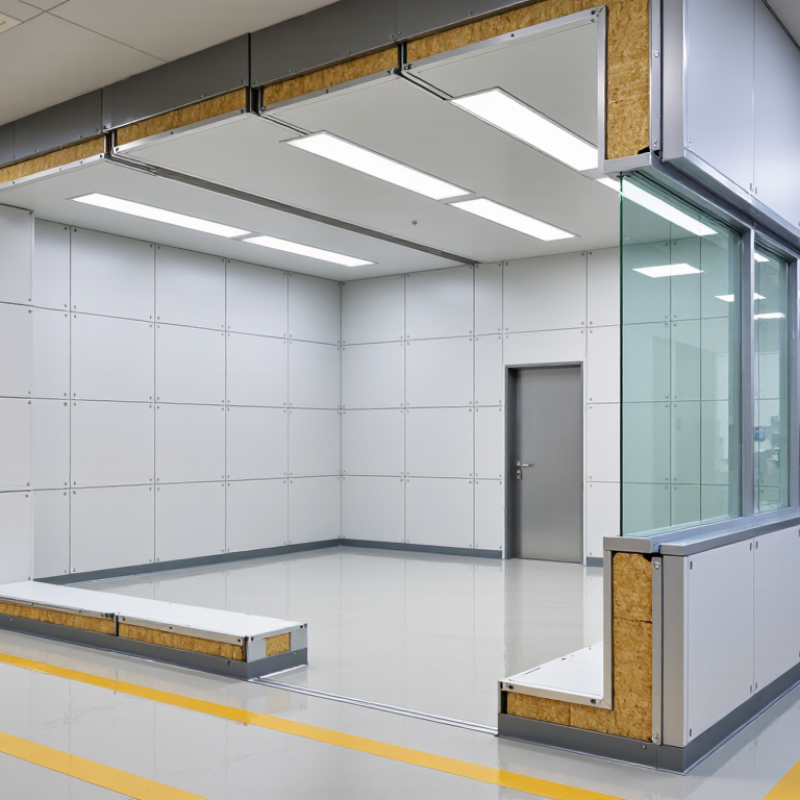
Barite drywall is a dense gypsum panel containing barite, a naturally occurring mineral rich in barium sulfate. Its added weight helps reduce the passage of diagnostic X-rays and some gamma radiation. Ordinary drywall offers limited protection because it contains less shielding material. Barite panels create a more substantial barrier within walls, ceilings, and partitions.
Radiation shielding works mainly through attenuation. As radiation travels through the panel, the dense material absorbs and scatters part of its energy. Thickness matters. So does radiation energy. A room used for dental imaging may need a different design from a CT suite or industrial inspection area. Distance and equipment direction also influence the required protection.
A panel alone is not a complete shield. Seams, corners, doors, cable openings, and service penetrations can become weak points. Installers should overlap or seal joints according to the project design, rather than relying on visual appearance. One detail is often missed. The floor and ceiling may need protection too.
Reliable projects begin with a qualified radiation physicist or shielding consultant. They should review workload, operating schedules, room layout, and neighboring occupied spaces. Measurements after installation can reveal gaps that drawings overlook. Barite drywall is heavy, so wall framing and handling plans deserve careful attention. It is tempting to treat higher density as automatically better, but that assumption can waste materials or leave unprotected areas. Proper calculations remain more important than impressive panel weight.
Top Barite Drywall Radiation Shielding Manufacturers
What Is Barite Drywall and How Does Radiation Shielding Work?
Barite drywall is a radiation-shielding board that incorporates barium sulfate, a high-density mineral. Its shielding performance depends on material density, board thickness, radiation energy, and installation quality. The chart illustrates the measured physical principle of a half-value layer: each additional half-value layer reduces the remaining radiation intensity by 50%. Actual project thickness should be determined by a qualified radiation physicist using the X-ray or gamma-ray energy and applicable building codes.
Key Features to Compare in Barite Drywall Products
Top Barite Drywall Radiation Shielding Manufacturers
Key Features to Compare in Barite Drywall Products
Medical imaging drives most artificial radiation exposure. UNSCEAR 2020/2021 reports estimate medical exposure contributes about 95% of this category globally. Therefore, barite drywall should be compared by tested performance, not appearance or advertised density alone.
Check lead-equivalent protection at the intended X-ray energy and angle. A panel rated at one kilovoltage may perform differently at another. NCRP Report No. 147 emphasizes workload, use factor, occupancy, and distance when designing shielding. Thickness must match those conditions. Barite content and panel density also matter, but higher density does not automatically mean better protection.
Ask for batch test results and dimensional tolerances. Small inconsistencies can create installation problems.
Examine the joints carefully. Radiation can pass through poorly sealed seams, outlets, doors, and service penetrations. Product edges should support overlapping or approved joint treatments. ASTM C1396 helps evaluate gypsum panel properties, but it does not prove radiation attenuation. Independent testing remains necessary.
Fire resistance should be verified for the complete wall assembly, not the panel alone. Moisture resistance, screw holding, cutting dust, and panel weight affect site safety and labor. Heavy boards are harder to handle. This is often underestimated.
Procurement teams should request laboratory reports, installation instructions, declared density, thickness tolerance, fire data, and project-specific shielding calculations before approval.
Leading Barite Drywall Radiation Shielding Manufacturers
Leading barite drywall radiation shielding manufacturers combine material expertise with disciplined production controls. Their panels use barite-rich compounds to provide radiation attenuation in diagnostic rooms, laboratories, and selected industrial facilities. Experienced manufacturers understand that shielding performance depends on density, thickness, joint design, and installation quality. A heavy panel alone cannot solve every exposure problem.
Reliable manufacturers publish product data, test results, and clear handling instructions. They verify panel density during production and monitor thickness across each batch. Some provide cut-to-size services, reinforced edges, and compatible joint treatments. These details reduce gaps around doors, outlets, windows, and service penetrations. Small openings matter. Qualified technical teams should also review room layouts with medical physicists or radiation protection consultants. This cooperation supports safer, evidence-based decisions.
Manufacturing experience becomes visible during difficult projects. Uneven walls, restricted access, and unusual equipment often require practical adjustments. A dependable supplier explains limitations instead of promising perfect results. No manufacturer gets every project right. Specifications may still overlook future equipment changes or local installation conditions. That deserves honest review. Buyers should request traceable quality records, independent testing where appropriate, and guidance on safe lifting procedures. Clear communication remains essential from design approval through final inspection.
Manufacturing Standards, Testing, and Quality Assurance
Top Barite Drywall Radiation Shielding Manufacturers
Manufacturing Standards, Testing, and Quality Assurance
Reliable barite drywall begins with controlled mineral selection. The USGS Mineral Commodity Summaries reports barite specific gravity near 4.2–4.5. Manufacturers should verify each batch through density checks, particle-size analysis, and moisture testing. Consistent density matters because small voids can weaken shielding performance.
There is no universal standard covering every barite drywall system. Responsible manufacturers typically align gypsum-board production with ASTM C1396/C1396M and installation practices with ASTM C840. Shielding design should follow NCRP Report No. 147, which considers workload, beam energy, distance, and room occupancy. A fixed thickness is not automatically adequate. It may fail in a busy imaging room.
Testing must reflect real use. Independent laboratories should measure attenuation at the equipment’s operating kilovoltage, not only under convenient conditions. Reports should identify specimen thickness, density, moisture content, test geometry, and uncertainty. IAEA safety guidance also supports documented acceptance testing and ongoing quality assurance for diagnostic facilities. Production records should connect test results to individual batches. That detail is often overlooked. Site inspections should check joints, penetrations, fasteners, and damaged panels. One imperfect assumption remains common: laboratory performance may not represent poor field installation. Manufacturers that publish limitations, retest schedules, and corrective procedures demonstrate stronger technical credibility than those offering only a headline protection value.
How to Select a Suitable Barite Drywall Supplier
Selecting a suitable barite drywall supplier requires more than comparing panel prices. Check the panel’s barite content, thickness, density, and stated lead-equivalent performance. Ask for recent evidence. Independent laboratory reports should identify test methods, sample dimensions, and production dates. Vague certificates deserve careful questions.
Request a physical sample before placing a large order. Inspect its edges, surface hardness, flatness, and resistance to crumbling during cutting. Details matter. Ask how the supplier controls batch consistency and protects panels from moisture during storage and transport. A reliable supplier should provide installation guidance, handling instructions, and clear replacement terms. Packaging photos can reveal practical experience.
Review completed projects with similar room sizes and radiation requirements. Speak with installers, not only sales staff. They can explain cutting waste, joint treatment, fastener performance, and delivery problems. Ask whether the supplier works with a qualified radiation physicist or can support your project’s design review. Local building and radiation requirements must guide final selection.
No supplier looks perfect on paper. A low quote may hide weak testing or costly waste. A higher price may also reflect unnecessary features. I would compare verified performance, technical support, lead time, and total installation cost. One overlooked issue is after-sales response. Delayed answers can disrupt a hospital or laboratory schedule. Choose the supplier that explains limitations clearly, not the one making the loudest claims.
Top Barite Drywall Radiation Shielding Manufacturers - How to Select a Suitable Barite Drywall Supplier
| Evaluation Dimension | Recommended Data Point | Suitable Supplier Benchmark | Documents or Verification to Request |
|---|---|---|---|
| Shielding material composition | Barium sulfate content and gypsum-board core composition | Composition is clearly declared, traceable by batch, and supported by a technical datasheet | Technical datasheet, safety data sheet, and batch traceability records |
| Panel thickness | Available thicknesses in millimetres | Common gypsum-board thickness categories such as 12.5 mm and 15.9 mm are available, with project-specific thickness options confirmed in writing | Product catalogue, dimensional tolerance data, and sample inspection |
| Panel dimensions | Length, width, squareness, and edge profile | Dimensions match the project drawings and remain within the stated manufacturing tolerances | Dimensional inspection report and pre-shipment quality-control record |
| Bulk density and weight | Panel mass per unit area and finished-panel density | Weight is declared for structural, handling, and fixing calculations; higher-density panels are used where the design requires greater attenuation | Declared weight per square metre, density test method, and batch test results |
| Radiation attenuation performance | Measured attenuation or lead-equivalent performance at specified X-ray energies | Performance is reported for the actual panel thickness and the project’s operating voltage; no generic value is accepted without test conditions | Independent attenuation report showing kVp, beam quality, test geometry, thickness, and calculation method |
| Radiation-shielding design support | Ability to provide wall, ceiling, floor, door, joint, and penetration details | Supplier provides technical input but the final shielding design is reviewed by a qualified radiation-protection professional | Typical installation details, CAD files, joint treatment instructions, and engineering contact |
| Fire-performance documentation | Fire-resistance rating of the complete wall or partition assembly | A tested or assessed assembly is offered; the panel alone is not treated as proof of a complete wall rating | Assembly test or assessment report, installation configuration, framing details, and joint-compound specification |
| Moisture and environmental suitability | Use conditions, water resistance, storage requirements, and indoor air considerations | Product selection matches dry, humid, or controlled clinical environments; panels are protected from prolonged water exposure | Environmental limitations, storage instructions, SDS, and applicable emissions documentation |
| Installation system compatibility | Compatible studs, tracks, screws, joint compounds, sealants, and reinforcement | Complete fixing guidance is available, including screw spacing, joint staggering, and treatment of service penetrations | Installation manual, approved accessory list, and sample wall detail |
| Quality-management controls | Manufacturing inspection, calibration, nonconformance control, and batch release | A documented quality system with consistent records for density, dimensions, appearance, and composition | Quality certificate, inspection and test plan, calibration records, and corrective-action process |
| Packaging and transport protection | Pallet design, edge protection, moisture protection, and maximum stacking conditions | Packaging prevents edge damage, warping, and moisture ingress during normal transport and storage | Packaging specification, loading photographs, transport insurance terms, and damage-claim procedure |
| Production and delivery capability | Minimum order quantity, production lead time, monthly capacity, and delivery schedule | Capacity is sufficient for the project programme, with realistic lead times and written delivery commitments | Formal quotation, production schedule, capacity statement, and delivery terms |
| Technical and after-sales support | Response time, site support, replacement policy, and warranty conditions | Written warranty terms and a defined process for technical queries, damaged goods, and nonconforming batches | Warranty document, service-level commitment, contact channel, and complaint-resolution procedure |
| Total installed cost | Panel price plus framing, fasteners, handling, installation, testing, and wastage | Selection is based on verified shielding performance and total installed cost rather than panel price alone | Itemised quotation, installation assumptions, freight charges, taxes, and testing costs |
Note: Radiation-shielding performance depends on panel composition, thickness, wall configuration, X-ray energy, joints, penetrations, and installation quality. Final selection should be verified against the project shielding calculation and applicable local regulations.
Article Source:
Let's Build Together
Contact Us: Call 435-563-3503
-OR- Fill in the form below and we will call you back.