
China Top 10 Biogas Treatment Engineering Suppliers
China’s biogas sector is moving from basic gas production toward complete treatment systems. A capable supplier must do more than deliver digesters. It should manage feedstock conditioning, desulfurization, moisture removal, gas upgrading, and control systems. The details matter: wet agricultural waste, fluctuating gas output, and corrosion can quickly expose weak engineering. This guide introduces ten Chinese suppliers for comparison, focusing on technical scope, project experience, equipment integration, and after-sales support.
The International Energy Agency’s Outlook for Biogas and Biomethane (2020) reported that global biogas and biomethane production was about 35 million tonnes of oil equivalent in 2018. That figure shows both an established market and significant room for development. IEA Executive Director Fatih Birol described biogas and biomethane as “versatile energy carriers.” For project buyers, versatility only becomes useful when treatment performance matches the intended application, whether heat, power, or grid-quality biomethane.
Numbers need context. A supplier’s stated removal efficiency may come from a controlled test, not a year of operation with variable feedstock. Buyers should check references, process guarantees, energy use, and maintenance requirements. This comparison is a starting point, not a certification. Some supplier information may also change faster than published profiles suggest. A careful shortlist should be verified directly.
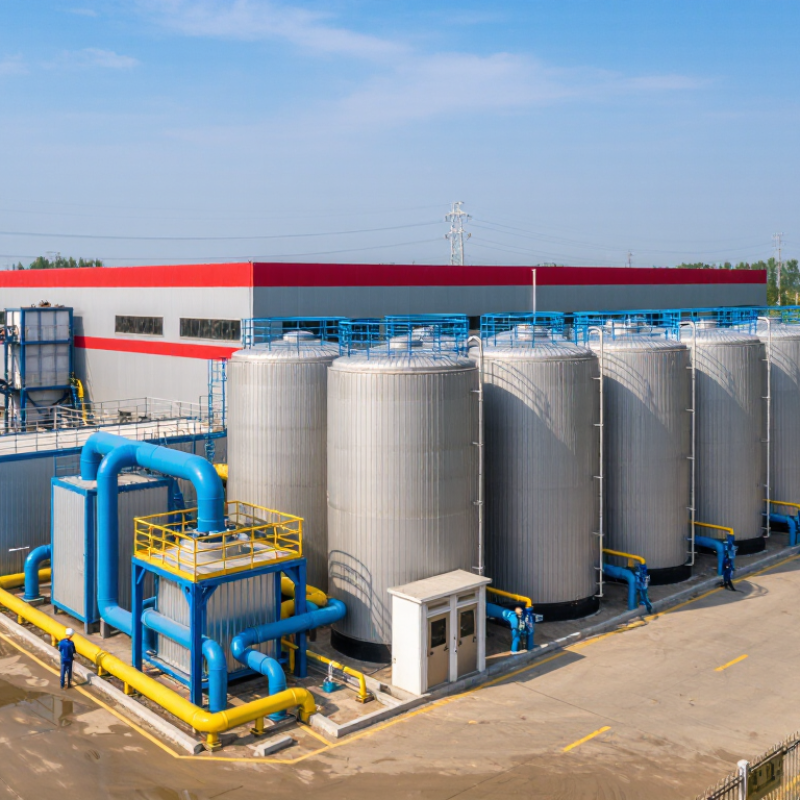
Biogas Treatment Engineering in China: Industry Scope and Key Processes
China’s Biogas Treatment Engineering spans feedstock preparation, anaerobic digestion, gas cleaning, storage, and end use. Projects commonly process livestock manure, crop residues, and organic wastewater. The engineering challenge is not only producing gas. Feedstock moisture, seasonal supply, and temperature swings can disrupt stable digestion. A wet digester needs reliable mixing and heat control; raw gas also requires moisture and hydrogen sulfide removal before use.
The International Energy Agency’s Outlook for Biogas and Biomethane reported global biogas production of about 1.3 exajoules in 2018, showing the scale of an established energy pathway. This is a global figure, not a China-only estimate. In China, the National Development and Reform Commission’s 14th Five-Year Plan for Renewable Energy Development identifies biogas as part of renewable energy development, while practical project design still depends on local feedstock and grid or heat demand. Gas quality monitoring, corrosion-resistant piping, and digestate management are essential. Small details matter. A blocked condensate drain can undermine otherwise sound treatment equipment. Some project assumptions also deserve rechecking: continuous, uniform feedstock is rarely guaranteed in the field.
China Top 10 Biogas Treatment Engineering Suppliers - Biogas Treatment Engineering in China: Industry Scope and Key Processes
Scope note: The ten entries below describe common engineering capability areas in China’s biogas treatment sector, not a verified ranking of companies. Suppliers may provide several of these services. Process selection and performance depend on feedstock, gas composition, site conditions, and applicable project standards.
| No. | Engineering Capability Area | Typical Feed or Input | Key Processes and Equipment | Typical Engineering Scope | Key Design Considerations |
|---|---|---|---|---|---|
| 1 | Anaerobic digestion systems | Livestock manure, food-processing residues, organic municipal waste, or wastewater sludge | Feed preparation, anaerobic reactors, mixing, heating, gas collection, and digestate handling | Digester process design, tank and equipment integration, instrumentation, commissioning, and operating support | Feedstock composition, solids content, temperature regime, retention time, loading rate, and digestate outlet requirements |
| 2 | Feedstock receiving and pretreatment | Organic wastes containing solids, packaging, grit, or variable particle sizes | Screening, size reduction, grit removal, blending, homogenization, and, where appropriate, hygienization | Receiving stations, pumps, conveyors, pretreatment equipment, odor control, and process controls | Contaminant levels, material handling, corrosion, cleaning access, and compatibility with the digester process |
| 3 | Biological desulfurization | Raw biogas containing hydrogen sulfide (H₂S) | Biological oxidation using controlled oxygen or air addition, commonly in a digester headspace or a separate treatment vessel | Biological treatment equipment, gas-flow and oxygen controls, monitoring, and downstream protection | H₂S concentration, oxygen control, moisture, gas safety, and protection of engines or upgrading equipment |
| 4 | Media-based desulfurization | Raw or partly treated biogas requiring H₂S reduction | Iron-based media, activated carbon, or other suitable adsorbents in fixed-bed vessels | Vessel sizing, media selection, change-out arrangements, bypasses, and H₂S monitoring | Inlet H₂S and flow, media service life, pressure drop, spent-media handling, and required outlet quality |
| 5 | Biogas drying and condensate management | Moist biogas from digesters or gas-treatment stages | Cooling and condensation, condensate traps, demisters, and, where required, further drying | Gas coolers, condensate drainage, piping, insulation, and moisture monitoring | Gas temperature, pressure, water-vapor load, freeze protection, and prevention of liquid carryover |
| 6 | Water-scrubbing upgrading | Pretreated biogas containing methane and carbon dioxide | Pressurized absorption of carbon dioxide in water, followed by water regeneration and gas conditioning | Absorption and regeneration equipment, pumps, water circuits, controls, and product-gas handling | Feed-gas pretreatment, water use and recycle, methane slip, energy demand, and product-gas specification |
| 7 | Pressure swing adsorption (PSA) upgrading | Dry, suitably pretreated biogas | Adsorption beds operated through pressure cycles to separate carbon dioxide and other adsorbable components from methane | Adsorber vessels, valves, cycle controls, off-gas management, and product-gas monitoring | Feed composition, pretreatment requirements, operating pressure, methane recovery, and off-gas handling |
| 8 | Membrane upgrading | Filtered and conditioned biogas | One or more membrane separation stages that preferentially permeate carbon dioxide and certain minor components | Compression, filtration, membrane modules, recycle or staging, controls, and product-gas conditioning | Feed-gas quality, pressure, membrane configuration, methane recovery, replacement planning, and permeate management |
| 9 | Gas compression, storage, and safety systems | Treated biogas or upgraded biomethane, depending on the project | Blowers or compressors, gas holders, pressure regulation, isolation, flame arresting, and gas detection | Gas transfer equipment, storage integration, safety instrumentation, emergency shutdowns, and interconnecting pipework | Gas pressure and flow, hazardous-area classification, ventilation, leak detection, and local safety requirements |
| 10 | Biogas utilization and plant integration | Treated biogas for on-site energy use, or upgraded gas for an approved downstream application | Combined heat and power (CHP), boilers, flares, heat recovery, metering, and plant-wide control systems | Equipment selection, electrical and heat integration, flare provision, automation, commissioning, and operator training | Gas quantity and quality, heat and power demand, grid or pipeline requirements where applicable, emissions rules, and backup operation |
Let's Build Together


Contact Us: Call 435-563-3503
-OR- Fill in the form below and we will call you back.