
Top 10 Ascophyllum Nodosum Agriculture Suppliers in China

Seaweed-based crop inputs are gaining attention as growers seek practical ways to support nutrient efficiency and plant resilience. FAO’s The State of World Fisheries and Aquaculture 2024 reports that global algae production reached about 37.8 million tonnes in 2022. This figure covers many algae types and uses; it does not measure Ascophyllum nodosum supply specifically. That distinction matters.

DunhamTrimmer’s 2023 Global Biostimulant Market Report estimated worldwide biostimulant sales at roughly US$3.3 billion in 2022. Such estimates indicate a growing commercial category, not guaranteed results in every field. In Ascophyllum Nodosum Agriculture, product quality depends on more than a label: buyers should examine species identification, extraction methods, composition data, batch consistency, and crop-specific evidence. A clear technical sheet helps. So does a traceable production record.

China’s supplier landscape includes manufacturers and exporters with different product formats, testing practices, and service capabilities. The following Top 10 list is intended as a practical starting point, not an endorsement or a substitute for supplier due diligence. Ask for recent certificates of analysis, review trial methods, and confirm that claims match the evidence provided. Even then, comparisons can be imperfect: testing protocols and product concentrations are not always presented consistently. A careful shortlist is useful, but the final choice should reflect the crop, application method, and local growing conditions.
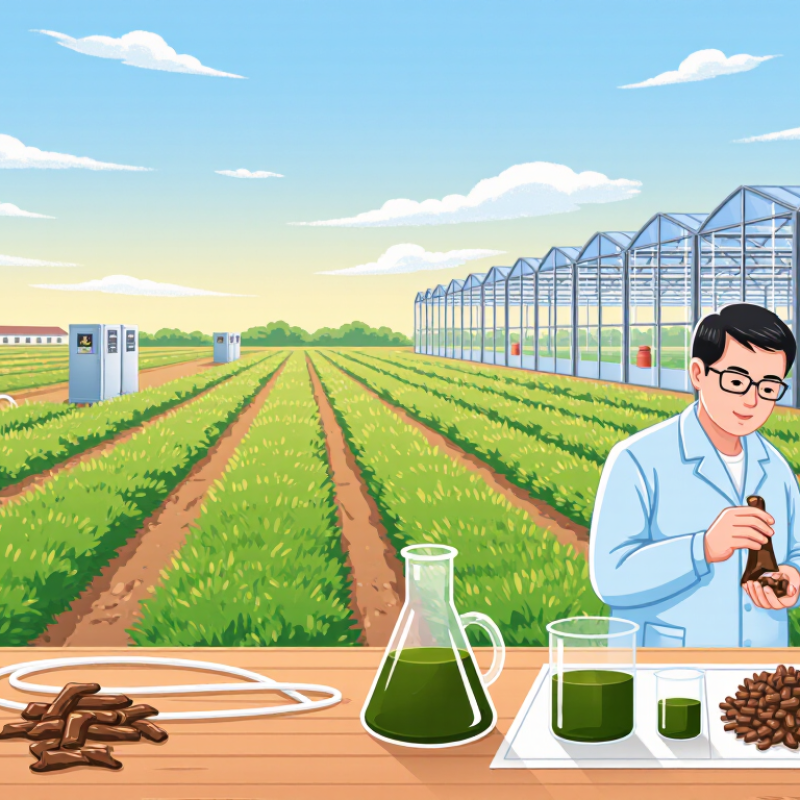
Top 10 Ascophyllum Nodosum Agriculture Suppliers in China

Ascophyllum nodosum: Harvested Seaweed, Key Compounds, and Agricultural Uses

Ascophyllum nodosum is a brown seaweed found along the cool North Atlantic coast, where tides expose it on rocky shores. Harvesting methods matter. Cutting selected fronds while leaving attachment points can support regrowth, though recovery depends on local conditions and harvest pressure. Responsible suppliers should be able to explain where the seaweed comes from and how it is collected.

Its composition includes alginates, mannitol, laminarin, minerals, and small amounts of other naturally occurring compounds. Levels vary with season, location, and processing. That variation matters: two extracts made from the same species may not perform identically. Processing temperature and extraction method can also affect which compounds remain in the final product.

In agriculture, seaweed extracts are commonly used as biostimulants, applied to leaves or soil to support plant growth and responses to stress. They are not a substitute for balanced nutrition, irrigation, or sound crop management. A grower might compare treated and untreated rows, recording application rates, weather, and crop stage. Results can be modest, and field evidence is not uniform. That uncertainty deserves attention, not a sales promise. Testing a small area first helps farmers judge whether an extract suits their crop and conditions.

Agricultural Uses of Ascophyllum nodosum Extracts

Ascophyllum nodosum extracts are used in agriculture as biostimulants, including for foliar application, seed treatment, and soil or root-zone application. Each bar marks a reported application route; it does not represent market share, frequency, or measured efficacy. These extracts complement rather than replace balanced crop nutrition.

How Seaweed Extracts Are Made: Extraction Methods and Quality Indicators

Ascophyllum nodosum extracts are made by turning washed seaweed into a liquid or soluble powder. Processing choices matter: they affect which compounds remain and how consistently the product performs. The seaweed is usually cleaned, dried, and milled before extraction. Water-based methods use controlled heat to release soluble compounds. Alkaline extraction can improve solubility, while enzyme-assisted methods use specific enzymes to break down cell structures. Each route leaves a different chemical profile.

Heat, pH, and extraction time need careful control. Excessive heat may damage sensitive compounds; strong alkalinity can alter others. No single method is best for every purpose. A clear process record helps buyers compare batches, though it does not guarantee field results. That distinction is easy to overlook.

Useful quality indicators include soluble solids, pH, electrical conductivity, and measured levels of compounds such as alginates, mannitol, or laminarin. Results should be interpreted alongside the extraction method, since test values can vary with processing and laboratory procedures. Reliable suppliers can provide batch-specific certificates of analysis, test methods, and checks for heavy metals and microbial contamination. Color and smell are worth noting, but they are not proof of quality. Details matter. A neat specification sheet can still leave questions about consistency, so comparing repeat batches is a sensible step.

Top 10 Ascophyllum Nodosum Agriculture Suppliers in China

China’s top 10 Ascophyllum nodosum agriculture suppliers are best compared by product evidence, not broad promises. Ask where the seaweed is harvested and how each batch is processed. Details matter. Extraction temperature and filtration can affect solubility and the range of naturally occurring compounds retained. Request a recent certificate of analysis, with test methods and batch identification, rather than relying on a general product sheet. A dependable supplier should explain recommended dilution, storage conditions, and compatibility with common fertilizers.

Practical experience also matters. Compare samples in a small field trial, using the same crop, application rate, and irrigation schedule. Record leaf color, root growth, and yield, while keeping untreated plots for comparison. Results vary with soil, weather, and crop stage. A low price may look convincing, but concentration and consistency deserve equal attention; buyers can overlook this when comparing only cost per kilogram. Ask how the supplier handles batch variation and technical questions. Clear answers are useful. If evidence is incomplete, note the gap and test cautiously before making a larger purchase.

Compare Suppliers by Extract Concentration, Product Form, Capacity, and Certifications

Comparing China’s Ascophyllum nodosum suppliers requires more than checking the headline extract percentage. Ask for a batch-specific certificate of analysis showing extraction ratio, soluble solids, moisture, and key compounds such as alginate or mannitol. These figures describe different things; a higher solids value does not automatically mean better field performance. Request a small trial sample and test it in the intended crop and application system. That step is easy to skip.

Product form affects handling. Liquid extracts can simplify fertigation, while powders may reduce shipping weight but need careful checks for solubility and sediment. Compare annual capacity with actual production records, not just stated maximum output. Also check whether the supplier can provide consistent batch traceability and certificates relevant to your market, such as ISO 9001 or ISO 22000. Certification scope matters.

FAO’s The State of World Fisheries and Aquaculture 2024 reports 37.8 million tonnes of aquatic algae production in 2022. That figure covers many algae, not Ascophyllum nodosum alone, so it is useful as sector context—not proof of a supplier’s raw-material access. Ask where the seaweed is harvested, how it is processed, and how seasonal variation is controlled. In practice, documentation can look complete while a few details remain unclear. Check those details before comparing prices.

How to Evaluate Field-Trial Data, Application Rates, and Crop Responses

For a “Top 10 Ascophyllum Nodosum Agriculture Suppliers in China” comparison, judge evidence before promises. FAO’s 2024 State of World Fisheries and Aquaculture reports 37.8 million tonnes of aquatic algae production in 2022. That scale shows a mature seaweed supply sector, not proven crop benefits. Ask suppliers for trial reports that name the crop, location, season, untreated control, and application method. Look for replicated plots and results from more than one site. A single greenhouse result is not enough.

Check rates in the product’s stated concentration and application volume. Compare treatments at equal nutrient inputs, then record spray timing, crop stage, rainfall, and irrigation. Measure harvest yield and quality, not just leaf color or root appearance. Responses can vary with soil, weather, and crop stress. One awkward reality: a yield increase in one season may vanish in another. Treat broad claims cautiously, especially when the report omits controls or raw data.

Tips: Request dose-response results and the full trial protocol. Compare low, label-rate, and higher treatments; never assume more extract means better results. Keep notes on visible crop changes, but weigh them against harvest measurements.

Top 10 Ascophyllum Nodosum Agriculture Suppliers in China - How to Evaluate Field-Trial Data, Application Rates, and Crop Responses

Supplier-neutral comparison framework. The entries below are evaluation criteria, not supplier rankings or claims about individual companies. Confirm product-specific directions and trial records directly with each supplier.

No. Evaluation dimension Evidence to request How to assess it
1 Product identity and composition Product specification, ingredient declaration, extraction description, and batch-specific certificate of analysis. Check that the material is identified as an Ascophyllum nodosum-derived product. Compare declared constituents and analytical methods; do not treat different extracts as interchangeable.
2 Quality control and consistency Recent batch records, test methods, storage conditions, shelf life, and applicable contaminant or safety test results. Look for defined specifications and repeatable testing across batches. Verify that test results identify the batch and laboratory or method used.
3 Trial design A complete protocol stating crop, site, season, plot layout, treatments, untreated or standard-practice control, and number of replicates. Prefer replicated, comparable treatments with clearly described controls. A demonstration plot without a suitable control provides limited evidence of product effect.
4 Field and crop context Crop and variety, location, soil or growing-medium information, weather, irrigation, and relevant baseline conditions. Check whether the trial context resembles the intended farm conditions. Results from one crop, region, or season should not automatically be generalized to others.
5 Application rate and method Exact dose, product concentration, dilution, application volume, route (such as foliar or soil application), and number of applications. Compare rates only when product formulation and application method are clear. There is no single rate that applies to all seaweed extracts and crops; follow the product label and local requirements.
6 Timing and treatment schedule Crop growth stage, dates or intervals, timing relative to stress or key development stages, and any tank-mix details. A result is more useful when the timing can be reproduced. Check whether other inputs or management changes differed between treated and control plots.
7 Measured crop responses Predefined outcomes such as marketable yield, quality grade, biomass, or relevant crop-specific measurements, with measurement methods. Give greatest weight to outcomes relevant to the farm’s production goals. Separate measured results from promotional descriptions or visual observations alone.
8 Data analysis and uncertainty Plot-level data, treatment averages, variation, statistical method, and any reported confidence intervals or significance tests. Check sample size and variability, not just percentage change. A numerical difference alone does not establish a reliable or repeatable treatment effect.
9 Repeatability across trials Results from more than one site, season, or independently managed trial, including trials with neutral or negative responses. Consistent evidence across relevant conditions is more informative than a single favorable result. Ask how trial selection and unsuccessful outcomes were handled.
10 Practical fit and economics Cost per treated area at the proposed rate, compatibility guidance, handling instructions, and local technical support arrangements. Estimate cost using the tested rate and actual farm application plan. Consider labor, equipment, compatibility, and the value of measured crop outcomes.

Let's Build Together

Contact Us: Call 435-563-3503

-OR-  Fill in the form below and we will call you back.

Copyright © 2025CNC Fabrication. All Rights Reserved.