10 Tips for Buying Sandstone Stone for Global Projects?

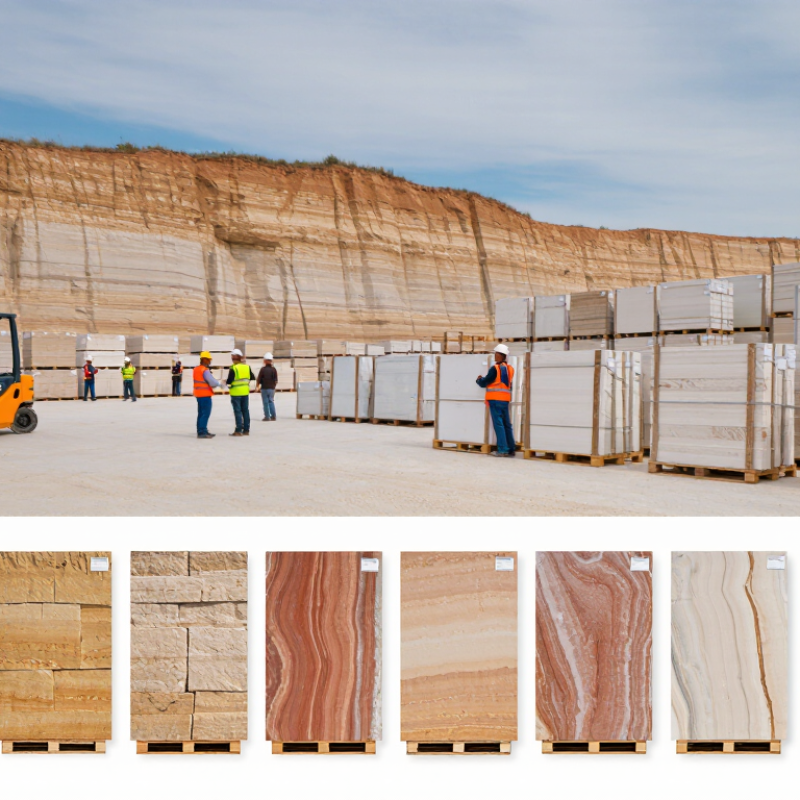
Buying Sandstone Stone for a global project involves more than choosing an attractive color. Each slab carries a geological history, from desert dunes to coastal deposits. That history affects strength, porosity, texture, and long-term performance. A warm golden surface may look perfect in a showroom, yet behave poorly under constant rain or freezing temperatures.

Dr. Robert L. Folk, a respected sedimentary petrologist, described sandstone as “a rock composed of sand-sized grains.” This simple definition matters. Grain size, cement type, bedding, and mineral content can change how the stone absorbs water, resists abrasion, and responds to cleaning. Buyers should request quarry details, technical data, recent test reports, and physical samples. Do not rely on photographs alone. Digital colors can mislead.

A reliable purchasing process also examines block consistency, finish quality, packaging, shipping routes, and replacement availability. Ask whether the proposed material suits façades, paving, walls, interiors, or wet areas. The answer may differ by project zone. Check slip resistance and water absorption for demanding applications. Confirm tolerances before production begins.

Experience teaches an uncomfortable lesson: the cheapest quotation can become the most expensive decision. A lower price may hide unstable supply, excessive waste, weak packaging, or mismatched batches. Even careful teams make mistakes. I would recheck every assumption before approving a large order. This guide presents ten practical tips for evaluating Sandstone Stone with clearer judgment, stronger documentation, and fewer costly surprises across international projects.
10 Tips for Buying Sandstone Stone for Global Projects?

Define Project Requirements and Sandstone Performance Criteria

Before buying sandstone for a global project, define its job at the site. A coastal hotel needs different performance than an inland interior wall. Record location, climate, traffic, fixing method, and expected service life. Include dimensions, finish, color range, allowable variation, and delivery sequence. These details turn a visual preference into measurable purchasing criteria. Do not rely on photographs alone.

Specify water absorption, density, compressive strength, flexural strength, abrasion resistance, and freeze-thaw behavior. For exterior paving, abrasion and slip resistance may matter more than color consistency. In cold regions, repeated saturation and freezing can expose weak bedding planes. In wet climates, absorption affects staining, anchoring, and long-term maintenance. Request independent test reports using recognized standards, with sample identification and test dates. Ask for quarry samples, not only polished showroom pieces. Small samples can hide natural variation.

A qualified stone consultant should compare laboratory data with actual site exposure. Mock-ups reveal shade changes, joint appearance, edge quality, and installation risks. Keep a retained reference panel for future inspections. Allow realistic tolerances; demanding perfect uniformity can create waste and disputes. I have seen attractive stone fail when drainage and anchoring were treated as afterthoughts. That mistake is easy to repeat. Recheck assumptions when the design changes, especially thickness or surface finish. Clear criteria protect budgets, safety, and the intended appearance across borders.

Evaluate Sandstone Types, Grades, Colors, and Surface Finishes

Sandstone is not one uniform material. Quartz arenite, arkose, and lithic sandstone contain different mineral mixes, affecting strength, absorption, and weathering. For global projects, request the geological description, quarry location, and recent test reports. Independent laboratory results are more dependable than a sales sample. Do not trust color alone. Two slabs from one quarry may show noticeable differences in grain, veining, and tone.

Grade should match the building’s exposure and use. Check water absorption, compressive strength, flexural strength, abrasion resistance, and freeze-thaw performance. A dense grade may suit a busy plaza, while a softer stone could work better for sheltered interior walls. Compare test methods carefully, because regional standards may use different procedures. Bedding direction also matters. Cutting across natural layers can improve durability, but careless installation may increase cracking. Small details become expensive later.

Color changes under rain, dust, and strong sunlight. Approve a full-size mock-up, not only a small polished tile. Examine it when dry and wet. Surface finishes create different maintenance needs. Sawn surfaces show natural texture, honed finishes feel smoother, and brushed or sandblasted finishes can improve visual depth. Textured stone may support slip resistance, but it still requires project-specific testing. A highly refined finish can disappoint outdoors. Recheck samples after cleaning and weather exposure. Leave room for doubt.

10 Tips for Buying Sandstone Stone for Global Projects

Evaluate sandstone types, grades, colors, and surface finishes before approving samples or placing an international order.

Chart: Indicative quartz content by common sandstone type. Quartz arenite generally offers the highest quartz content and strong weathering resistance, while arkose, litharenite, graywacke, and calcarenite contain higher proportions of feldspar, rock fragments, clay matrix, or carbonate grains. Actual values vary by quarry and should be confirmed through laboratory testing.

For global projects, compare petrographic composition, water absorption, compressive strength, color consistency, freeze-thaw performance, and the suitability of finishes such as natural split, honed, brushed, flamed, or sandblasted surfaces. Always approve a physical sample and project-specific test report before production.

Verify Supplier Credentials, Quarry Sources, and Product Consistency

For global sandstone projects, supplier credentials deserve more than a polished website. The U.S. Geological Survey’s Mineral Commodity Summaries 2024 valued U.S. dimension-stone imports at roughly $2.3 billion in 2023. That scale creates room for inconsistent documentation. Request company registration, quarry ownership records, export history, insurance, and recent project references. Confirm that the legal supplier matches the quarry operator.

Trace the stone to its source. Ask for quarry coordinates, extraction permits, geological descriptions, and current production photographs. A broker may provide attractive samples but lack control over future batches. I have seen small color changes become major façade problems. It happens.

Require samples from several production blocks, not one carefully selected slab. Compare color, grain, bedding direction, thickness, moisture behavior, and edge defects. Test representative samples through an independent laboratory. ASTM C97 covers absorption and bulk density, while ASTM C170 evaluates compressive strength. ASTM C616 also helps classify sandstone. Match test results with the project’s climate and installation method. The Natural Stone Institute’s technical guidance emphasizes that quarry variation can affect performance and appearance, so approval samples should include acceptable variation limits. Record batch numbers, quarry dates, test results, and container photographs. Recheck them before shipping. Paperwork can still be wrong.

10 Tips for Buying Sandstone Stone for Global Projects? - Verify Supplier Credentials, Quarry Sources, and Product Consistency

No. Buying Dimension What to Verify Useful Evidence or Test Practical Acceptance Point Common Risk to Avoid
1 Supplier Credentials Confirm legal registration, export experience, quality procedures, production capacity, and references for projects with similar volumes. Business registration documents, trade references, factory or quarry audit, and recent project records. Documents should be current, consistent, and independently verifiable. Unverifiable certificates, unclear ownership, or no evidence of comparable deliveries.
2 Quarry Source Identify the exact quarry, geological formation, available reserve, extraction method, and distance to the processing facility. Quarry location, extraction permit, source photos, geological description, and production visit. The quoted material should come from the same declared source throughout the project. Substituting blocks from different quarries without written approval can change color and performance.
3 Petrographic Composition Check grain size, cement type, mineral content, bedding, laminations, and visible clay or iron-rich zones. Petrographic examination by a qualified laboratory and representative quarry samples. The petrographic profile should match the intended indoor or outdoor application. Weak bedding planes, swelling clay, or high iron content may increase durability and staining concerns.
4 Dimensional Tolerances Define permitted variation in length, width, thickness, squareness, flatness, and edge condition before production. Inspection plan, calibrated measuring tools, approved shop drawings, and pre-shipment dimensional reports. Use project specifications or the applicable stone standard; do not rely on “standard tolerance” alone. Inconsistent thickness may create installation delays, excessive adhesive use, or uneven façades.
5 Physical Performance Evaluate water absorption, apparent density, compressive strength, flexural strength, and abrasion resistance for the planned use. Independent laboratory test reports using recognized ASTM, EN, or equivalent methods. Set project-specific limits based on climate, traffic, thickness, fixing method, and structural design. A test result without the method, specimen direction, age, or sample identification is incomplete.
6 Freeze–Thaw and Weathering Assess suitability for repeated freezing, wetting, salt exposure, strong sunlight, and temperature changes. Freeze–thaw cycling, salt crystallization, and wet–dry durability tests where the climate requires them. Require performance data that reflects the actual installation environment, not only a general product datasheet. High porosity and poorly bonded grains can lead to scaling, cracking, or surface loss outdoors.
7 Color and Pattern Consistency Review background color, veining, fossil marks, natural holes, surface texture, and acceptable variation across batches. Large representative mock-up, dry-lay review, batch photographs, and approved control samples. Approve a range of natural variation rather than a single small sample. Small samples may hide batch variation, shade changes, or differences between quarry benches.
8 Surface Finish and Treatment Specify sawn, honed, brushed, sandblasted, tumbled, or other finishes, including sealers and edge profiles. Approved finish sample, slip-resistance data where relevant, sealer compatibility test, and maintenance instructions. The finished surface should meet appearance, traction, cleaning, and slip-resistance requirements. Unapproved coatings can darken sandstone, trap moisture, or reduce repairability.
9 Packing and International Shipping Check crate design, moisture protection, labeling, pallet weight, container loading, documentation, and Incoterms. Packing list, loading photographs, crate inspection, shipping marks, and agreed damage-claim procedure. Each crate should be traceable to a batch, quantity, size, finish, and inspection record. Insufficient bracing, mixed batches, and unclear responsibility for transit damage create costly disputes.
10 Pre-Shipment Quality Control Confirm inspection frequency, sampling method, defect classification, corrective action, and final approval responsibility. Third-party inspection, batch-based checklist, nonconformance report, and retained reference samples. Release shipment only after dimensions, finish, appearance, quantity, and packing meet the purchase specification. Relying only on visual inspection can miss absorption, strength, thickness, and long-term durability issues.
Recommended purchasing record: Keep the approved quarry description, control sample, technical specification, laboratory reports, inspection records, packing list, and batch photographs together for every shipment.

Compare Pricing, Shipping Terms, Packaging, and Import Requirements

Buying sandstone for an international project requires more than comparing the quarry price. Request at least three written quotations with grade, finish, thickness, tolerances, and available quantities. A low price may hide cutting losses, inspection charges, or replacement risk. Ask for recent test results covering water absorption, compressive strength, and slip resistance. Color variation matters. Approve a physical sample before production.

Calculate the landed cost, not only the invoice value. Include inland transport, ocean freight, insurance, port handling, customs duty, broker fees, and destination delivery. UNCTAD’s Review of Maritime Transport 2024 states that shipping carries over 80% of global merchandise trade by volume, so freight volatility can change a project budget quickly. Compare FOB, CIF, and DAP terms under ICC Incoterms 2020. Confirm who pays demurrage and who bears damage risk.

Packaging deserves a separate inspection. Use strong crates, corner protection, moisture barriers, and clear piece numbers. Wood packaging may require treatment and marking under IPPC ISPM 15. Poor packing can turn beautiful slabs into expensive fragments. It happens. Check the destination’s HS classification, import permits, labeling rules, and required certificates before ordering. The World Bank’s Logistics Performance Index 2023 evaluates customs and infrastructure across 139 economies, showing why border performance differs sharply. A spreadsheet can still miss local port charges. Leave a contingency allowance, and obtain written confirmation from a customs broker.

Inspect Samples, Confirm Quality Standards, and Finalize the Purchase

When buying sandstone for a global project, begin with physical samples, not catalog images. Request several pieces from the intended quarry face and production batch. Inspect grain size, color variation, bedding lines, edge integrity, and surface finish under natural light. Wet one sample to see how the tone changes. Samples can mislead. Large slabs may reveal veins, open pores, or weaker layers hidden in a small tile. Record dimensions and photograph each piece beside a ruler.

Ask for recent test reports from an independent laboratory. Check water absorption, density, compressive strength, flexural strength, abrasion resistance, and freeze-thaw performance. Match every result to the project’s climate and use, especially exterior paving or heavy-traffic areas. Confirm the testing method and standard version, such as applicable ASTM, EN, or local requirements. Passed is not enough. Testing documents may omit sample orientation or curing conditions. That gap deserves questions. Request written details covering tolerances, shade range, repair limits, packaging, and replacement procedures.

Before paying a deposit, approve a signed reference sample and inspection plan. Define acceptable color limits, thickness variation, chipped corners, resin repairs, and moisture marks. Order extra material for future repairs, based on measured waste rather than guesses. Review loading photos, pallet labels, container protection, and delivery terms. Keep an independent pre-shipment inspection when possible. It costs money. Delayed stone costs more. If a supplier resists simple evidence, pause the purchase and reassess the risk.

Let's Build Together

Contact Us: Call 435-563-3503

-OR-  Fill in the form below and we will call you back.

Copyright © 2025CNC Fabrication. All Rights Reserved.