What Is a Laser Tube Cutter and How Does It Work?
A Laser Tube Cutter uses a focused beam to cut profiles in round, square, and rectangular metal tubing. It combines a laser source, CNC controls, a cutting head, and a chuck or rotary system that turns and positions the tube. The beam heats a small area, while assist gas clears molten material from the cut. The result can be a clean edge, though settings and material condition matter.
The market context is growing. Grand View Research estimated the global laser cutting machine market at USD 5.3 billion in 2023 and projected a 7.7% compound annual growth rate from 2024 to 2030. These figures cover laser cutting machines broadly, not tube cutters alone, so they should not be read as a tube-cutter forecast. Still, they point to wider investment in laser-based manufacturing. It is not magic. A tube cutter’s practical value depends on factors such as wall thickness, material type, production volume, and setup accuracy. Even a small alignment error can affect a long cut. This guide explains how the machine works, what happens during cutting, and where its capabilities—and limitations—fit into real production. The details matter.
What Defines a Laser Tube Cutter?
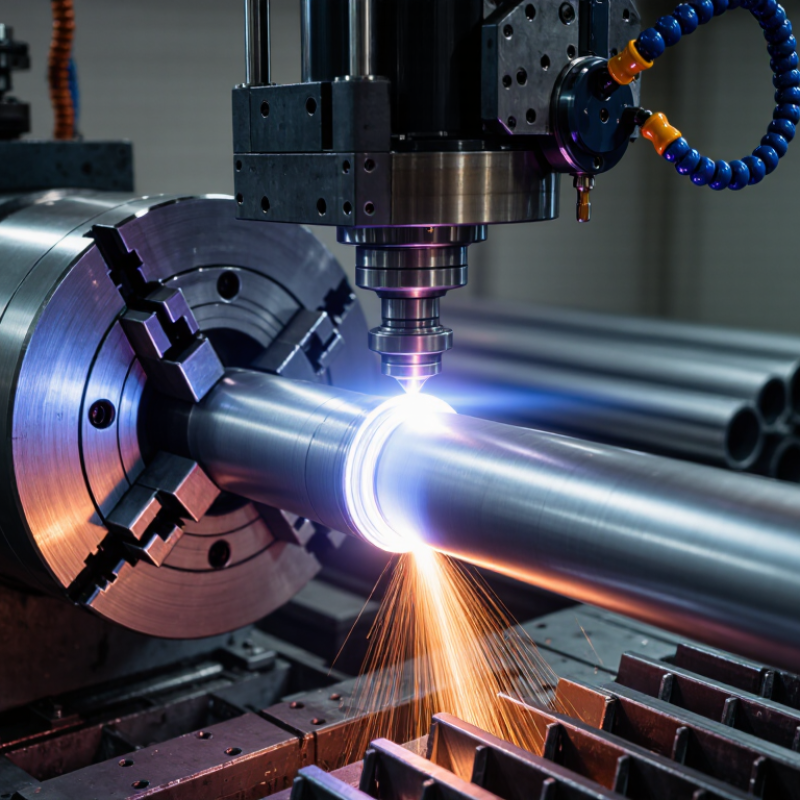
A laser tube cutter is a CNC machine designed to cut hollow, elongated metal workpieces, including round, square, and rectangular tubing. Unlike a flat-bed cutter, it uses chucks to grip and rotate the tube while a laser head moves along its length. The beam melts or vaporizes a narrow path; assist gas clears the molten material. That is the core distinction. The machine coordinates rotation, feed, and laser output to produce features such as slots, holes, and angled ends without repositioning the tube by hand.
Its defining parts are the laser source, cutting head, rotary chuck system, motion controls, and material supports. Some machines add automatic loading or bevel cutting, but those options are not essential to the definition. The label can be a little loose: systems may also process open profiles, and their limits vary with tube size, wall thickness, and material. A precise drawing does not guarantee a clean cut. Focus, gas pressure, and heat can still leave burrs or distortion.
Market reports show why the category matters, though they do not define machine capability. Fortune Business Insights’ 2024 Laser Cutting Machine Market report valued the global market at US$5.21 billion in 2023. That figure covers laser cutting machines broadly, not tube cutters alone. For buyers, the practical test is whether the machine can hold and rotate the intended workpiece accurately, then repeat the cut across a production run. A small test piece often reveals more than a specification sheet.
Which Components Make Up a Laser Tube Cutter?
A laser tube cutter combines a laser source, beam-delivery optics, a cutting head, a rotary chuck, and a CNC controller. The laser source creates a concentrated beam, while mirrors or fiber-optic delivery guide it toward the cutting head. Inside the head, a focusing lens compresses the beam onto the tube wall. Assist gas then clears molten material from the cut. The effect is a narrow kerf and a bright, brief flash.
The chuck grips the tube and rotates it as the cutting head moves along the machine’s axes. This synchronized motion lets the system cut slots, holes, and angled ends around the tube’s surface. The CNC controller translates a digital part design into coordinated movements. A rigid frame limits vibration; a chiller helps control heat, and an extraction system removes smoke. The enclosure matters, too. It helps contain laser radiation and flying debris. Small setup errors can still spoil a cut.
Grand View Research’s 2024 laser-cutting-machine market report estimated a global market value of USD 5.26 billion in 2023 and forecast 7.3% annual growth from 2024 to 2030. That figure signals industrial demand, not guaranteed machine performance. Tube diameter, wall thickness, material, and alignment all affect results. Even a good lens needs cleaning.
How Does the Tube Cutting Process Work?
A tube cutting job begins with a drawing that defines the tube’s length, profile, and cut features. The operator checks the material type, outside diameter, and wall thickness before setting the program. These details affect focus, power, speed, and assist-gas settings. Small errors here can shift holes or leave rough edges.
The tube is loaded into a chuck and supported to limit movement. The machine aligns it, then feeds it through the cutting area. Depending on the design, the tube rotates, the laser head moves, or both happen together. The laser pierces the wall and follows programmed paths, while assist gas clears molten material from the cut. For openings on several sides, the system indexes the tube between cuts. It looks simple on screen. Setup rarely is.
After cutting, short offcuts are removed and the parts are checked for length, hole position, and burrs. A sample measurement can catch problems before a full batch runs. Even a smooth-looking edge may hide a slight taper or heat mark, especially on thin walls. Operators may need to adjust support, focus, or speed and test again. That extra check can feel slow, but it prevents small setup issues from repeating across many parts.
What Factors Affect Cutting Accuracy and Quality?
A laser tube cutter rotates and feeds a hollow section through a focused beam. Its accuracy depends on more than the laser itself. Small errors add up.
Tube condition is a major factor. A slightly oval tube or a bent length can shift as it rotates, changing the distance between the surface and the cutting head. Chuck alignment and clamping pressure matter too. If the tube slips, holes may land off-center or fail to line up at a joint. Support rollers help limit sag, especially on long, thin-walled sections.
Cutting settings shape the edge. The focal position, nozzle distance, laser power, and travel speed must suit the material and wall thickness. Too much heat can widen the kerf or leave a rough, discolored edge; too little may leave uncut spots. Assist-gas flow also affects how cleanly molten material leaves the cut. A practical check is to cut a short sample, then measure key features and inspect for burrs, taper, or dross. Not every tube behaves exactly as expected, even with unchanged settings. Small shifts in material, setup, or machine calibration can require a fresh adjustment.
Where Are Laser Tube Cutters Commonly Used?
Laser tube cutters are used wherever hollow profiles need accurate holes, slots, or angled ends. A rotating chuck holds the tube while a focused beam cuts its surface. This avoids many manual drilling and trimming steps. The cut edge still needs inspection.
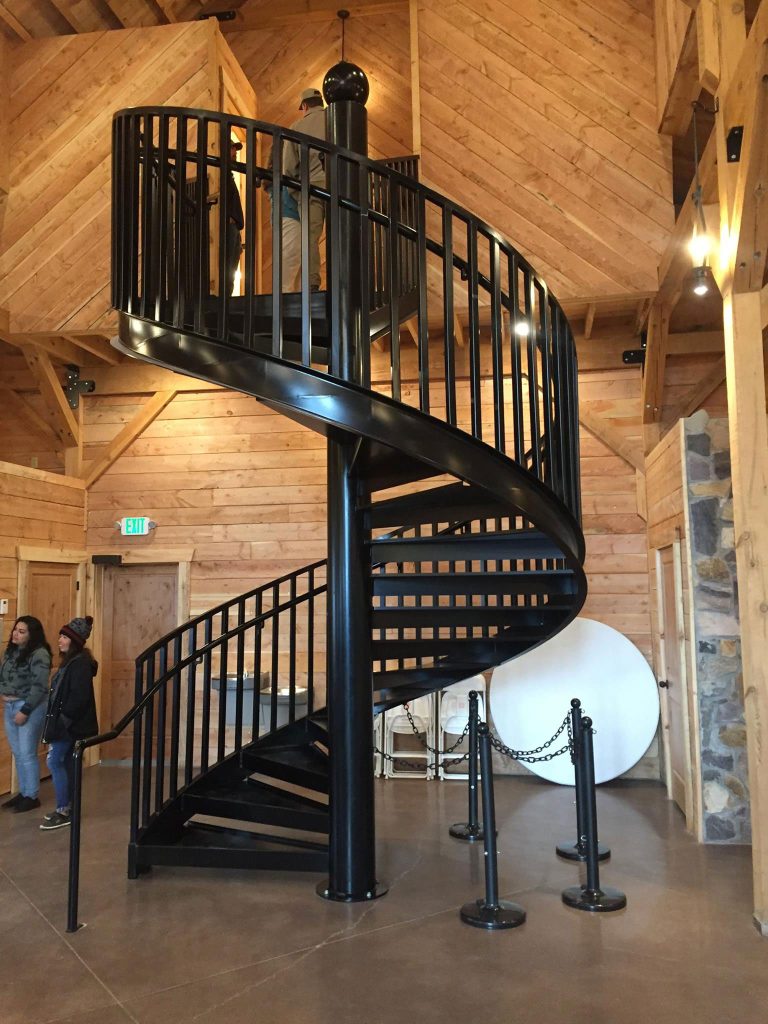
Building and infrastructure work is a major application. World Steel Association’s World Steel in Figures 2024 attributes about 52% of global steel use to construction. Tube-cut parts appear in handrails, roof frames, scaffolding, and greenhouse structures. Mechanical equipment accounts for another 16%, supporting demand for machine frames, conveyor components, and equipment guards. The fit matters. Poorly aligned holes can complicate assembly.
Automotive manufacturers use cut tubes in seat frames, chassis structures, and exhaust components. OICA reported 93.5 million motor vehicles produced worldwide in 2023, indicating the scale of this manufacturing sector. Tube cutting also serves furniture, fitness equipment, and agricultural machinery makers, where repeated frame parts benefit from consistent cuts. That is not automatic. Material thickness, tube shape, and heat distortion can affect precision, so operators still check samples and adjust cutting parameters.