What Is a Fresh Air Fan and How Does It Work?
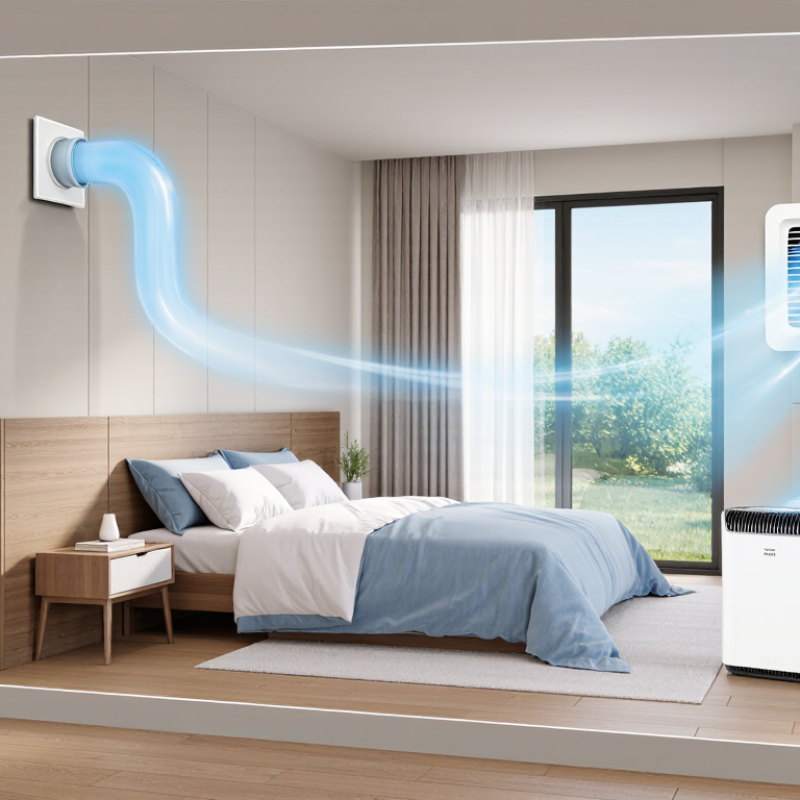
A Fresh Air Fan brings outdoor air into a building and helps move stale indoor air toward exhaust outlets. Picture a filtered stream entering through a wall grille, then traveling through a duct into a bedroom or living space. The exact setup varies: some fans supply air directly, while others work with exhaust fans or heat-recovery equipment. Its purpose is ventilation, not simply stronger airflow.
The need is practical. The U.S. Environmental Protection Agency’s Introduction to Indoor Air Quality notes that indoor pollutant levels can sometimes be two to five times outdoor levels, and occasionally much higher. That range depends on the pollutant and the building; it is not a promise that ventilation alone will solve every air-quality problem. ASHRAE Standard 62.2-2022 sets residential ventilation requirements and related measures for acceptable indoor air quality. Building scientist Joseph G. Allen, coauthor of Healthy Buildings, has said, “The air we breathe is the most important thing we consume.” It is a useful reminder, though a fan’s real performance depends on installation, filtration, and maintenance.
This guide explains how a Fresh Air Fan works, what its main parts do, and where it may fit in a home. We will also consider noise, energy use, filters, and common installation choices. A fan can help. It cannot fix every source of pollution, and overlooking that limit would make the explanation less useful.
What a Fresh Air Fan Is
A fresh air fan is a mechanical ventilation device that brings outdoor air into an indoor space. Unlike a ceiling fan, it does not simply move the same room air around. Depending on the system, it may connect to a wall opening or ductwork and use a filter to catch some dust and pollen. The fan’s job is straightforward: create a steady path for fresh air to enter. Some systems also help stale indoor air leave through separate vents. They do not remove every pollutant, and they cannot replace source control, such as fixing dampness or reducing smoke indoors.
In a typical setup, the fan draws air through an intake, then pushes it into a room or central duct. A filter may sit near the intake, while controls adjust airflow or operating times. More advanced systems can transfer heat between incoming and outgoing air, but not every fresh air fan has this feature. Capacity, placement, noise, and climate all affect performance. A fan that is too small may not supply enough air; one that is poorly installed can create drafts or pull air from unwanted places. The details matter.
Tips: Check the filter on the schedule recommended for your system, and keep the outdoor intake clear of leaves. Notice whether airflow feels weak or unusually noisy. Those clues are useful, though they do not prove a fault. If you are unsure about sizing or duct connections, ask a qualified ventilation professional to assess the space.
The Main Components of a Fresh Air Fan
A fresh air fan moves outdoor air into a building through a set of connected parts. The intake grille sits outside and helps keep leaves and larger debris away from the opening. Behind it, a filter catches dust and other particles. Filter choice matters: a finer filter may capture more, but it can also restrict airflow when dirty.
At the center is the fan assembly, usually an electric motor connected to rotating blades or an impeller. The motor provides the force; the impeller pushes air through the unit and into the ductwork. A solid housing guides the airflow and helps limit vibration. In a quiet room, a loose panel or poorly supported duct can still create a noticeable hum. Small details count.
Controls regulate when the fan runs and, in some systems, how fast it moves air. A timer or speed control is simple; sensors may adjust operation when conditions change. Not every fan has them. Duct size, bends, and length also affect delivered airflow, so the number on a fan label does not tell the whole story. Check the filter regularly, and follow the equipment instructions before cleaning or servicing the unit. A neglected filter is easy to miss.
How a Fresh Air Fan Draws in Outdoor Air
A fresh air fan pulls outdoor air through an intake, then pushes it indoors through a duct. You may feel the airflow near a ceiling grille or notice a slight pressure change when the fan runs. A filter catches some dust and pollen, but its performance depends on the filter type and fit. Outdoor air is not automatically clean. Place intakes away from vehicle exhaust, dryer vents, and other local pollution sources.
The U.S. Environmental Protection Agency reports that indoor concentrations of some pollutants are often two to five times higher than typical outdoor concentrations; some can be much higher. This finding supports bringing in ventilation air, but it does not mean every outdoor source is harmless. In practice, a fan works best as part of a balanced system: supplied air should have a clear path through the home, while stale air leaves through exhaust fans or planned outlets. Otherwise, closed doors can leave bedrooms stuffy. That detail is easy to miss.
ASHRAE Standard 62.2 sets residential ventilation requirements based on factors including home size and bedroom count. A fan’s actual delivery can fall short of its rated airflow if ducts are long, filters are clogged, or grilles are blocked. Check airflow and replace filters on schedule; a quiet fan is not proof of adequate ventilation.
How Air Is Filtered and Delivered Indoors
A fresh air fan draws outdoor air through an intake and pushes it indoors. In many systems, the air passes through a filter before reaching bedrooms or living areas. The filter catches particles such as dust, pollen, and some smoke; it does not remove every gas or odor. Small details matter. A poorly sealed filter can let air bypass its media, while a clogged one can reduce airflow.
The U.S. Environmental Protection Agency’s “The Inside Story: A Guide to Indoor Air Quality” reports that concentrations of some indoor pollutants are often two to five times outdoor levels. That makes filtration useful, but outdoor air quality and filter maintenance still matter. ASHRAE Standard 52.2 rates filters by particle size. For MERV 13, its stated efficiency thresholds are at least 50% for particles from 0.3 to 1 micrometer, 85% for 1 to 3 micrometers, and 90% for 3 to 10 micrometers. A higher rating is not automatically better for every fan: dense filters can restrict airflow if the system is not designed for them. Check the equipment guidance, inspect the filter regularly, and notice whether airflow changes. Real homes are messier than test conditions. Dust, gaps, and infrequent replacement can all weaken performance.
Common Types and Uses of Fresh Air Fans
Fresh-air fans bring outdoor air into a building or move stale indoor air outside. Their common types include supply fans, exhaust fans, and balanced systems. A supply fan pushes filtered air indoors, often through a central duct. An exhaust fan pulls air from kitchens, bathrooms, or laundry rooms. Balanced systems use separate supply and exhaust fans to exchange air more evenly.
Heat-recovery ventilators (HRVs) transfer heat between outgoing and incoming air, while energy-recovery ventilators (ERVs) also transfer some moisture. They suit homes that need regular ventilation without wasting as much conditioned air. The U.S. Environmental Protection Agency reports that people spend about 90% of their time indoors, where some pollutant levels can be two to five times outdoor levels. That makes ventilation useful, but a fan cannot replace source control or proper filtration.
Sizing matters. ASHRAE Standard 62.2-2022 uses floor area and household occupancy when calculating residential ventilation requirements; the correct design also depends on the home and local conditions. Real houses are messier. A small bathroom exhaust fan may clear shower steam, while a balanced unit can serve a tighter, whole-house setup. Watch for a cold draft near a supply grille or lingering cooking odors. Those details can signal poor placement, inadequate airflow, or a filter that needs attention.