What Is a Fire Resistant Fan and How Does It Work?

A Fire-Resistant Fan is designed to keep moving air when heat, smoke, and combustion gases threaten conventional ventilation equipment. This role matters because fire conditions can change within minutes. NFPA’s Fire Loss in the United States During 2023 reported approximately 1.39 million fires and more than $22 billion in property damage. These figures show why dependable smoke-control equipment deserves careful engineering, not casual product selection.

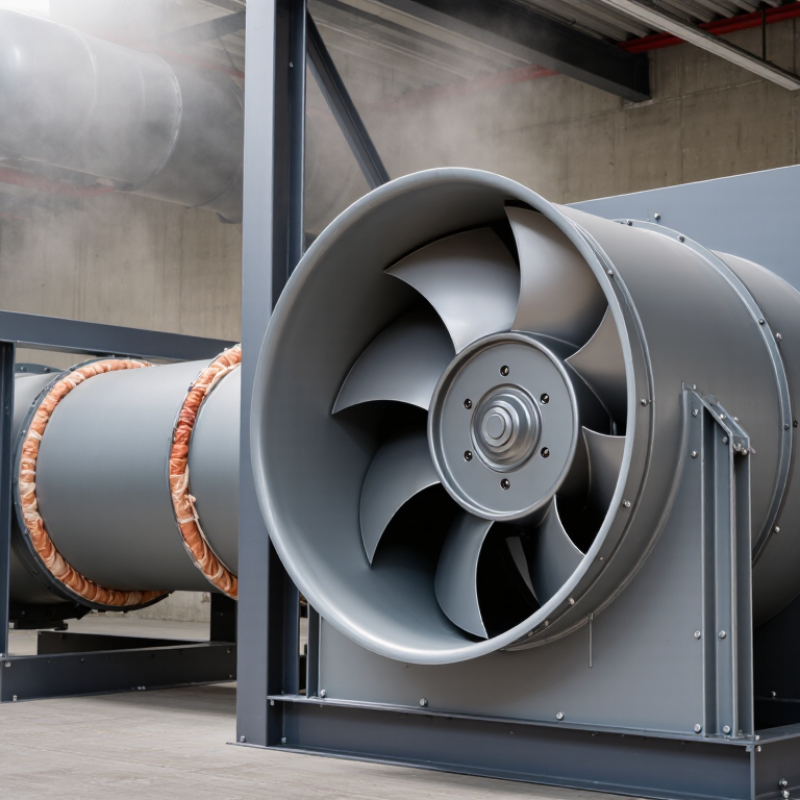
The fan works through several coordinated features. Its motor, impeller, bearings, wiring, and housing must tolerate specified temperatures for a defined period. A reinforced steel casing protects internal components. The impeller maintains airflow and pressure while hot gases pass through the system. Depending on its application, the equipment may extract smoke from stairs, tunnels, car parks, or industrial rooms. Standards such as EN 12101-3 and ISO 21927-3 provide important performance frameworks for smoke and heat exhaust fans. AMCA publications also support testing, rating, and airflow verification across the ventilation industry.

But resistance has limits. No fan remains safe under every fire condition. Its rating depends on temperature, duration, installation, maintenance, and system design. A label alone proves little. Engineers must check certified test data, duty points, dampers, controls, and emergency power. NIST research on building fires repeatedly demonstrates how rapidly smoke movement can affect visibility and survivability. That reality makes field experience valuable. A blocked intake, loose belt, or neglected bearing can undermine a carefully designed system. The uncomfortable lesson is simple: reliable fire protection requires both advanced equipment and disciplined inspection.
What Is a Fire Resistant Fan and How Does It Work?

Definition and Purpose of a Fire-Resistant Fan

A fire-resistant fan is an engineered fan designed to operate during fire conditions. Its purpose is not to extinguish flames. It helps remove smoke, toxic gases, and hot air from protected routes or fire compartments. In practice, the fan draws contaminated air through a duct system and discharges it outside. Some systems also pressurize stairwells, reducing smoke movement into escape paths. A fan is not a fire barrier.

Its casing, impeller, motor, bearings, wiring, and supports must tolerate specified temperatures and operating periods. Common testing frameworks include EN 12101-3 for smoke and heat control fans, while other regions use different certification routes. Ratings may describe operation at 300°C for two hours or 600°C for one hour, but the exact class depends on the tested assembly. Installation matters greatly. Poorly sealed ducts can defeat excellent equipment.

The need is measurable. NFPA’s Fire Loss in the United States During 2022 reported about 1.5 million fires and approximately 18.1 billion dollars in direct property damage. Smoke often spreads faster than visible flames, making controlled extraction important in large buildings. Yet the label “fire-resistant” can mislead. It does not mean unlimited protection. Engineers must check airflow, pressure, power continuity, fire dampers, maintenance records, and structural supports. Real sites are rarely perfect. Dust, corrosion, or an incorrectly positioned sensor may reduce performance when it matters most. Regular inspection against the applicable local standard remains essential.

Key Components and Materials Used in Its Construction

A fire resistant fan is designed to keep moving air when heat and flames threaten ventilation equipment. Its construction begins with a steel or high-temperature alloy housing, not ordinary plastic. Thick walls resist warping, while protected joints limit flame and smoke leakage. The impeller often uses heat-tolerant steel and balanced blades. Balance matters. At high speed, a distorted blade can increase vibration and damage bearings.

Bearings sit away from the hottest airflow when the design allows it. Metal shields, heat-resistant grease, and insulated supports help preserve rotation. Some designs use a cooling path around the motor, while others use external motor placement. The shaft may include a thermal barrier or extended section to reduce heat transfer. Seals and gaskets need careful selection. A material that survives smoke may still fail under direct flame. This detail is easy to overlook.

During inspection, engineers check casing thickness, weld quality, clearances, and emergency operating time. They also review temperature testing and electrical protection. Fire resistance is not created by one component. It depends on material compatibility, assembly accuracy, and verified testing under applicable safety standards. Real installations can expose weaknesses, including dust buildup, poor wiring, or blocked cooling passages. I would not treat a certificate as a permanent guarantee. Maintenance records and site-specific testing still matter.

How a Fire-Resistant Fan Operates in High-Temperature Conditions

A fire-resistant fan is designed to keep moving air when temperatures rise sharply. It is not completely fireproof. Instead, its casing, motor, bearings, wiring, and seals are selected for controlled performance under specified heat conditions. Engineers test these parts against temperature, vibration, and airflow requirements.

In a high-temperature event, the fan draws heated smoke through a protected housing. Heat-resistant insulation helps shield electrical connections. Some designs place the motor outside the hottest airflow, reducing thermal stress. A strong impeller continues turning while smoke travels through the duct system. Clearances matter. Even a small imbalance can increase vibration and damage bearings during extended operation.

The control system may activate the fan through heat sensors, smoke detection, or a dedicated emergency signal. It can also maintain airflow after the surrounding temperature changes. Technicians should verify the fan’s temperature rating, running time, duct resistance, and backup power supply. Installation is crucial. Poor wiring or blocked exhaust paths can defeat a well-tested design.

No fan is invincible. I have seen specifications appear impressive until site conditions revealed dust, restricted airflow, or weak maintenance routines. Regular inspections should check belts, terminals, bearings, access panels, and emergency controls. Testing should follow the manufacturer’s instructions and applicable safety standards. Real performance depends on the complete ventilation system, not the fan alone.

Safety Standards, Testing Methods, and Performance Ratings

A fire resistant fan is designed to move smoke and hot gases while an emergency system operates. Its safety depends on the complete assembly, not the fan casing alone. Engineers assess the impeller, motor, bearings, wiring, housing, and mounting arrangement under severe heat. A painted metal housing may look strong, but appearance proves little.

Safety standards vary by region and application. Smoke-control fans may be evaluated under standards such as EN 12101-3, while airflow performance can involve recognized laboratory procedures. Testing usually places the fan in a controlled hot-gas environment. Technicians monitor temperature, airflow, pressure, vibration, and running time. The fan may need to operate at 250°C or 300°C for a stated period. Some systems also require insulation and fire-exposure testing. Results should come from an accredited laboratory with traceable instruments and a complete test report.

Performance ratings must be read carefully. A label such as 300°C/2 hours describes a tested condition, not unlimited protection. It may apply only to a specific orientation, voltage, duct connection, and installation method. Ratings are not automatically interchangeable between countries. In the field, poor wiring, loose anchors, or blocked discharge paths can reduce performance sharply. Small details matter. A rating alone is not enough. I have seen specifications treated like guarantees, although real buildings rarely match laboratory conditions perfectly. Engineers should verify the tested configuration, maintenance schedule, and emergency control sequence before approval.

Common Applications and Maintenance Requirements

A fire-resistant fan is designed to move smoke and hot air during a fire emergency. Unlike a standard ventilation fan, it uses heat-tolerant materials, protected motors, and certified construction. Its approved operating time may be 30, 60, or 120 minutes, depending on the tested design. Always check the project specification.

These fans commonly serve underground car parks, escape routes, kitchens, tunnels, warehouses, and industrial buildings. In a car park, they can help control smoke movement and support firefighter access. In commercial kitchens, they remove hot, greasy air through suitable extraction systems. Installation must match the building’s fire strategy, airflow calculations, emergency controls, and local regulations. A fan placed correctly can still perform poorly if dampers, ducts, or power supplies are unsuitable.

Maintenance should include visual checks, test runs, bearing inspection, belt tension, impeller cleaning, and electrical connection checks. Grease and dust can collect quickly, especially near cooking areas. Keep access clear. Technicians should test emergency switches, backup power, control panels, and linked dampers at scheduled intervals. Records matter. Documenting noise, vibration, temperature, and airflow can reveal problems early.

A checklist is useful, but it is not perfect. Small vibration changes may be dismissed during routine visits. That mistake can become expensive. Qualified personnel should follow the manufacturer’s instructions, certification limits, and applicable fire-safety codes. Never replace a rated component with an ordinary equivalent.

Let's Build Together

Contact Us: Call 435-563-3503

-OR-  Fill in the form below and we will call you back.

Copyright © 2025CNC Fabrication. All Rights Reserved.