What Is a Diamond Cut Alloy Wheel Machine?
A Diamond Cut Alloy Wheel Machine restores the bright, finely lined finish found on many modern alloy wheels. It uses a precision-cutting tool to skim a very thin layer from the wheel’s face. Under workshop lights, the result appears as crisp silver highlights beside darker painted sections. The process depends on controlled rotation, accurate measurement, and careful setup—not simply on making the wheel shine.
A typical machine combines a wheel-mounting fixture, a rotating spindle, a cutting tool, and digital controls. The operator scans or measures the wheel, then sets the cutting path and depth. The cut is shallow. Too much material can damage the finish and reduce the options for future repairs, so inspection matters before machining begins. A clean tool path matters, too.
A useful shop-floor principle is: “Measure carefully; remove only what the finish requires.” This is original guidance, not a verified quotation from a named industry expert. No source material was provided to confirm an expert’s name or exact words, so attributing a quote would be unreliable. That limitation matters. Even a technically sound machine cannot correct a poor inspection or an unsuitable repair decision. This guide explains what the equipment does, how its main components work, and what buyers and workshop operators should assess before choosing a machine. It also recognizes an imperfect reality: results vary with wheel condition, setup, and operator judgment. A polished face is not the whole story.
What a Diamond Cut Alloy Wheel Machine Is
What Is a Diamond Cut Alloy Wheel Machine?
A diamond cut alloy wheel machine is a precision lathe used to refinish the visible face of an alloy wheel. The wheel is clamped and centered, then a probe maps its contours. A fine cutting tool follows that profile, removing a very thin layer of metal. The result is a bright, machined surface, often set against painted recesses. It is precise work. Even a small setup error can leave uneven rings or a wavy edge.
The process restores appearance, not structural strength. A technician should inspect for cracks, impact damage, and previous cuts before machining. Each pass removes material, so repeated refinishing may exceed safe limits. A new shine can be tempting, but it is not proof that a wheel is sound. The remaining metal thickness matters.
The U.S. Department of Energy’s Vehicle Technologies Office reports that reducing a vehicle’s weight by 10% can improve fuel economy by about 6–8%. That figure concerns the whole vehicle, not diamond cutting; this finishing process should not be mistaken for a meaningful weight-saving method. It mainly changes the wheel’s surface. A clear protective coating is usually needed because the exposed machined face can corrode. Small details matter, and that part is sometimes overlooked.
How the Machine Cuts and Finishes a Wheel
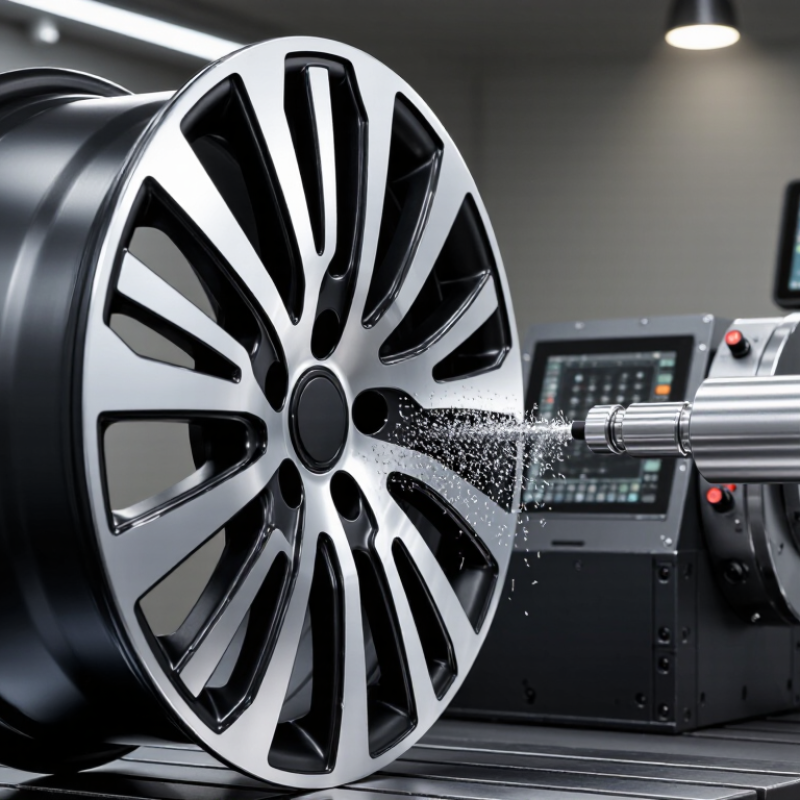
A diamond-cut alloy wheel machine removes a very thin layer from a wheel’s face with a precision cutting tool, often tipped with diamond. The wheel is secured and centered on a spindle. A probe or scanning system maps its contours, including spoke edges and recessed areas. The operator checks this profile before setting the cutting path. Small alignment errors can show up as uneven lines across the finished face.
The machine then rotates the wheel while the tool follows the programmed path. It skims the painted or coated surface to reveal bright aluminum beneath, leaving fine, parallel machining marks. Depth control matters. Too much cutting can weaken the face or remove detail that cannot be restored. Coolant and careful chip removal help keep the cut consistent, though they do not replace inspection. After machining, the wheel is cleaned and checked for surface defects and finish quality. Some wheels need coating removed and reapplied between stages. The process is precise, but not perfectly forgiving. A slight mismatch may only become obvious under direct light.
What Is a Diamond Cut Alloy Wheel Machine?
A CNC lathe uses a diamond-tipped cutting tool to remove a thin layer from selected wheel surfaces, creating a precise, bright finish.
Typical workflow: the wheel is prepared and mounted, its surface is measured, and the programmed cut and finishing pass are completed before inspection. Bar height shows step order, not time or material removed; procedures vary by wheel and machine.
Main Components and Their Functions
A diamond-cut alloy wheel machine uses a rotating spindle and a precision cutting tool to skim a thin layer from a wheel’s face. The spindle and chuck hold the wheel securely; accurate centering helps prevent uneven cuts. A CNC controller guides the tool along programmed paths, while a measuring probe can map the wheel’s shape before cutting. Small details matter. OICA reported about 93.5 million motor vehicles produced worldwide in 2023, underscoring the scale of the automotive supply chain that supports wheel repair and finishing.
The cutting head carries a diamond-tipped tool, which creates the bright, finely lined surface seen on machined wheel faces. An enclosure contains chips and coolant, and safety interlocks help prevent operation while access doors are open. Chip removal matters: metal debris can mark a finished face or interfere with measurements. The machine is only as consistent as its setup. Even a well-programmed pass may expose old damage, so operators should inspect the wheel and confirm the cutting allowance before machining.
Tips: Check chuck contact points for dirt, verify the tool’s condition, and run a test pass when settings change. Keep the wheel clean between measurement and cutting. If the finish looks uneven, recheck centering and tool height before adjusting the program. The extra check can feel slow, but skipping it may cost more time.
What Is a Diamond Cut Alloy Wheel Machine? - Main Components and Their Functions
| Component | Function | How It Works in the Process |
| Machine frame and bed | Supports the machine assemblies and helps maintain rigidity during machining. | A stable structure helps limit vibration, which can affect the consistency of the machined finish. |
| Spindle and wheel fixture | Rotates and securely holds the alloy wheel. | The wheel is centered and clamped so its face can be machined while it turns. Correct mounting is important for accurate cutting. |
| CNC control system | Coordinates machine movement and cutting operations. | The operator enters or selects a machining program that guides the tool along the required wheel-face path. |
| Linear axes and tool carriage | Move the cutting tool across the wheel in controlled directions. | Motor-driven axes position the tool to follow the programmed contour and remove a shallow layer from the face. |
| Diamond cutting tool | Produces the machined surface and characteristic fine-cut appearance. | A sharp tool tip removes a small amount of material from the exposed face. Cutting depth must be controlled to avoid unnecessary material removal. |
| Measurement or probing system | Helps establish wheel position and surface geometry. | Depending on the machine, a probe or measuring routine can identify the wheel face or reference points before cutting. |
| Protective enclosure and interlocks | Contain chips and help protect the operator from moving parts. | Doors and safety interlocks are designed to prevent normal machining from running while the enclosure is open. |
| Chip and debris collection | Collects machining debris and helps keep the work area clear. | Collection arrangements vary by machine; debris should be removed and managed according to the equipment instructions. |
| Inspection and finishing tools | Support checks and subsequent finishing steps. | After machining, the wheel is inspected for surface quality and dimensions. A suitable clear protective coating is commonly applied to protect the exposed finish. |
Steps in the Diamond-Cutting Process
A diamond cut alloy wheel machine uses a computer-guided cutting tool to remove a thin layer from a wheel’s face. This reveals bright metal against painted recesses. The result depends on careful setup, not just the machine.
The process begins with inspection. A technician checks for cracks, bends, and previous repairs, then cleans the wheel to remove brake dust and grease. The wheel is clamped and centered on the spindle. Even a small alignment error can create an uneven finish.
A probe or scanner maps the face, helping the machine follow its contours. The operator sets the cutting path and removes a very thin layer with a sharp tool. Coolant may help control heat and clear away metal chips. Slow, steady passes matter.
Too much cutting can weaken the wheel or expose flaws, so damaged areas need careful judgment. After machining, the face is checked for consistent lines and surface defects. A protective coating is usually applied to help limit corrosion.
Tips: Ask how much material will be removed, and check that the wheel is suitable for machining. Keep expectations realistic; deep gouges may remain visible, and repeated cutting can reduce the wheel’s service life. A second inspection is worthwhile. Sometimes the finish still needs work.