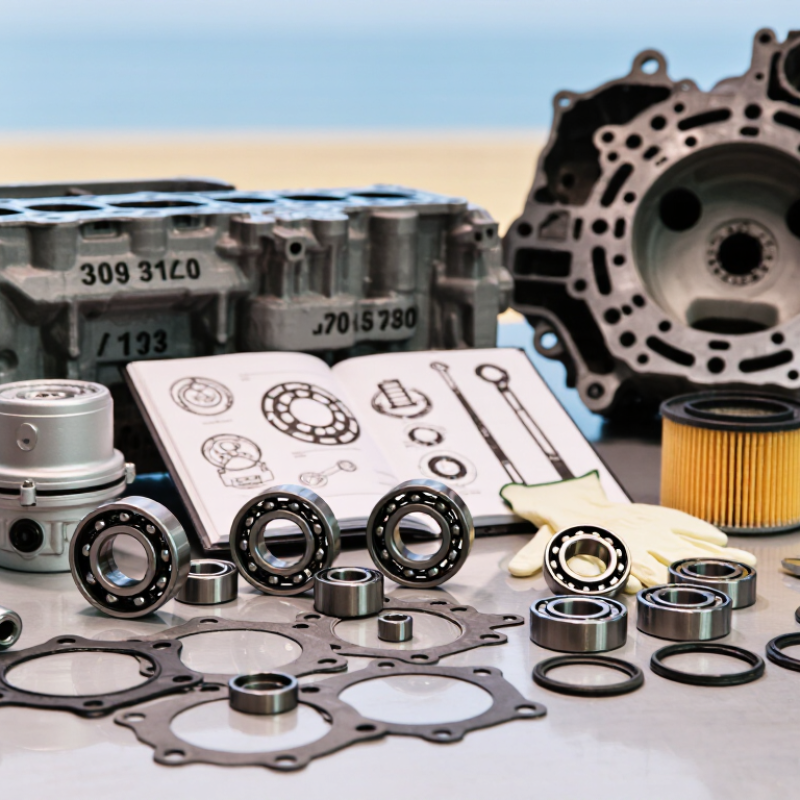
How to Choose the Right Generator Engine Spare Parts?
Choosing the right Generator Engine Spare Parts is essential for reliable power generation, controlled maintenance costs, and longer engine life. A poorly matched gasket, injector, bearing, or filter can cause vibration, overheating, fuel inefficiency, or unexpected shutdowns. The correct part must fit the engine model, serial number, operating environment, and manufacturer’s technical specifications. Appearance alone is not enough.
Experienced maintenance teams usually begin with the engine manual, service history, and the original part number. They also verify material quality, dimensional tolerances, compatibility, and supplier traceability. For example, a coastal generator may require stronger corrosion resistance than a unit operating indoors. A high-hour diesel engine may need inspection beyond simple replacement. Small details matter.
Ask difficult questions.
Is the supplier authorized or technically verified? Can the part’s origin and warranty be documented? Does it meet the required performance standards? These checks help reduce counterfeit risks and prevent repeated failures. However, even professional selection can be imperfect when records are incomplete or older engines have been modified. That uncertainty should be recorded, not ignored. In practice, the best decision combines manufacturer guidance, technician experience, inspection results, and realistic operating conditions. This guide explains how to compare quality, compatibility, lifespan, cost, and supplier reliability before purchasing Generator Engine Spare Parts. Reliable power begins with careful evidence, not the cheapest quotation.
Understanding Generator Engine Spare Parts and Their Functions
How to Choose the Right Generator Engine Spare Parts?
Understanding a spare part’s function is more important than matching its appearance. A fuel filter removes fine particles and water before they reach the injection system. A damaged filter can cause poor combustion, unstable speed, or difficult starting. Lubricating oil filters protect bearings, pistons, and camshafts from abrasive debris. Coolant hoses control heat transfer and pressure. A small crack may become a serious leak under load.
The U.S. Department of Energy’s Operations & Maintenance Best Practices Guide reports that effective maintenance can reduce maintenance costs by 10% to 20%. It also identifies preventive maintenance as a way to improve equipment reliability. In practice, I have seen technicians replace a filter correctly but ignore its sealing ring. The engine still leaked. That mistake is easy to repeat.
Choose parts by engine model, duty cycle, operating temperature, and service history. Check dimensions, material quality, filtration ratings, and pressure limits. ISO 14224 highlights the value of consistent failure and maintenance data for improving equipment reliability. The International Energy Agency reported that data centers used about 460 TWh of electricity in 2022, with demand potentially exceeding 1,000 TWh by 2026. Backup engines therefore face stricter readiness expectations. A part that fits is not always a part that performs. Test the source, review records, and question incomplete specifications.
Identifying the Correct Part for Your Generator Engine
Choosing the correct spare part begins with identifying the generator engine accurately. Record the engine model, serial number, rated output, and production year. These details narrow the search far better than appearance alone. A filter may look identical, yet its seal, thread, or flow capacity can differ.
Check the engine manual, parts catalogue, and maintenance records together. Compare the listed part number with the old component, but do not copy it blindly. Previous repairs may have used an incorrect replacement. Measure critical details, including diameter, length, connector position, thread type, and gasket shape. Small differences matter.
Ask a qualified parts supplier to verify the information before ordering. Share clear photos, measurements, operating conditions, and the generator’s service history. This creates a traceable decision rather than a guess. I have seen experienced technicians select parts by sight and miss a small mounting difference. It happens. When information conflicts, pause and confirm it with the engine manufacturer’s technical documentation or an authorized service professional. Keep the final part number, supplier confirmation, and installation date in your maintenance file. That record can prevent another costly mistake.
Checking Compatibility, Quality, and Manufacturer Specifications
How to Choose the Right Generator Engine Spare Parts?
Choosing generator engine spare parts starts with compatibility, not price. A part may look identical yet use different dimensions, materials, or connection points. Check the engine model, serial number, operating speed, power rating, and installation position. Compare these details with the manufacturer specifications before placing an order. Measure the old part when possible, especially seals, belts, filters, and bearings.
Small differences matter.
During field maintenance, I once accepted a replacement belt after checking only its length. The width and tension rating were different, causing early wear and unexpected vibration. That mistake reinforced a simple lesson: confirm every relevant specification. Review technical drawings, tolerance ranges, material grades, temperature limits, and lubrication requirements. Compatibility includes performance under real operating conditions.
Quality also requires evidence. Examine machining accuracy, surface finish, packaging, inspection records, and traceability information. Reliable suppliers should provide test data and clear installation instructions. Avoid parts with vague descriptions or missing specifications. A low-cost component can increase downtime, labor, and repair risks. I still question some purchasing decisions after installation, because a part that fits may not perform well over time. Keep replacement records, including running hours and failure symptoms. These notes help technicians identify patterns and make more informed choices for the next service interval.
How to Choose the Right Generator Engine Spare Parts? - Checking Compatibility, Quality, and Manufacturer Specifications
| Spare Part Category | Compatibility Data to Confirm | Typical Technical Checks | Quality Indicators | Manufacturer Specification Documents | Common Replacement Risks |
|---|---|---|---|---|---|
| Oil Filter | Engine model, filter mounting thread, gasket diameter, filter height, bypass-valve requirement, and filtration direction. | Check thread size and pitch, sealing-gasket dimensions, relief-valve setting, installation clearance, and oil-flow direction. | Uniform pleat spacing, strong end caps, correctly bonded filter media, undamaged gasket, and a clean anti-drainback valve. | Parts catalogue, lubrication-system specification, service manual, and approved filter cross-reference. | Incorrect thread or gasket size can cause oil leakage; an unsuitable bypass setting may restrict lubrication during cold starts. |
| Fuel Filter | Fuel type, filter housing, inlet and outlet arrangement, water-separation requirement, flow direction, and pressure rating. | Verify connection size, flow capacity, filtration rating, water-drain provision, and compatibility with the fuel injection system. | Sealed housing, corrosion-resistant materials, clean filter media, reliable drain seal, and traceable batch information. | Fuel-system specification, installation drawing, maintenance schedule, and service-parts list. | Excessive restriction can reduce engine power; poor sealing may allow air ingress or fuel leakage. |
| Air Filter | Air cleaner housing dimensions, sealing profile, intake airflow direction, dust-loading capacity, and engine air-consumption requirement. | Measure length, outside diameter, inside diameter where applicable, sealing-surface width, and available installation clearance. | Even pleats, rigid support structure, accurate sealing surfaces, moisture-resistant media, and no visible media damage. | Air-intake specification, engine installation manual, filter drawing, and maximum allowable intake-restriction limit. | A poor seal allows abrasive dust into the cylinders; excessive restriction can increase smoke and fuel consumption. |
| V-Belt or Serpentine Belt | Belt profile, effective length, number of ribs, pulley arrangement, rotation direction where applicable, and tensioning method. | Check belt width, rib count, length, pulley alignment, tension range, and clearance from guards or adjacent components. | Correct rubber compound, flexible construction, clean molded ribs, reinforced cord, and resistance to heat, oil, and cracking. | Belt-size specification, drive-layout drawing, tension procedure, and service interval. | An incorrect length or profile can cause slippage, overheating, charging failure, or premature bearing wear. |
| Water Pump | Engine model, mounting pattern, impeller design, shaft direction, pulley or gear arrangement, gasket type, and coolant-flow capacity. | Confirm bolt-hole spacing, shaft dimensions, impeller clearance, rotation direction, seal design, and coolant compatibility. | Smooth shaft rotation, secure impeller, correctly seated bearing, leak-free mechanical seal, and corrosion-resistant wetted parts. | Cooling-system diagram, pump performance data, torque specifications, gasket instructions, and coolant requirements. | Wrong rotation or impeller geometry can cause overheating; improper gasket installation may obstruct coolant passages. |
| Thermostat | Opening-temperature specification, housing shape, diameter, gasket or seal arrangement, and bypass-flow design. | Compare the marked opening temperature with the service manual; inspect fit, orientation, vent position, and sealing surfaces. | Accurate temperature marking, smooth valve movement, corrosion-resistant body, and consistent opening and closing action. | Cooling-system specification, thermostat test procedure, installation orientation, and replacement-temperature requirement. | An incorrect temperature rating may cause overcooling, overheating, poor fuel economy, or unstable operating temperature. |
| Gasket and Seal Set | Exact engine configuration, joint location, material type, thickness, bolt-hole pattern, and fluid or temperature exposure. | Compare every opening and bolt hole with the original component; verify thickness and confirm whether sealant is permitted. | Clean die-cut edges, accurate holes, uniform thickness, suitable compression characteristics, and material compatibility. | Assembly drawing, torque sequence, tightening values, sealant instructions, and fluid-compatibility data. | Incorrect thickness can change clearances or compression ratio; excess sealant may block oil or coolant passages. |
| Piston Ring Set | Cylinder bore diameter, piston design, ring thickness, ring position, ring material, and ring-gap specification. | Measure bore condition, ring axial and radial dimensions, end gap in the cylinder, and installed orientation. | Consistent dimensions, smooth finished surfaces, correct markings, controlled ring tension, and no chips or distortion. | Engine overhaul manual, piston-and-ring specification, bore measurement limits, and ring-installation diagram. | Incorrect end gap or orientation can cause blow-by, oil consumption, scuffing, or ring failure. |
| Connecting-Rod Bearing | Crankshaft journal diameter, rod bore, bearing width, oil-hole position, bearing grade, and required running clearance. | Inspect journal condition; measure journal diameter, bearing thickness, crush, oil-hole alignment, and assembled clearance. | Uniform bearing surface, accurate locating tabs, correct overlay, clean oil passages, and no scratches or flaking. | Crankshaft measurement chart, bearing-selection table, torque values, clearance limits, and assembly instructions. | Wrong clearance can result in low oil pressure, overheating, seizure, or accelerated crankshaft wear. |
| Glow Plug or Ignition Component | Engine type, thread size, reach, voltage or resistance requirement, connector style, and combustion-chamber design. | Verify thread and reach, electrical rating, terminal arrangement, resistance or operating test, and installation torque. | Correct terminal insulation, undamaged heating or electrode tip, stable electrical readings, and clean threads. | Electrical schematic, starting-system specification, test procedure, thread and torque data, and control-module requirements. | Incorrect voltage or reach can damage the component, interfere with combustion, or cause starting problems. |
| Starter Motor | Rated system voltage, mounting bolt pattern, pinion gear, tooth count, rotation direction, and engagement depth. | Check voltage rating, flange dimensions, gear engagement, terminal layout, cranking current, and alignment with the flywheel. | Secure housing, smooth gear movement, sound solenoid operation, clean terminals, and verified no-load performance. | Starting-system schematic, starter installation drawing, electrical rating, mounting torque, and test limits. | Incorrect gear engagement can damage the flywheel; unsuitable current demand may overload batteries or cables. |
| Genuine-Equivalent Fasteners | Thread diameter and pitch, length, strength class, head design, coating, and use in high-temperature or high-load areas. | Confirm thread engagement, washer requirements, torque value, tightening sequence, and whether the fastener is torque-to-yield. | Accurate threads, clear strength marking where required, consistent coating, and no deformation or corrosion. | Engine assembly manual, fastener-grade specification, torque chart, and replacement-use instructions. | A visually similar fastener may have different strength or length and can loosen, bottom out, or damage threads. |
Selection rule: Always match the complete engine identification, part number, revision level, dimensional requirements, operating conditions, and installation instructions before ordering. Where specifications conflict, use the latest approved engine service documentation and verify the part with a qualified technician.
Comparing Genuine, OEM, and Aftermarket Spare Parts
How to Choose the Right Generator Engine Spare Parts?
Comparing Genuine, OEM, and Aftermarket Spare Parts
Genuine parts come through the engine manufacturer’s approved channel. They usually match the original drawings, materials, and calibration requirements. OEM parts come from the original component maker, often with equivalent specifications and traceability. Aftermarket parts vary widely. Some perform well, while others merely look similar.
The choice affects downtime, not just purchase price. The Uptime Institute’s 2022 Global Data Center Survey reported that 60% of outages cost more than $100,000. Allianz Risk Barometer 2024 also identified business interruption as a leading business risk, selected by 31% of respondents. A failed injector seal can stop a set, damage a cylinder, and delay urgent loads.
For critical engines, verify dimensions, material grades, test records, and warranty terms. Check the serial number before ordering. A genuine fuel pump may justify its higher cost when failure consequences are severe. An OEM oil filter can offer reliable performance with less packaging expense. Quality aftermarket gaskets may suit older, non-critical units, but inspect compression, hardness, and surface finish carefully.
Do not trust price alone.
In practice, maintenance history matters too. A low-cost part installed without torque control can fail early. Even experienced teams sometimes approve substitutes too quickly. That deserves review. Keep one tested spare on site, especially for injectors, belts, sensors, and sealing kits.
Evaluating Suppliers, Costs, Warranties, and Long-Term Support
Choosing generator engine spare parts requires more than comparing prices. A reliable supplier should provide clear specifications, traceable part numbers, and production records. Ask for material certificates and inspection reports when the part affects fuel, cooling, or lubrication systems. I have seen a low-cost gasket fail after repeated heat cycles. The resulting downtime cost far more than the original saving.
Evaluate the complete purchase cost. Include shipping, customs charges, installation time, and possible emergency delivery fees. A supplier offering a slightly higher price may provide better dimensional accuracy and faster technical support. Check whether the warranty covers manufacturing defects, labor, freight, and consequential damage. Read the exclusions carefully. Some warranties expire early when maintenance records are incomplete. That detail is easy to miss.
Long-term support often separates a dependable supplier from a temporary seller. Confirm stock policies for older engine models and ask how replacement parts are identified. A useful supplier can review photos, serial numbers, and service history before recommending a component. Request written advice, not only a quick message. Response time matters during an overnight failure. Keep copies of quotations, test reports, and warranty terms. My own judgment is not always perfect, especially when delivery pressure is high. A second technical review can prevent an expensive mistake. Spare parts should fit today and remain supportable years later.
Article Source:
Let's Build Together
Contact Us: Call 435-563-3503
-OR- Fill in the form below and we will call you back.