How to Choose the Best PE Filler Masterbatch for Your Needs?
Choosing the right PE Filler Masterbatch is a formulation decision, not a simple price comparison. A low-cost product may reduce resin consumption, yet create weak seals, rough surfaces, or unstable film thickness. The correct choice depends on polymer grade, filler loading, processing temperature, and final product requirements.
As polymer compounding specialist Dr. Jeffrey Wooster explains, “Performance starts with understanding the formulation, not simply adding more filler.” This principle matters on a production floor. A blown-film operator may notice die lines after several hours. A pipe manufacturer may discover reduced impact strength during pressure testing. These details reveal whether the masterbatch truly matches the application.
Start with the carrier resin. A PE-based carrier usually offers better compatibility with polyethylene materials. Check calcium carbonate content, particle size, moisture level, melt flow rate, and dispersion quality. Ask for technical data, safety documentation, and batch consistency records. Then request a trial sample. Compare torque, output, film appearance, tensile strength, sealing behavior, and surface feel under identical conditions.
More filler is not always better. That assumption can fail.
A reliable supplier should explain recommended addition rates and processing limits. They should also discuss recycling targets, equipment design, and storage conditions. However, laboratory data cannot replace a factory trial. Real production may expose feeding problems, dust, or uneven dispersion. The best PE Filler Masterbatch balances cost, performance, consistency, and process stability. Your selection should leave measurable evidence behind, not vague promises.
Understanding PE Filler Masterbatch and Its Role in Plastic Manufacturing
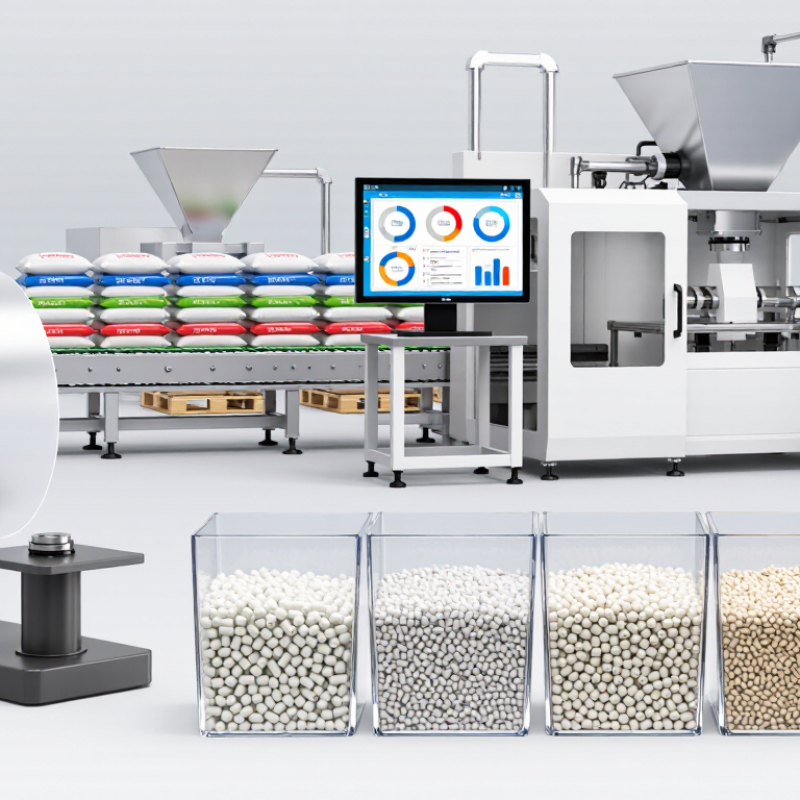
PE filler masterbatch is a concentrated blend of mineral filler and a polyethylene carrier. It helps manufacturers control material cost, stiffness, and processing behavior. In production, it is mixed with virgin or recycled PE pellets before extrusion or molding. The carrier supports more even dispersion than loose powder. That difference matters. Poor dispersion can create white streaks, weak spots, or unstable film thickness.
Choosing a grade starts with the product, not the filler percentage. A thin shopping bag needs reliable melt flow and smooth film formation. A rigid crate may need higher stiffness and impact balance. Check carrier compatibility, recommended dosage, moisture level, particle distribution, and ash content. Ask for a technical data sheet and a recent batch sample. Test it on your own extruder. Laboratory data cannot fully predict factory behavior. Small changes in screw speed or cooling temperature may alter the final surface.
During trials, record torque, pressure, output, opacity, tensile strength, and breakage. Keep the same PE resin and processing settings when comparing samples. A lower-priced masterbatch may require higher dosage or create more rejects. That can erase the apparent saving. Do not treat calcium carbonate loading as the only quality measure. It is easy to focus on numbers. It is harder to measure batch consistency. Application requirements may also differ. Food-contact and safety-sensitive products require separate compliance verification with qualified technical staff.
Identifying Your Product Requirements and Performance Targets
Choosing the best PE filler masterbatch begins with a clear product definition. Identify the final item, its thickness, color, and expected service conditions. A thin film may need stable processing and controlled stiffness. A molded container may require higher rigidity, opacity, and dimensional stability. Do not select a grade by filler percentage alone. The carrier resin must match your polyethylene and processing temperature.
Set measurable performance targets before requesting samples. Define tensile strength, elongation, impact resistance, density, melt flow, and surface appearance. Record acceptable limits, not vague goals like “good quality.” During production trials, check dispersion under the microscope and inspect film surfaces under angled light. Specks, streaks, or uneven gloss often reveal poor compatibility or mixing. Measure output rate and energy use as well. A lower-cost formulation may increase die pressure or cause more waste.
Trial conditions must resemble real production. Use the same equipment, screw speed, cooling method, and cycle time when possible. Compare several addition levels, then test finished products after aging. Results can change after heat exposure or storage. Request technical data, batch consistency records, and safety documentation from the supplier. Independent testing adds confidence, but it is not always practical for every trial. Small mistakes happen. That is why production feedback should adjust the target, rather than simply confirm an early assumption.
| Product Requirement | Recommended Specification or Data Range | Why It Matters | Suitable Applications | Performance Target | Verification Method |
|---|---|---|---|---|---|
| Carrier Resin Compatibility | Use a PE-based carrier. LDPE or LLDPE carriers are commonly used for films and flexible products; HDPE carriers are generally more suitable for rigid or higher-stiffness products. | A compatible carrier promotes dispersion, reduces processing instability, and helps prevent surface defects. | Blown film, cast film, bags, sheets, injection-molded parts, extrusion profiles, and pipes. | Uniform distribution without visible agglomerates, die build-up, or significant loss of weld strength. | Check the carrier type, melt flow rate, processing temperature, and compatibility with the base PE resin. |
| Calcium Carbonate Content | Typical commercial grades contain approximately 40%–85% calcium carbonate by mass, depending on the required cost reduction, stiffness, opacity, and processability. | Higher mineral loading can reduce polymer consumption and increase stiffness, but may reduce elongation and impact resistance if overused. | Packaging film, shopping bags, agricultural film, sheets, woven products, and injection-molded items. | Select the lowest loading that achieves the required economics and physical properties. | Review the technical data sheet and confirm mineral content using an agreed laboratory test method, such as ash testing. |
| Recommended Addition Level | Common starting ranges are 5%–15% for film and 10%–30% for rigid or semi-rigid products. Final dosage depends on filler concentration and product requirements. | Excessive addition may cause brittleness, lower tear strength, poor sealing, or unstable extrusion. | Flexible film generally requires lower addition levels than rigid sheets, profiles, or molded parts. | Meet cost and stiffness targets while maintaining tensile strength, elongation, impact resistance, and appearance. | Run a controlled trial at three dosage levels and compare mechanical, optical, and processing results. |
| Melt Flow Rate | Choose a masterbatch MFR that is reasonably close to the base PE resin. Typical commercial values may range from approximately 2 to 25 g/10 min, measured under the specified PE test condition. | A large mismatch can affect extrusion pressure, throughput, layer uniformity, and filler dispersion. | Low-MFR grades for heavier extrusion sections; higher-MFR grades for many film and injection processes. | Stable melt pressure and consistent output at the intended production speed. | Compare masterbatch and base-resin MFR using the same standard and test condition, such as ASTM D1238 or ISO 1133. |
| Moisture Content | A practical target for calcium-carbonate-filled PE masterbatch is commonly no more than approximately 0.2% moisture; lower values may be preferred for sensitive film applications. | Moisture can contribute to bubbles, voids, surface marks, poor appearance, and unstable processing. | Blown film, cast film, thin sheet, and products requiring a smooth surface. | No visible bubbling or pinholing during normal processing. | Measure moisture using a moisture analyzer, Karl Fischer method, or another validated laboratory procedure. |
| Particle Size and Dispersion | Fine, surface-treated calcium carbonate is generally preferred for film and thin-wall products. A typical median particle size for fine grades may be approximately 1–3 micrometres, while coarser grades may be used in less demanding products. | Smaller and well-dispersed particles usually improve surface appearance and reduce the risk of visible specks or weak points. | Thin film, high-opacity film, printed packaging, and smooth extruded sheet. | No visible agglomerates under the agreed visual or microscopic inspection standard. | Review particle-size distribution and evaluate a molded or extruded sample for dispersion uniformity. |
| Surface Treatment | Surface-treated calcium carbonate is often selected for improved compatibility, dispersion, and processing performance. Treatment chemistry should be compatible with the PE carrier and end use. | Treatment can improve filler wetting and reduce processing defects, although it may increase material cost. | High-speed film extrusion, thin products, high-filler formulations, and applications requiring better surface quality. | Improved dispersion and stable output without excessive die deposits. | Request treatment information and compare torque, pressure stability, dispersion, and surface appearance in a production trial. |
| Whiteness and Opacity | Commercial calcium-carbonate masterbatches often provide high whiteness, but actual values depend on mineral purity, particle size, treatment, and pigment composition. | Whiteness and opacity affect visual quality, color matching, print appearance, and the amount of additional white pigment required. | White bags, packaging film, sheets, agricultural products, and household containers. | Consistent color and opacity at the selected addition level and film thickness. | Measure whiteness, L* value, haze, and opacity using agreed instruments and test standards. |
| Mechanical Strength | Adding calcium carbonate generally increases stiffness and may improve modulus, while tensile elongation, tear strength, and impact performance can decrease as filler level rises. | The correct balance depends on whether the product must be flexible, rigid, puncture-resistant, or dimensionally stable. | Flexible packaging, refuse bags, agricultural film, rigid sheets, profiles, and molded components. | Meet the product specification for tensile strength, elongation, tear resistance, impact strength, and flexural modulus. | Test finished products using applicable methods such as ASTM D638, ASTM D882, ASTM D1922, ASTM D1709, or ISO equivalents. |
| Thermal Processing Window | PE filler masterbatch is commonly processed within a PE temperature range, often approximately 160–220°C, depending on the base resin, equipment, residence time, and product design. | Excessive temperature or residence time can cause polymer degradation, discoloration, odor, or unstable output. | Blown film, cast film, extrusion, injection molding, and profile production. | Stable processing without discoloration, burning, excessive pressure, or die build-up. | Confirm the supplier’s recommended temperature range and optimize barrel, die, screw speed, and cooling settings during trials. |
| Surface Appearance | Choose a grade according to the required level of gloss, smoothness, haze, and visible particle control. Higher filler levels generally increase haze and reduce gloss in transparent or translucent films. | Appearance requirements can limit the usable filler level even when mechanical performance remains acceptable. | Retail bags, printed film, clear or translucent packaging, decorative sheets, and consumer products. | Meet the agreed limits for gloss, haze, surface roughness, pinholes, gels, and visible specks. | Use visual inspection and instrument measurements for haze, gloss, roughness, and defect counts. |
| Sealing and Welding Performance | For heat-sealed film, start with a moderate masterbatch dosage and verify the sealing window after filler addition. Calcium carbonate may reduce seal strength or change seal-initiation behavior. | Packaging failure can occur if filler content, particle dispersion, or seal-layer formulation is not controlled. | Shopping bags, sacks, pouches, liners, and multilayer packaging film. | Required seal strength, hot-tack performance, seal-initiation temperature, and leak resistance. | Conduct hot-tack, seal-strength, burst, and leak tests using the customer’s packaging specification. |
| Food and Regulatory Requirements | For food-contact, pharmaceutical, medical, or regulated applications, the complete formulation must comply with the applicable local regulations. Compliance cannot be assumed from the filler type alone. | Carrier resin, additives, pigments, processing aids, heavy metals, and impurities may all affect regulatory status. | Food packaging, consumer packaging, healthcare products, and other regulated goods. | Documented compliance for the intended market and application, with traceable raw materials. | Request a current declaration of compliance, migration information, safety data, and relevant test reports. |
| Cost-in-Use | Evaluate total cost per finished kilogram rather than masterbatch price alone: base-resin replacement, addition level, energy use, scrap rate, throughput, and rejected-product cost should be included. | A lower-priced masterbatch may become more expensive if it requires a higher dosage or causes production defects. | All PE products, especially high-volume film and extrusion operations. | Achieve the lowest total production cost while maintaining the required quality and productivity. | Calculate cost-in-use from trial data at the intended dosage and production speed. |
| Trial and Approval Plan | Use a controlled trial with at least three addition levels, while keeping resin grade, equipment settings, cooling, line speed, and product thickness consistent. | A structured trial separates masterbatch effects from normal process variation. | Recommended for every new formulation, resin change, equipment change, or major dosage adjustment. | A repeatable formulation that meets performance, appearance, compliance, and productivity requirements. | Record process conditions, test results, defect rates, and finished-product performance before approval. |
Comparing Filler Types, Resin Compatibility, and Concentration Levels
How to Choose the Best PE Filler Masterbatch for Your Needs?
Choosing a PE filler masterbatch starts with the filler type. Calcium carbonate usually lowers material cost and can improve stiffness, opacity, and processing stability. Talc offers higher rigidity, but it may reduce impact strength. Barium sulfate provides density and whiteness, yet it can increase equipment wear. PlasticsEurope reported 413.8 million tonnes of global plastics production in 2023. That scale makes formulation efficiency commercially important, not merely technical.
Resin compatibility comes next. A masterbatch designed for LDPE may disperse poorly in HDPE, especially under different shear conditions. Match the carrier resin with the production resin whenever possible. For LLDPE films, excessive mineral loading can reduce elongation and tear resistance. For injection-molded HDPE, moderate loading may improve stiffness without causing brittle edges. Test the actual grade, not only the datasheet.
Concentration needs a controlled trial. Many commercial formulations use 40–80% mineral content, according to technical market assessments from Ceresana and Research and Markets. Higher concentration reduces dosing volume, but it can create agglomerates and unstable surfaces. Higher loading is not automatically better. Start with three levels, such as 10%, 20%, and 30%, then measure tensile strength, impact, haze, and melt flow. In practice, operators often overlook screw design and drying conditions. That mistake can distort the comparison. A small pilot batch may reveal more than a polished specification.
Evaluating Processing Conditions, Dispersion, and Quality Consistency
Choosing the best PE filler masterbatch starts with your actual processing conditions. A formulation that runs smoothly at 180°C may behave poorly at 220°C. Check the carrier resin, extrusion temperature, screw speed, and cooling rate before comparing prices. During trials, record melt pressure and torque every few minutes. Sudden changes often indicate poor compatibility or uneven feeding. Small details matter.
Dispersion should be judged in the finished product, not only from technical data. Cut sample sheets and inspect thin sections under a microscope. Look for agglomerates, streaks, pinholes, or dull patches. A well-dispersed masterbatch should produce a stable surface and consistent mechanical performance. Test different let-down ratios, because acceptable dispersion at 5% may fail at 20%. Pellet shape and flow also influence feeding accuracy.
Quality consistency requires more than one successful production run. Ask for batch test results covering filler content, moisture, melt flow, and particle distribution. Compare samples from different lots under identical settings. Keep retain samples for later investigation. No test plan is perfect. I once trusted a clean first sample and ignored a small moisture variation; the next run showed surface defects. That mistake reinforced the value of repeated trials, clear records, and practical communication with the supplier. Choose the material that performs reliably across ordinary production changes, not only under ideal laboratory conditions.
Balancing Cost, Sustainability, and Supplier Reliability
How to Choose the Best PE Filler Masterbatch for Your Needs?
Cost, sustainability, and supplier reliability should be evaluated together. A low-cost PE filler masterbatch may seem attractive, but the calculation is often incomplete. Check the recommended dosage, dispersion, melt flow, and possible production scrap. A slightly higher-priced product can reduce die buildup and rejected rolls. That difference matters.
Sustainability requires more than selecting a recycled carrier. Ask for clear information about mineral content, recycled content, energy use, and relevant test methods. Confirm that the masterbatch suits your resin, processing temperature, and end application. Poor dispersion can increase waste and weaken finished products. The greenest option is not always the one with the highest recycled percentage. This deserves careful review.
Supplier reliability is equally practical. Request recent batch records, a certificate of analysis, safety documentation, and traceability details. Test samples under your actual extrusion or molding conditions. Compare color, output, tensile strength, and surface quality. Keep a small retained sample from each approved batch. It helps identify changes later. Lead time also matters. A supplier with limited capacity can disrupt production during peak demand. Technical support is useful, but documented consistency is stronger evidence. I have seen teams focus too heavily on unit price. They later discover that unstable quality costs more than expected. Allow room for testing, questions, and a second evaluation.
Article Source:
Let's Build Together
Contact Us: Call 435-563-3503
-OR- Fill in the form below and we will call you back.