
How to Choose the Best Battery Testers for Global Sourcing

Choosing the right Battery Testers can determine whether a global sourcing program succeeds or quietly creates costly returns. A tester may look impressive on a product page, yet fail when voltage readings drift in a busy inspection room. Buyers should examine measurement accuracy, testing speed, supported chemistries, data storage, software compatibility, and calibration records. These details matter when teams compare lithium-ion packs, alkaline cells, and rechargeable batteries from different suppliers.

Isidor Buchmann, founder of Cadex Electronics and a recognized battery technology expert, wrote, “The battery is a chemical device that stores energy in an electrochemical form.” That simple observation should guide purchasing decisions. Battery Testers do not merely check numbers. They help reveal charging behavior, internal resistance, capacity loss, overheating risks, and inconsistent production batches. A reliable model should support controlled charge and discharge cycles, clear alarms, and exportable test reports. It should also fit the factory’s real workflow, including gloves, barcode labels, limited bench space, and unstable internet access.

Small details expose weak choices.

Before placing a large order, sourcing teams should test several units against a calibrated reference instrument. Ask suppliers for traceable calibration evidence and documented operating limits. Confirm whether local service, replacement probes, and firmware support are available. Global compliance requirements can differ by market, so technical files and safety documentation deserve careful review. We should admit one uncomfortable point: the most expensive tester is not always the most suitable. A cheaper device may work well for incoming inspection, but struggle with high-volume endurance testing. This guide compares practical options and highlights the compromises buyers sometimes overlook.
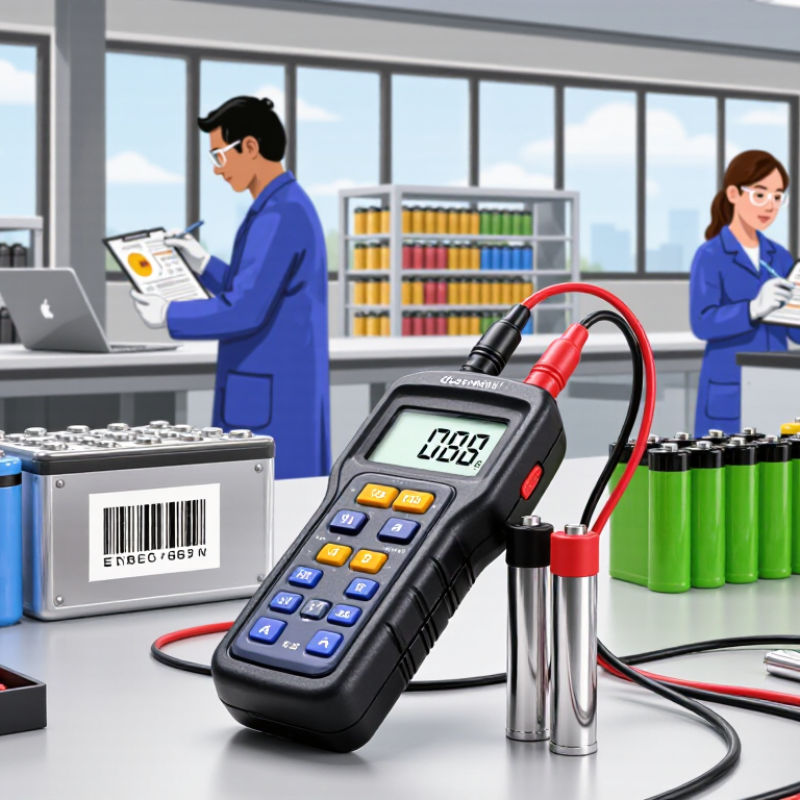
How to Choose the Best Battery Testers for Global Sourcing

Understanding Battery Tester Types and Their Testing Capabilities

Choosing a battery tester starts with the battery chemistry, size, and question you need answered. A simple voltage tester checks resting voltage, but it cannot confirm usable capacity. Load testers apply controlled current and reveal voltage drop under demand. They suit quick checks for starting batteries, power tools, and assembled packs. Capacity testers discharge batteries over time and measure ampere-hours or watt-hours. This method takes longer, but it provides stronger runtime evidence. For rechargeable cells, impedance testers estimate internal resistance and help identify aging connections. Results can shift with temperature, charge level, and probe pressure.

For global sourcing, match the tester’s range to your incoming inspection process. Check voltage limits, current control, data logging, and calibration records. A narrow tester may produce misleading readings or fail prematurely. In practical inspections, repeatability matters more than one impressive number. Test the same sample three times. Small differences matter. Use four-wire measurement when low resistance requires higher accuracy. For battery packs, choose equipment supporting balancing checks and cell-level monitoring. Do not assume a capacity result proves safety. Separate protection and physical inspections remain necessary.

Tips: Ask suppliers for sample reports and calibration evidence. Define pass or fail limits before testing. Record temperature, charging history, and test duration. Keep one reference battery for periodic verification. I once overlooked connector resistance, and the readings changed noticeably. That mistake was useful. It showed why the complete test setup matters.

Defining Testing Requirements for Different Battery Applications

Choosing the best battery tester starts with the battery’s real operating conditions. A coin cell needs stable low-current measurement and accurate voltage detection. A power tool battery needs high-current discharge testing, temperature monitoring, and cycle recording. These requirements are not interchangeable.

For rechargeable packs, specify capacity, internal resistance, charge acceptance, and cutoff accuracy. A tester should record voltage changes at fixed time intervals. It should also detect abnormal heating during charging or discharging. For small consumer cells, repeatability may matter more than maximum current. For industrial batteries, load stability and data export become essential. In global sourcing, confirm input voltage, software language, calibration records, and replacement sensor availability.

Do not trust impressive specifications alone. I have seen test plans fail because the fixture could not hold the battery securely. Another mistake was testing at room temperature only. Real batteries may operate in cold warehouses or hot equipment cabinets. Define temperature ranges before requesting quotations. Ask suppliers for sample reports, measurement uncertainty, and maintenance procedures. A short trial with ten batteries can reveal loose connections, slow sampling, or confusing software. The first test may still be imperfect. That is useful. It shows which requirements need clearer wording before production approval.

Comparing Accuracy, Safety, Compatibility, and Operating Features

When sourcing battery testers globally, accuracy should be tested rather than assumed. A useful tester should measure voltage, capacity, internal resistance, and discharge performance consistently. During warehouse checks, I compare readings from several new and partially used cells. A difference of only 0.05 volts can affect sorting decisions. Look for clear resolution, stable probes, and repeatable results. Calibration records also matter. Cheap instruments may appear accurate at first, but their readings can drift after frequent use.

Safety deserves equal attention. Choose equipment with insulated leads, overload protection, reverse-polarity alerts, and controlled discharge settings. A tester should remain stable on a crowded workbench. Heat buildup is a warning sign. I prefer models with visible temperature monitoring and automatic shutdown. However, safety features are not a substitute for trained operators. That assumption is easy to make, and often wrong.

Compatibility must match the intended battery types, sizes, chemistries, and connector designs. Confirm the tester’s operating range before placing a large order. It should support the voltage and current levels used in your inspection process. Practical features can save time, including USB data export, internal memory, replaceable leads, and a readable display under warehouse lighting. Battery life matters too. One overlooked detail is software usability. Complicated menus slow inspections and invite mistakes. A short trial with real samples may reveal more than a polished specification sheet.

Evaluating Suppliers, Certifications, Pricing, and Global Logistics

When sourcing battery testers globally, supplier evaluation should begin with evidence, not polished catalogs. Request product samples, calibration records, factory quality procedures, and recent inspection reports. A reliable supplier should explain measurement accuracy, test current, display resolution, and expected service life in practical terms. I prefer suppliers that answer technical questions clearly. Vague promises are costly later.

Check certifications carefully. The required documents may vary by destination and tester design, so verify applicable electrical safety, electromagnetic compatibility, and environmental requirements. Ask whether certificates cover the exact model, not a similar unit. Confirm calibration traceability through recognized laboratories. Paperwork can look complete and still hide gaps. That deserves a second review.

Pricing must include more than the unit cost. Compare tooling, packaging, spare probes, calibration, payment terms, and warranty support. For logistics, confirm carton dimensions, battery restrictions, shipping documents, customs codes, and delivery terms before placing an order. A small tester may travel cheaply, but damaged probes can delay an entire shipment. We once underestimated protective packaging; the savings disappeared after replacements and rework.

Tips: Test two or three samples under identical conditions. Record readings at low and high charge levels. Request a pre-shipment inspection with photos. Compare landed cost, not only factory pricing. Leave room for currency changes and port delays. Supplier relationships matter, but measurable performance matters more.

How to Choose the Best Battery Testers for Global Sourcing

Recommended procurement-screening weights for evaluating battery tester suppliers, certifications, pricing, and global logistics.

Supplier capability receives the highest weighting because measurement accuracy, calibration control, technical support, and after-sales service directly affect testing reliability. Certification compliance should include applicable requirements such as IEC 61010-1 for measurement equipment, IEC 62133-2 for portable lithium battery safety testing, and UN 38.3 transport testing. Pricing and logistics remain important for total landed cost, delivery reliability, spare parts, and international support.

Selecting and Validating the Best Battery Tester for Your Needs

Choosing the best battery tester requires more than comparing screen size or advertised accuracy. Start with the battery types you will inspect, including alkaline, lithium, nickel-metal hydride, or rechargeable cells. Check voltage range, test current, capacity measurement, and internal resistance functions. A tester for incoming samples should provide stable readings across repeated tests. Cheap instruments may look suitable, but unstable contact springs can distort results.

Tips: Test the same cell three times. Clean the contacts. Record temperature, voltage, and test duration. A small testing log often reveals patterns that one reading hides.

Validation should use batteries with known specifications and different charge levels. Compare the tester’s results with a calibrated reference instrument when possible. Test fresh cells, partly discharged cells, and weak cells. Watch for heating, slow readings, or sudden numerical changes. These details may indicate poor contact or an unsuitable load. For global sourcing, request sample units from several suppliers and test them under identical conditions. Keep the fixture, cables, and measurement method unchanged.

Do not trust a perfect result immediately. Real testing is sometimes messy. In practical use, operators may press contacts differently, and battery temperatures may vary. I would validate repeatability before trusting a claimed accuracy figure. A tester that performs consistently is often more useful than one with impressive specifications but unclear measurement conditions.

How to Choose the Best Battery Testers for Global Sourcing - Selecting and Validating the Best Battery Tester for Your Needs

Tester Category Typical Battery Applications Typical Voltage Range Typical Current Capability Core Measurements Typical Accuracy Best Use Case Key Sourcing Check
Handheld Battery Analyzer Lead-acid, alkaline, Ni-MH, and selected lithium battery packs Approximately 0–60 V DC Low measurement current; usually not a discharge load Voltage, internal resistance, conductance, estimated state of charge Voltage commonly around ±0.5% of reading; resistance depends strongly on test leads and method Incoming inspection, maintenance, service diagnostics Confirm chemistry profiles, connector compatibility, lead compensation, and measurement repeatability
DC Electronic Load Primary cells, rechargeable cells, battery packs, and power modules Commonly 0–80 V DC, with higher-voltage models available From milliamps to hundreds of amps, depending on power rating Constant-current discharge, constant-resistance discharge, voltage, current, power, capacity Typically voltage and current accuracy from about ±0.05% to ±0.2% of reading or full scale Capacity testing, runtime verification, discharge curves, cutoff-voltage testing Check continuous power, pulse capability, thermal protection, data logging, and regenerative or non-regenerative operation
Battery Cycler Lithium-ion, lithium iron phosphate, Ni-MH, lead-acid, and battery modules Often 0–100 V per channel; system voltage depends on configuration From low-current laboratory channels to hundreds of amps for module testing Charge, discharge, cycle life, capacity, energy, coulomb counting, rest periods Current commonly about ±0.05% to ±0.1% of full scale on laboratory systems Research, qualification, aging studies, cycle-life comparison, production sampling Verify channel synchronization, emergency shutdown, software export formats, and programmable safety limits
AC/DC Impedance Meter Cells, capacitors, battery packs, and production samples requiring impedance screening Usually designed for low-voltage devices; commonly below 100 V DC Small AC test signal rather than sustained charge or discharge current AC impedance, phase angle, resistance, reactance, and sometimes DC voltage Often approximately ±0.1% to ±1% of measured impedance, depending on range and frequency Cell matching, weld-joint screening, incoming quality control, aging comparison Confirm test frequency, fixture resistance compensation, open/short correction, and allowable sample impedance range
Production Battery Tester High-volume cells, packs, power banks, and finished battery products Commonly 0–60 V DC for portable products; higher ranges for industrial packs Usually configured for the product's rated current and test takt time Voltage, current, polarity, continuity, capacity sampling, protection response, insulation checks when integrated Typically selected to meet the product acceptance tolerance; measurement accuracy commonly ±0.1% to ±0.5% End-of-line testing, automated screening, traceability, pass/fail decisions Evaluate cycle time, fixture life, barcode support, PLC or network interfaces, and audit-trail capability
Battery Safety Tester Battery packs, chargers, assemblies, and products requiring electrical safety checks Test voltage may range from low-voltage DC to several kilovolts AC or DC, depending on function Leakage and insulation tests use controlled test current; not intended for capacity testing Insulation resistance, dielectric withstand, ground continuity, leakage current, polarity Must be verified against the applicable safety-test specification and calibrated reference standards Compliance screening and production safety verification Check interlocks, discharge time, guarded fixtures, arc detection, emergency stop, and test-standard coverage
Thermal Battery Test System Cells, modules, and packs requiring temperature-controlled testing Determined by the connected cycler or load; commonly low- to medium-voltage DC Determined by the integrated charge/discharge equipment Electrical performance plus chamber temperature, surface temperature, and thermal event alarms Temperature control often approximately ±1–2 °C after stabilization, depending on chamber size and load Low-temperature, high-temperature, storage, performance, and abuse-related evaluations Confirm chamber operating range, cooling capacity, gas detection, fire protection, ventilation, and remote shutdown
Validation checklist: Before global sourcing, compare the tester's calibrated measurement range with the battery's nominal and maximum values; verify accuracy at the actual operating point; test repeatability with a known reference device; review calibration certificates and service procedures; confirm electrical safety, environmental requirements, software compatibility, data export, spare parts availability, and operator training.
Performance ranges are representative industry values. The final specification should be confirmed against the supplier's latest datasheet, calibration report, applicable battery chemistry, and intended test method.

Let's Build Together

Contact Us: Call 435-563-3503

-OR-  Fill in the form below and we will call you back.

Copyright © 2025CNC Fabrication. All Rights Reserved.