How to Choose Polyethylene Boards for Global Sourcing?
Choosing Polyethylene Boards for global sourcing is not simply a price comparison. It is a material, performance, and supplier-risk decision.
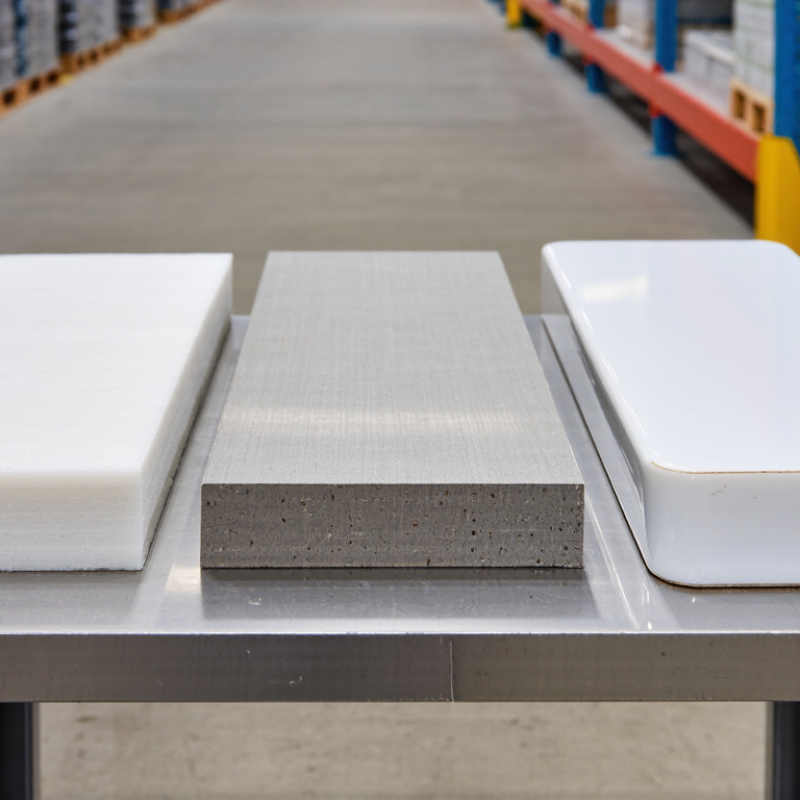
A purchasing team may receive three similar-looking samples. One may be virgin HDPE, another recycled polyethylene, and the third UHMW-PE. Their surfaces can appear identical under warehouse lighting. Their wear resistance, impact strength, dimensional stability, and service life may differ significantly. Professor Michael F. Ashby, a leading materials-selection authority, explains, “The objective of materials selection is to identify the material that best meets the requirements of a design.” That principle matters when selecting Polyethylene Boards for cutting tables, machine guards, marine components, or chemical-handling environments.
A reliable sourcing review should examine grade, density, thickness tolerance, operating temperature, load conditions, surface finish, and chemical exposure. Ask for technical datasheets, production samples, inspection records, and batch traceability. Check whether the supplier can maintain stable dimensions across repeated orders. A board that measures 20 millimetres in one shipment should not become 19.2 millimetres in the next.
Price still matters.
However, the cheapest quotation may hide higher machining waste, short service life, or inconsistent packaging. Supplier visits, video inspections, and independent testing can reveal more than polished brochures. Testing should match the application, not merely satisfy a purchasing checklist. No checklist is perfect. Even experienced buyers can overlook moisture, transport damage, or unclear tolerance language. That is why responsible global sourcing combines documented evidence with practical judgment, realistic samples, and a willingness to challenge convenient assumptions.
What Are Polyethylene Boards and Where Are They Used?
Polyethylene boards are solid plastic sheets made from polymer resin. They are lightweight, moisture-resistant, and easy to machine. Common grades include HDPE and UHMWPE, each serving different performance needs. HDPE suits cutting surfaces, wall liners, tanks, and fabricated covers. UHMWPE offers lower friction and stronger abrasion resistance for chutes, conveyor guides, and sliding components.
Their uses are practical and often demanding. In food-processing areas, boards can provide smooth, washable work surfaces. In warehouses, they protect walls and reduce product impact. Marine operators use thicker sheets as fender panels because polyethylene tolerates water exposure. Workshops also cut boards into spacers, guards, wear strips, and custom machine parts. The right choice depends on load, temperature, friction, sunlight, and contact requirements.
Sourcing requires more than comparing price per sheet. Ask for resin grade, density, thickness tolerance, surface finish, and test documentation. Confirm whether the material is suitable for food contact or outdoor service. Color consistency may matter for production, but performance matters more. A common mistake is choosing a board that is too thin. It may bend, warp, or wear quickly. No board is perfect. Some grades machine cleanly but expand with heat. Others resist abrasion yet cost more. Sampling helps reveal these trade-offs before a larger international order. Consider packaging, moisture protection, cutting accuracy, and inspection procedures as well.
Which Polyethylene Grade Fits Your Application?
How to Choose Polyethylene Boards for Global Sourcing?
Which Polyethylene Grade Fits Your Application?
Polyethylene is not one universal material. The correct grade depends on load, temperature, friction, moisture, and contact requirements. Start with the working environment, not the supplier’s catalog label. High-density polyethylene offers useful stiffness, chemical resistance, and easy fabrication for covers, tanks, guides, and general industrial boards. Low-density polyethylene is softer and more flexible, making it suitable for cushioning and low-load protection.
For sliding parts, wear strips, and demanding liners, ultra-high-molecular-weight polyethylene can reduce friction and resist abrasion. However, it may cost more and require different machining methods.
Medium-density polyethylene can provide a practical balance between impact resistance and rigidity. It fits applications where extreme stiffness is unnecessary. Small detail. That detail matters.
Temperature changes can alter board performance. Outdoor use also requires attention to ultraviolet exposure, color stability, and moisture absorption. For food-contact applications, request current compliance documents for the destination market. For industrial use, ask for test data covering tensile strength, impact resistance, wear, and dimensional tolerance. Confirm thickness, flatness, surface finish, and cutting tolerances before placing a global order.
A practical warning: a grade that performs well in one factory may disappoint elsewhere. The choice is rarely perfect on paper. Prototype testing remains valuable, especially when loads vary or surfaces become contaminated. Ask for batch traceability, material declarations, and clear inspection standards. These documents make quality discussions easier across languages, ports, and production teams.
How to Compare Board Size, Thickness, and Surface Properties
When sourcing polyethylene boards, compare dimensions as a working system, not as isolated numbers. The 2024 PlasticsEurope market report recorded global plastics production at about 414 million tonnes in 2023. That scale supports broad availability, but specifications still vary between suppliers. A 12 mm board may measure 11.6 mm after cooling, depending on extrusion control. Ask for measured tolerance, not only nominal size.
Thickness affects stiffness, weight, machining, and shipping cost. For a large panel, a small thickness difference can change deflection noticeably. Use the supplier’s test data, then check the method against ASTM or ISO procedures. Surface properties need equal attention. Rough textures improve grip, while smooth surfaces clean more easily. Request roughness values, gloss information, hardness, and friction data where relevant. ASTM D2240 can support hardness comparisons, but hardness alone does not predict cutting performance.
Inspect sample edges and corners.
I have seen buyers compare price before checking flatness. That choice can become expensive after installation. The OECD Global Plastics Outlook reports that global plastic waste reached 353 million tonnes in 2019, reinforcing the value of durable material selection. However, recycled-content claims need verification through traceable documentation. Ask whether the board uses virgin, recycled, or mixed polyethylene, and whether the surface changes across production batches. A practical comparison sheet should record length, width, thickness tolerance, density, color consistency, surface texture, and test conditions. Supplier data may look complete, yet one missing detail can weaken the decision.
How to Choose Polyethylene Boards for Global Sourcing? - How to Compare Board Size, Thickness, and Surface Properties
| Board Type | Typical Density | Common Board Sizes | Typical Thickness Range | Standard Surface Options | Surface Characteristics | Typical Service Temperature | Recommended Sourcing Use |
| High-Density Polyethylene (HDPE) | 0.94–0.97 g/cm³ | 1,220 × 2,440 mm
1,500 × 3,000 mm
2,000 × 4,000 mm | 3–100 mm | Smooth, matte, textured, embossed | Low moisture absorption; smooth grades are easy to clean; textured grades provide improved grip. | Approximately −50°C to +80°C for many general-purpose applications | General fabrication, liners, tank components, cutting surfaces, machine guards, and outdoor panels. |
| Ultra-High-Molecular-Weight Polyethylene (UHMW-PE) | 0.93–0.95 g/cm³ | 1,220 × 2,440 mm
1,500 × 3,000 mm
Custom oversized formats may be available | 5–150 mm | Machined smooth, matte, grooved, textured | Very low friction, high abrasion resistance, and good impact resistance; surface texture affects sliding and noise. | Approximately −100°C to +80°C for many standard grades | Wear strips, conveyor guides, chute liners, impact surfaces, and low-friction components. |
| Low-Density Polyethylene (LDPE) | 0.91–0.94 g/cm³ | 1,000 × 2,000 mm
1,220 × 2,440 mm
Custom formats depend on processing method | 1–50 mm | Smooth, semi-gloss, matte, lightly textured | More flexible and softer than HDPE; better suited to applications requiring conformability rather than high stiffness. | Approximately −50°C to +60°C for many general-purpose applications | Flexible liners, protective sheets, packaging components, cushioning, and low-load covers. |
| Reprocessed or Recycled PE Board | Typically 0.93–0.98 g/cm³; verify by batch | 1,000 × 2,000 mm
1,220 × 2,440 mm
Other sizes subject to production capacity | 5–100 mm | Usually matte, speckled, or lightly textured | Color and surface uniformity can vary; dimensional stability and mechanical properties should be verified for each batch. | Application-dependent; confirm the supplier’s tested range | Pallet protection, construction pads, temporary barriers, industrial spacers, and non-critical fabricated parts. |
| Food-Contact HDPE Board | 0.94–0.97 g/cm³ | Commonly 1,220 × 2,440 mm
Smaller cut panels available | 6–50 mm | Smooth, non-porous, easy-clean finish | Low water absorption and cleanable surface; compliance depends on the exact formulation and destination-market requirements. | Typically suitable for refrigerated and ambient applications; verify hot-use limits | Food-processing surfaces, cutting boards, work tables, hygienic partitions, and washable equipment parts. |
Global Sourcing Checklist: Confirm nominal and minimum thickness, dimensional tolerance, flatness, board weight, surface roughness, color consistency, UV stabilization, material grade, test method, packaging dimensions, container loading quantity, and destination-market compliance before placing an order.
Note: Dimensions, thicknesses, temperature ranges, and densities are typical industry ranges. Actual availability and performance depend on the polyethylene grade, manufacturing process, additives, tolerance specification, and supplier test data.
What Quality Standards Matter in Global Sourcing?
How to Choose Polyethylene Boards for Global Sourcing?
What Quality Standards Matter in Global Sourcing?
Global sourcing of polyethylene boards begins with a precise quality definition. Do not treat “industrial grade” as a complete specification. Request the resin type, density, melt flow rate, board thickness, and dimensional tolerances. These details affect cutting, welding, stiffness, and service life. A supplier should provide a current certificate of analysis for each production batch. Keep the paperwork traceable.
Testing methods must match the board’s intended use. Important checks include tensile strength, impact resistance, hardness, water absorption, and heat deflection. Outdoor projects may also require UV exposure testing. Food-contact or medical applications need separate compliance evidence. Local requirements can differ between countries. Confirm the destination market before placing a large order.
Quality systems matter, but certificates need careful reading. ISO 9001 shows process control, not automatic product excellence. Ask for test reports using recognized ASTM or ISO methods. Independent inspection can verify thickness, surface defects, color consistency, packaging, and labeling before shipment. A small sample order is useful. It can reveal warping, uneven edges, or weak packaging early.
We once relied too heavily on a supplier’s standard report. The figures looked acceptable, but the sampling method was unclear. That was a warning we should have noticed sooner. Reliable sourcing combines documents, physical samples, factory communication, and repeat testing. Quality is not a single certificate. It is a pattern of evidence.
How to Evaluate Suppliers, Costs, Shipping, and Compliance
Choosing polyethylene boards for global sourcing requires more than comparing unit prices. Define thickness, density, color, surface finish, flatness, and cutting tolerance before contacting suppliers. A practical sample check can reveal warping, uneven edges, or inconsistent color. These small defects may become expensive during fabrication.
Evaluate suppliers through factory evidence, not polished presentations. Request recent inspection records, material specifications, production photos, and batch traceability documents. Ask whether the supplier controls resin quality and recycled content separately. Compare minimum order quantities, tooling charges, payment terms, packaging costs, and landed cost. A low quotation may hide costly trimming or weak export packaging. I have seen attractive offers fail after damaged corners arrived. That risk deserves attention.
Tips: Request two production samples. Measure thickness at several points. Confirm Incoterms and container loading plans. Oversized boards need corner protection and stable stacking. Check destination requirements for chemical declarations, recycled content claims, and food-contact use when relevant. Requirements vary by market, so obtain current supplier declarations and independent test reports. Do not accept an old certificate without checking its scope and validity. Allow time for customs documents and inspection. My own process is still imperfect; freight estimates can change quickly, especially when boards use unusual dimensions. Recheck every assumption before placing a large order.
How to Choose Polyethylene Boards for Global Sourcing?
Use a balanced evaluation model that prioritizes product consistency, compliance evidence, landed cost, logistics reliability, production capacity, and traceability.
How to use this chart: Score each supplier against these weighted dimensions before placing an order. Confirm board specifications, test reports, certificates, Incoterms, lead times, packaging, and destination-country requirements during due diligence. The percentages represent a transparent 100-point procurement scorecard, not supplier performance claims.