Why Choose Grinding Steel Balls for Mining?
In a mine’s grinding circuit, steel balls do more than fill a mill. They collide with ore, break it into smaller particles, and help prepare material for separation. Choosing the right Grinding Steel Ball can affect throughput, product size, energy use, and operating costs. The best choice depends on the ore, mill design, and site conditions—not on a single product claim.
Ball diameter, hardness, toughness, and wear rate all matter. A ball that is too soft may wear quickly. One that is excessively hard or poorly made can fracture under impact. Operators can look for consistent dimensions, documented material specifications, and quality-control records. They should also review wear data from their own circuit. Results vary. Ore hardness and mill operating conditions can change performance.
Drawing on the comminution expertise associated with mineral-processing scholar Dr. Alban Lynch, this introduction offers a synthesized takeaway, not a verified verbatim quotation: “Grinding media should be selected for the ore and mill, then judged by measured performance.” That distinction matters. A supplier’s brochure can identify intended properties, but plant trials and operating records provide stronger evidence for a particular site. Small differences count. A careful comparison of consumption, breakage, and product-size data can reveal whether a Grinding Steel Ball suits the job. There is no universal winner. Good selection is a practical engineering decision, supported by clear specifications and measured results.
What Grinding Steel Balls Are and How They Work
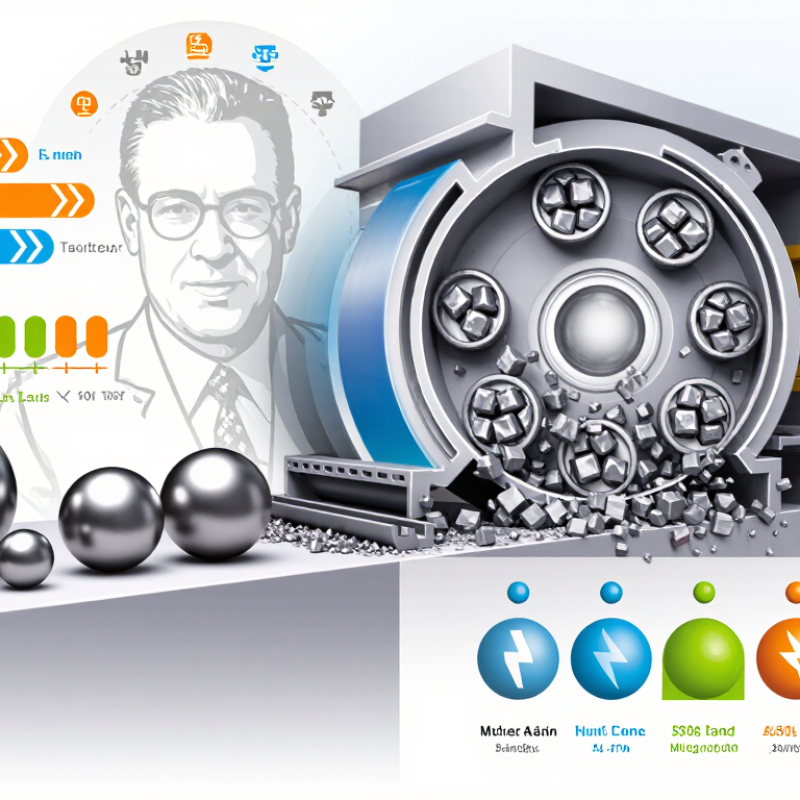
Grinding steel balls are hardened steel spheres used inside tumbling mills to break ore into smaller particles. As the mill rotates, its lining lifts the balls and ore, then gravity pulls them down. The falling charge crushes coarse fragments; rolling contact also abrades their surfaces. That combination helps expose minerals for later separation. Small details matter.
Ball size, hardness, and wear rate affect how energy becomes useful breakage. Larger balls can strike coarse feed with greater force, while smaller balls provide more contact points for finer grinding. The balance depends on ore size and hardness, mill speed, and the desired product. The U.S. Department of Energy’s 2007 Mining Industry Energy Bandwidth Study estimated U.S. mining energy use at about 1.8 quadrillion Btu in 2002, underscoring why grinding performance deserves attention. It does not mean steel balls alone determine energy use; feed conditions and mill operation matter too. In practice, worn balls gradually lose mass and change the charge, so operators track consumption and adjust the mix. There is no perfect setting. A trial can look convincing, then behave differently when the ore changes.
Why Choose Grinding Steel Balls for Mining?
Grinding steel balls are spherical media used in rotating mills. As the mill turns, the balls lift and fall, breaking ore through impact and abrasion. Their mass increases rapidly with diameter, helping deliver stronger impacts. The chart shows calculated mass for solid steel spheres at selected diameters, using a steel density of approximately 7,850 kg/m³. Actual grinding media sizes and properties vary by application.
The Role of Grinding Balls in Mining Operations
Why Choose Grinding Steel Balls for Mining?
Grinding steel balls break ore through repeated impact and abrasion inside rotating mills. Their role is practical: expose valuable minerals by reducing rock to a finer, processable size. In a mill, balls cascade against dark, uneven ore, while water carries the ground material onward. Ball size, hardness, and charge level affect grinding efficiency and product consistency. Small changes matter.
The U.S. Department of Energy’s 2007 Mining Industry Energy Bandwidth Study identifies comminution as a major energy-use area, estimating it can consume about 40% of mining energy. This makes ball selection an operating decision, not just a purchasing choice. Balls that wear too quickly may increase replenishment and alter the mill’s grinding profile. Yet harder is not always better; excessive brittleness can cause breakage. Site ore, mill speed, and operating data should guide selection. Results can still be messy.
Tips: Track ball consumption per tonne, inspect worn balls, and compare mill-feed and product sizes regularly. Use trial data before changing the ball mix. A neat spreadsheet helps, but it cannot replace careful checks at the mill.
Why Choose Grinding Steel Balls for Mining? — The Role of Grinding Balls in Mining Operations
Diameter ranges are indicative examples, not universal specifications. Actual grinding-media selection should be based on ore characteristics, feed and target product sizes, mill design, and operating data.
Key Advantages of Steel Balls in Ore Processing
Grinding steel balls deliver repeated impact and abrasion inside a rotating mill, helping break ore into particles that can be separated downstream. Their high density makes them effective in hard-rock grinding, while a controlled range of ball sizes supports both coarse breakage and finer grinding. Small details matter. Ball diameter, hardness, and charge level must match the ore and mill conditions; a poor fit can increase wear without improving throughput.
The Coalition for Energy Efficient Comminution (CEEC) has reported that comminution uses roughly 3% of global electricity and can account for up to half of a mine’s energy use. That figure puts media selection in perspective: even modest efficiency changes may matter at operating scale. Steel balls are widely used because their wear and impact performance can be monitored through routine checks of ball consumption, mill power, and product size. But the benefit is not automatic. Abrasive or unusually hard ore can accelerate wear, and worn balls may shift the charge’s size distribution. I would treat laboratory wear tests as a starting point, not a guarantee; plant results still depend on ore variability and operating practice.
How to Select Grinding Balls for Mining Applications
Selecting grinding balls for mining applications starts with the ore and the mill, not a catalog description. Hard, abrasive ore may need balls with strong wear resistance, while a mill with heavy impacts also needs adequate toughness. A ball that is too brittle can chip; one that is too soft may wear quickly. Match ball diameter to feed size, mill design, and the target grind. Larger balls can break coarse particles, while smaller balls offer more contact points for finer grinding. It is a balance.
Check the ball material and hardness, but do not rely on one number alone. Chemistry, heat treatment, and manufacturing consistency can affect performance. Ask for test data, then compare it with operating results from similar conditions where possible. Small details matter. Record ball consumption, product size, mill power, and any signs of unusual breakage. A short plant trial can reveal more than a confident sales claim. Not always a clean comparison, either: ore hardness and feed size can change during testing. Review the results with those variables in mind, and adjust the ball size or grade gradually rather than changing everything at once.
Factors That Affect Grinding Ball Wear and Performance
Grinding-ball wear depends on more than steel grade. Ore hardness and abrasiveness can change sharply across a deposit, while oversized or angular particles increase impact and surface damage.
The U.S. Department of Energy’s 2007 Mining Industry Energy Bandwidth Study estimated that comminution used about 29% of mining energy in its assessment. That figure is not universal, but it shows why poor grinding efficiency matters.
Small details matter.
Ball diameter, hardness, and toughness must suit the mill and feed. Very hard balls may resist abrasion, yet can be more vulnerable to fracture under severe impacts. Mill speed, ball charge, slurry density, and water chemistry also affect wear; corrosive conditions can accelerate material loss. I would not choose media by hardness alone. A useful check is to track ball consumption per tonne alongside product size and mill power, then compare results under similar ore conditions. The Global Mining Guidelines Group’s 2016 guide to Bond efficiency offers a framework for evaluating grinding-circuit performance. It is a starting point, not a substitute for site trials. Ore blends vary, and the “best” ball may change with them.