How to Choose the Best Hot Forging Press for Your Needs?
Choosing the right hot forging press can significantly impact your manufacturing process. This decision is crucial for efficiency and productivity. With various models and specifications available, it can be overwhelming. Many factors must be considered, such as size, power, and features.
A hot forging press plays a vital role in metal shaping. It defines the quality of the final product. Understanding your specific needs is essential. For instance, what materials will you work with? What production volume do you expect? These questions can guide your choice. Additionally, reflect on the long-term costs and maintenance requirements.
Investing in a hot forging press is not just about immediate benefits. It's also about future growth. Consider how the press will fit into your evolving needs. A thoughtful choice can lead to greater efficiency and reduced waste. Ultimately, the right hot forging press can enhance your operational capabilities and competitive edge.
Understanding Hot Forging and Its Applications
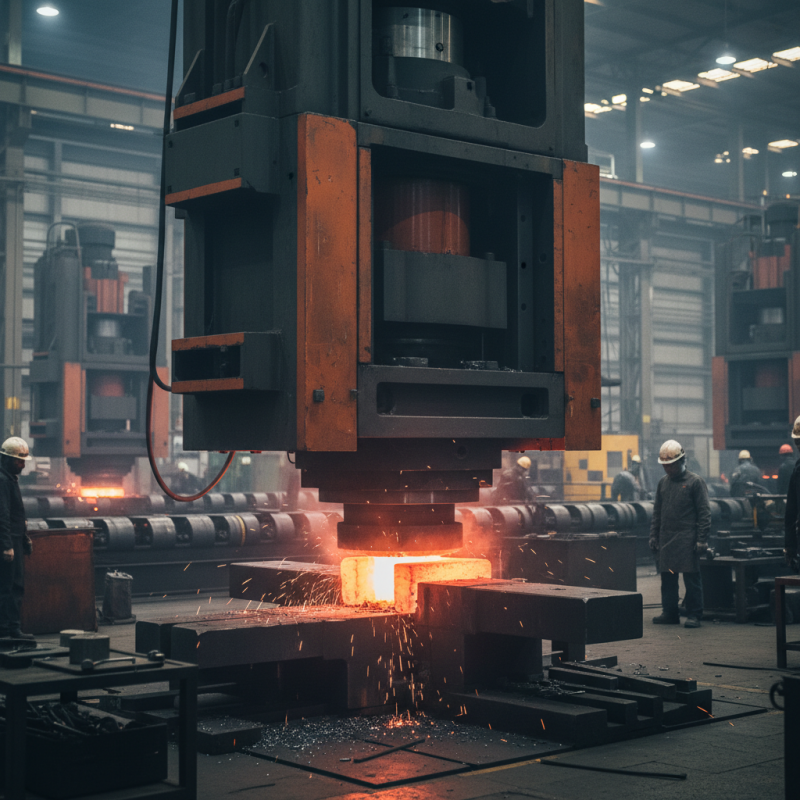
Hot forging is a manufacturing process that involves shaping metal at elevated temperatures. The heat improves ductility, making the metal easier to work with. This process is crucial for creating components that require high strength and durability, such as parts used in automotive and aerospace applications.
In hot forging, metal is typically heated to temperatures exceeding its recrystallization point. This allows for moldable shapes without cracking. While hot forging can produce complex geometries, it also presents challenges. For instance, controlling temperature and material properties can be tricky.
Improper heating can lead to defects, compromising the integrity of the final product.
Understanding the specific requirements for your project is critical. Different metals react differently to heat. For example, steel may require a different approach compared to aluminum. Evaluating the desired application outcomes will guide you in selecting the right forging techniques.
This evaluation process can be more iterative than expected, revealing complexities in material behavior and design.
Key Factors in Selecting a Hot Forging Press
When selecting a hot forging press, it's crucial to consider several key factors. The capacity of the press must align with your production requirements. A machine with too low a capacity might slow down operations. Conversely, selecting an oversized press can lead to unnecessary energy consumption and increased costs.
The type of materials you plan to forge is another important consideration. Different materials have varying requirements for temperature and pressure. Understanding these needs will help you choose a press that can effectively handle your specific materials. A mismatched press could result in poor-quality products and increased waste.
Lastly, don’t overlook service and support. Look for manufacturers who offer training, maintenance, and responsive customer service. A press is an investment, and maintaining it is vital for longevity. Ensure the supplier can provide reliable support, as this can save you from future downtime and repair costs. Choosing the right hot forging press requires a thoughtful approach. Reflect on your specific needs, and be prepared to engage with experts in the field for guidance.
Types of Hot Forging Presses Available on the Market
When selecting a hot forging press, understanding the types available is crucial. There are generally three main categories: hydraulic, mechanical, and screw presses. Each type has distinct features that influence their application.
Hydraulic presses utilize fluid pressure, allowing for high force outputs. They are often preferred for intricate shapes and materials. Mechanical presses operate using a crank mechanism to deliver consistent force. They are effective for mass production and simpler designs. Screw presses, on the other hand, provide a unique option. Their continuous rotation allows for precise control in forging operations.
Choosing the right type often depends on the specific requirements of the project. Each category has its strengths and weaknesses. Not every press will suit every need.
It’s essential to reflect on the materials, shapes, and production volumes involved. Inadequate evaluation could lead to inefficiencies. Understanding these nuances will guide you toward a more informed decision.
Evaluating Press Specifications and Features
When selecting a hot forging press, evaluating specifications and features is crucial. Different types of presses serve varying needs. Key specifications to consider include the press capacity, stroke length, and forming force. According to a recent industry report, a press with a forming force of at least 1,200 tons is optimal for most heavy-duty applications. This capacity supports complex forging operations and enhances production efficiency.
Beyond basic specifications, examine advanced features. A programmable control system can improve precision and repeatability. These systems often incorporate adaptive algorithms that adjust parameters in real time, reducing waste and downtime. Industry studies indicate that presses equipped with such technology increase productivity by up to 30%. Additionally, energy efficiency should not be overlooked. Presses that utilize hydraulic systems with energy recovery can significantly lower operational costs over time.
Consider usability as well. An intuitive interface can minimize training time and reduce user errors. A user-friendly design should facilitate quick adjustments during production. Feedback from operators frequently highlights the importance of ergonomic designs, which can lead to a safer working environment. While many machines boast impressive specifications, it is vital to assess how these features translate into real-world applications.
Budget Considerations and Cost-Effectiveness in Purchasing
When considering the purchase of a hot forging press, budget becomes a critical factor. According to industry reports, the average cost of a high-quality hot forging press ranges from $100,000 to $500,000. However, it's essential to assess not just the purchase price, but also the long-term cost-effectiveness. A machine that offers better energy efficiency and lower maintenance costs can save significant amounts over time.
Choose a press that fits your production needs. If your operations require high production rates, investing in a more expensive model might be justified. Conversely, for lower output needs, a less costly option may suffice. Careful consideration of your production volume can lead to better financial outcomes.
Tip: Always factor in potential downtime. A budget-friendly press may have higher rates of breakdowns, resulting in additional costs. Investing a bit more upfront can ensure better reliability. Additionally, seek equipment that comes with robust technical support. This can aid in mitigating future repair costs. Always reflect on these aspects before making a final decision.
How to Choose the Best Hot Forging Press for Your Needs? - Budget Considerations and Cost-Effectiveness in Purchasing
| Feature | Details | Cost Range ($) | Cost-Effectiveness Rating (1-5) |
| Press Type | Hydraulic | 20,000 - 150,000 | 4 |
| Capacity (Tons) | 100 | 30,000 - 70,000 | 5 |
| Speed (Cycles/Minute) | 5-10 | 10,000 - 50,000 | 3 |
| Control System | Programmable | 15,000 - 100,000 | 5 |
| Energy Efficiency | High | 25,000 - 200,000 | 5 |
| Maintenance Requirements | Low | 5,000 - 20,000 | 4 |