How to Choose a CNC Metal Milling Machine for Your Needs?
Choosing a cnc metal milling machine is a production decision, not merely an equipment purchase. The right model must match material, tolerance, part size, batch volume, tooling, and operator capability. A compact three-axis mill may suit aluminum brackets, while hardened steel components often need stronger spindles, better rigidity, and controlled coolant delivery.
Market evidence shows why this choice deserves care. Grand View Research estimates that the global CNC machine market was valued at more than USD 80 billion in 2023, with continued growth expected through 2030. Fortune Business Insights reports similar expansion, although market estimates vary by definition and region. That difference matters. It reminds buyers to examine machine specifications, not only impressive forecasts. The International Federation of Robotics reported 541,302 industrial robots installed worldwide in 2023, reflecting manufacturers’ broader move toward repeatable, data-supported production.
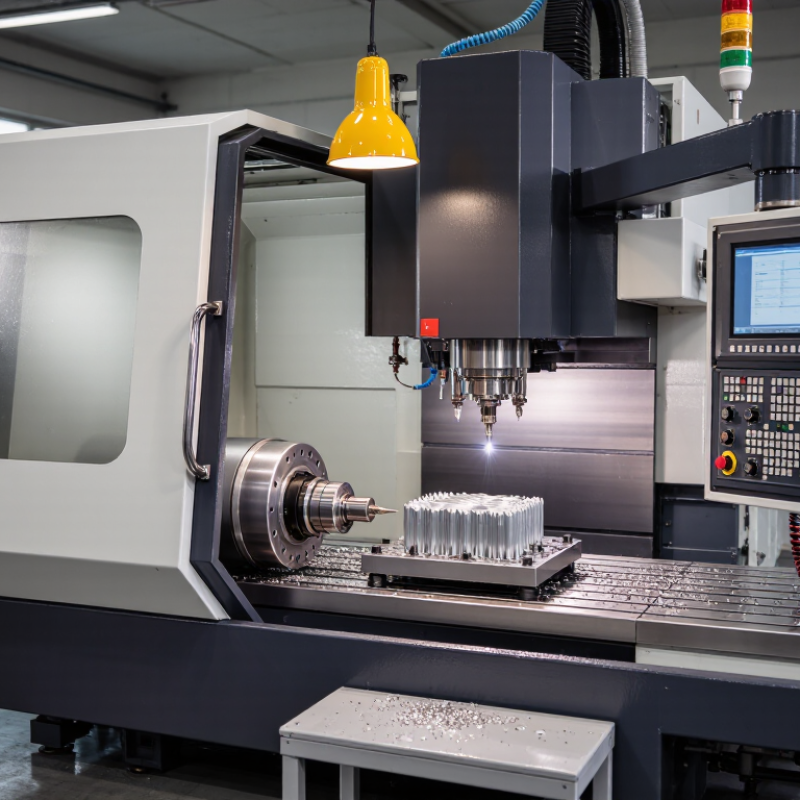
In practice, compare spindle speed, torque, travel range, table load, positioning accuracy, and control-system usability. Check whether the machine accepts your preferred tool holders and probing equipment. A shop cutting titanium needs different thermal management from one machining aluminum housings. Noise, chip evacuation, floor space, and service response also affect daily output. Small details become expensive later.
Experience should guide the final judgment. Request sample cuts using your actual alloy and tools. Measure surface finish, cycle time, and dimensional drift after warm-up. Do not trust a brochure alone. A lower-priced machine can become costly through downtime, training gaps, or limited technical support. The best choice balances present work with realistic future demand, while leaving room for honest uncertainty.
Define Your CNC Metal Milling Requirements
Before comparing CNC metal milling machines, define the work they must perform. Write down the metals, part sizes, tolerances, and expected production volume. Aluminum cuts quickly, while stainless steel demands greater rigidity, stable tooling, and careful heat control. Record the largest workpiece, including its length, width, height, and weight. Leave room for fixtures and tool access. Small details matter.
Then set realistic accuracy and surface-finish requirements. A part requiring a tight tolerance may need better thermal stability and measurement practices. If drawings allow wider tolerances, an oversized machine may waste money and floor space. Production volume also changes the decision. Prototype work may favor flexible setup and easy programming. Repeated production needs dependable cycle times, automatic tool changes, and simple chip removal.
Do not ignore your workshop conditions. Check available power, floor strength, door clearance, ventilation, coolant handling, and operator skill. In my experience, these practical limits often cause more trouble than the machine specifications. I once underestimated the space needed to load a heavy fixture. That mistake was expensive. Consider future work, but avoid paying for capacity you cannot use. Discuss training, maintenance access, inspection tools, and spare tooling with the supplier. Could your team run the machine safely on a busy Monday morning? A reliable requirement sheet should answer that question before any purchase decision.
Compare Machine Types, Sizes, and Working Capacities
Choosing a CNC metal milling machine starts with the workpiece, not the machine’s appearance. A compact benchtop mill suits small aluminum parts, brackets, and repair work. It needs less floor space and usually consumes less power. However, limited travel can become frustrating when parts exceed the table area.
Compare machine types carefully. Three-axis mills handle common pockets, slots, and drilled patterns. Four-axis models rotate the workpiece, reducing repeated setups. Five-axis machines reach angled surfaces and complex contours, but they require stronger programming skills and higher maintenance discipline. More axes are not automatically better.
Size affects working capacity in several ways. Check X, Y, and Z travel, table dimensions, spindle-to-table clearance, and maximum workpiece weight. Leave room for clamps and tool access. A machine rated for a 600 mm table may not safely handle a large steel block. Material matters too. Steel demands greater rigidity and cutting force than aluminum. I once underestimated fixture space and lost useful travel during setup. That mistake changed how I compare machines now. Review real cutting loads, not only advertised travel. Ask for test cuts when possible, and inspect accuracy reports, service access, coolant control, and chip removal before choosing. Smaller may be wiser.
How to Choose a CNC Metal Milling Machine for Your Needs?
Compare typical machine types by usable X, Y, and Z-axis travel. Choose a working envelope that is larger than your largest part and allows room for fixturing and tool access.
Compact mills are suitable for small components and limited production space. Standard vertical machining centers provide a practical balance of size, rigidity, and versatility for general metalworking. Large machining centers are intended for oversized parts, molds, structural components, and jobs requiring extended travels. The figures show representative industry ranges in millimeters, not fixed specifications for every machine.
Evaluate Spindle Power, Speed, and Precision
How to Choose a CNC Metal Milling Machine for Your Needs?
Spindle power determines how confidently a machine removes metal.
Match the motor to your usual materials, cutter diameter, and cutting depth. Aluminum needs less torque than stainless steel or hardened steel. A small spindle may handle light finishing, but it can struggle during deep roughing. Check continuous power, not only the advertised peak rating. Torque at lower speeds also matters when using larger cutters.
In my workshop experience, insufficient torque caused chatter, heat, and uneven tool wear. The machine sounded strained before the surface looked damaged.
Spindle speed affects cutting efficiency, surface finish, and tool life.
Higher RPM can suit small cutters and aluminum, while larger tools often need slower rotation. Use the cutter maker’s recommended surface speed as a starting point. Then adjust for machine rigidity, coolant, and workholding.
Precision depends on more than spindle speed. Check spindle runout, bearing quality, axis resolution, and thermal stability. A stated accuracy figure means little without testing conditions. Ask how accuracy is measured and whether it reflects real production use.
Tiny runout can leave visible lines on a polished pocket.
Do not select the strongest spindle automatically.
Excess power may increase heat, vibration, and purchase cost. My own early choice prioritized power too heavily, and the machine rarely used it. A balanced spindle, rigid frame, and reliable feedback system often perform better.
Inspect sample cuts, measure hole positions, and test repeatability after several hours. Leave room for doubt.
A machine that meets today’s tolerance may need upgrades when your parts become more complex.
Check Control Systems, Tooling, and Automation Features
How to Choose a CNC Metal Milling Machine for Your Needs?
The control system shapes daily productivity more than impressive specifications. Choose a CNC with clear menus, reliable diagnostics, and open communication interfaces. Operators should adjust offsets quickly beside the machine. Built-in probing, tool-life monitoring, and simulation can reduce setup errors. Deloitte’s 2024 Smart Manufacturing and Operations Survey found that 86% of manufacturers view smart manufacturing as a key competitiveness driver. That supports investing in useful connectivity, not decorative software. Ask whether the system records alarms, cutting loads, and maintenance events. Data is valuable only when operators can understand it.
Tooling needs equal attention. Match the spindle taper, torque curve, coolant delivery, and table rigidity to your metals and cutters. A high-speed spindle may struggle with deep cuts in stainless steel. Check automatic tool measurement and broken-tool detection. Small details matter. Bring your common end mills to a supplier test. Observe chip evacuation, surface finish, vibration, and cycle time. A perfect brochure cannot replace this test. No checklist is perfect. Actual material behavior may still expose weak assumptions.
Automation should fit production volume and labor availability. Consider pallet changers, robotic loading, automatic probing, and in-process inspection. The International Federation of Robotics reported 541,302 industrial robot installations worldwide in 2023. However, automation can create new failure points when interfaces are poorly integrated. Confirm recovery procedures after a power loss or misloaded part. Require training, service access, and spare-part availability. The cheapest machine may become expensive when one sensor stops production.
How to Choose a CNC Metal Milling Machine for Your Needs? — Check Control Systems, Tooling, and Automation Features
| Machine Category | Typical Work Envelope | Suitable Materials and Jobs | Control System Features to Check | Spindle and Tooling Requirements | Useful Automation Features | Best-Fit Selection Guidance |
|---|---|---|---|---|---|---|
| Compact 3-Axis Vertical Mill |
X: 400–700 mm Y: 250–400 mm Z: 300–500 mm |
Aluminum, plastics, mild steel, and small steel components. Suitable for prototypes, repair parts, and low-volume production. |
|
|
|
Choose this class when floor space, initial cost, and flexibility matter more than maximum metal-removal rate or large-part capacity. |
| Standard 3-Axis Vertical Machining Center |
X: 700–1,200 mm Y: 400–600 mm Z: 450–650 mm |
Aluminum, carbon steel, stainless steel, cast iron, and engineering plastics. Suitable for general machining and repeat production. |
|
|
|
A strong all-purpose choice for job shops and manufacturers machining mixed materials, varied part sizes, and moderate production volumes. |
| Heavy-Duty Vertical Machining Center |
X: 1,000–2,000 mm Y: 500–800 mm Z: 600–900 mm |
Stainless steel, alloy steel, cast iron, titanium, and large aluminum parts. Suitable for deep cuts, molds, dies, and structural components. |
|
|
|
Select this class when spindle torque, machine rigidity, and long unattended cutting cycles are more important than compact installation. |
| High-Speed Aluminum and Mold Mill |
X: 600–1,500 mm Y: 400–700 mm Z: 400–700 mm |
Aluminum, copper, graphite, plastics, and mold steels with finishing requirements. Suitable for molds, electrodes, aerospace parts, and detailed surfaces. |
|
|
|
Best for high feed rates, fine surface finishes, and complex 3D geometry. It may be unnecessary for low-speed heavy cutting. |
| 4-Axis Vertical Machining Center | Linear travel commonly similar to a 3-axis machine, with a rotary table of approximately 200–800 mm diameter. | Prismatic parts requiring machining on four sides, bolt-circle drilling, indexing, and multiple angled features. |
|
|
|
Choose a 4-axis configuration when multiple setups are causing alignment errors, handling time, or excessive fixture costs. |
| 5-Axis Machining Center | Linear travel varies widely; rotary table diameters commonly range from about 300–1,000 mm for compact and medium machines. | Turbine components, impellers, medical parts, aerospace structures, molds, and parts with many compound surfaces. |
|
|
|
Select only when the part geometry justifies the added programming, setup, calibration, and maintenance requirements. |
| Production Mill with Pallet Automation | Commonly X: 700–1,500 mm, Y: 400–700 mm, Z: 500–700 mm, with one or more standard pallets. | Repeat batches of aluminum, steel, stainless steel, and cast-iron components with stable part designs. |
|
|
|
The added automation is justified when setup time, operator availability, or high machine utilization has a measurable effect on production cost. |
| CNC Mill with Bar Feeder or Robotic Cell | Machine envelope depends on the mill; cell footprint commonly requires additional space for loading, guarding, and material staging. | Repetitive small-to-medium parts with predictable raw-stock dimensions and stable inspection requirements. |
|
|
|
Use this configuration when labor reduction and consistent cycle times outweigh the cost of cell integration and process engineering. |
Selection note: Travel ranges, spindle speeds, taper standards, tool capacity, and automation options are typical industry ranges rather than fixed specifications. Confirm the machine’s actual capacity, workholding limits, electrical requirements, software compatibility, and safety features against the material, part geometry, tolerance, and production volume.
Assess Budget, Maintenance, Safety, and Supplier Support
How to Choose a CNC Metal Milling Machine for Your Needs?
Budget should include more than the purchase price. Add tooling, installation, training, software, electricity, and possible downtime. Deloitte’s 2024 Smart Manufacturing Survey found that 92% of manufacturers view smart manufacturing as important for competitiveness. However, advanced features are not always necessary for a small workshop. A reliable three-axis machine may outperform an expensive system with unused functions. I have seen buyers underestimate workholding costs. That mistake becomes expensive quickly.
Maintenance and safety deserve equal attention. Ask about lubrication access, spare-part availability, service response times, and remote diagnostics. McKinsey reports that predictive maintenance can reduce machine downtime by 30% to 50%. Still, sensors cannot replace daily inspections. Check guarding, emergency stops, chip control, electrical protection, and operator training. Review the supplier’s manuals before purchase. A vague safety explanation is a warning sign. Supplier support also matters during commissioning, not only after a breakdown.
Tips: Request a complete five-year ownership estimate. Test the machine with your actual metal and tooling. Ask for two customer references. Record service response promises in writing. Compare maintenance schedules carefully. Leave room for human error; operators may miss a warning, especially during long shifts. A practical checklist is less impressive than a brochure, but usually more useful.
Related Posts
-
What Is a Large CNC Machine and How Does It Work?
-
What Is the Best Steel CNC Machine from China?
-
Manufacturing Excellence Redefined China Leads the Way with the Best 3D CNC Machines for Global Markets
-
Navigating the Challenges of Choosing the Best Home CNC Machine: Insights and Solutions
-
Unlocking the Potential of Best Home CNC Machines in Woodworking with Step by Step Applications
-
Understanding CNC Machine Working Principles and Their Applications
Let's Build Together

Contact Us: Call 435-563-3503
-OR- Fill in the form below and we will call you back.