China Best Alkaline Water Hydrogen Production Equipment?
Choosing the best Alkaline Water Hydrogen Production Equipment depends less on a headline capacity and more on the demands of the intended application. A system that suits a pilot facility may not fit continuous industrial operation. The right comparison starts with verified hydrogen output, operating pressure, product purity, energy consumption, and expected duty cycle.
An alkaline water electrolysis system typically brings together an electrolyzer, power supply, water treatment, gas separation, cooling, and control equipment. Each part affects installation and operation. For example, check whether the quoted production rate applies at the stated pressure and operating conditions. Compare water-quality requirements, utility connections, floor space, maintenance access, and the supplier’s service arrangements. Small details matter.
Specifications can look similar on paper. They may describe different test conditions, so ask suppliers to explain their figures and provide supporting documentation. A practical assessment should also consider commissioning support, replacement-part availability, monitoring features, and procedures for handling routine maintenance. These checks help buyers judge both performance and long-term fit.
There is no universal winner. The strongest choice is the equipment that meets documented process requirements and can be supported reliably at the site. Some purchasing decisions still rely too heavily on initial price; that deserves a second look. A qualified engineering review can clarify trade-offs before a final selection.
What Alkaline Water Hydrogen Production Equipment Is
What Is Alkaline Water Hydrogen Production Equipment?
Alkaline water hydrogen production equipment uses electricity to split water into hydrogen and oxygen. Its electrolyzer stack contains electrodes separated by a porous diaphragm and an alkaline liquid electrolyte. The diaphragm helps keep the gases apart while ions move through the liquid. That is the core.
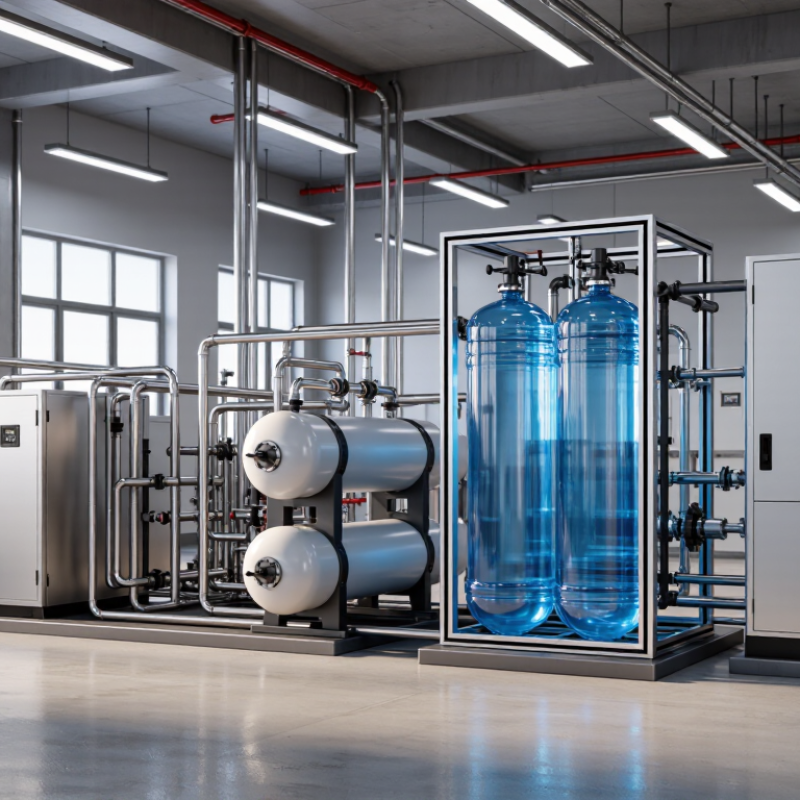
A complete system usually includes the stack, a power supply, water treatment, cooling, gas-liquid separators, and controls. Hydrogen may also pass through purification and drying equipment before use. On a practical skid, pipes, valves, and sensors manage water flow, temperature, pressure, and gas quality. Operators monitor these readings because uneven flow or heat can affect stable operation. The term “alkaline water” can confuse buyers: this is industrial hydrogen equipment, not a drinking-water appliance.
The International Energy Agency’s Global Hydrogen Review 2024 reported 1.4 GW of water-electrolyser capacity installed worldwide by the end of 2023. That figure shows the technology’s growing deployment, but it does not guarantee that every unit performs equally well. Buyers should compare rated output with operating conditions, energy use, hydrogen purity, and maintenance needs. A specification sheet rarely tells the whole story. Feedwater quality and real operating hours matter, too.
What Is Alkaline Water Hydrogen Production Equipment?
Alkaline electrolysis equipment uses electricity to split water into hydrogen and oxygen. Electricity use varies with operating conditions and system boundaries; the figures below are indicative benchmarks, not a product specification.
Energy is shown in kilowatt-hours per kilogram of hydrogen. The 33.3 kWh/kg lower-heating-value figure is a thermodynamic reference; 39.4 kWh/kg is the approximate thermoneutral benchmark. Actual alkaline electrolyzer electricity use is commonly around 50–55 kWh/kg, depending on system design and what equipment is included.
How Alkaline Electrolysis Produces Hydrogen
China Best Alkaline Water Hydrogen Production Equipment?
Alkaline electrolysis uses direct current to split water into hydrogen and oxygen. Inside the cell, a potassium hydroxide solution carries ions between electrodes, while a diaphragm keeps the gases apart. Hydrogen forms at the cathode; oxygen forms at the anode. The process looks simple on paper. Real operation depends on steady power, temperature control, and careful gas separation.
Scale matters. The International Energy Agency’s Global Hydrogen Review 2024 estimates that global hydrogen production reached about 97 million tonnes in 2023, while low-emissions hydrogen remained below 1 million tonnes. These figures show why equipment performance alone does not determine a project’s climate impact: electricity supply matters too. A useful equipment assessment should examine energy use, operating flexibility, gas purity, and maintenance needs—not just rated output.
Water also deserves attention. The theoretical requirement is about 9 litres per kilogram of hydrogen, though practical systems may use more because of treatment and process losses. Inspect seals, electrolyte condition, and the separator regularly. Small leaks matter. “Best” is a slippery word: a unit suited to stable industrial power may perform poorly with variable renewable electricity. I would compare real operating data, not rely only on a brochure.
Core Components and Performance Measures
China Best Alkaline Water Hydrogen Production Equipment?
Core Components and Performance Measures
A practical assessment starts inside the stack, not with the cabinet’s advertised output. Electrodes provide reaction surfaces, while the porous diaphragm separates product gases and allows ions to pass. The electrolyte circulation system helps move heat and maintain consistent conditions across the cells. Power electronics also matter: unstable current can affect output and place extra stress on components. Small leaks matter. Inspect seals, pipe joints, and separators during routine maintenance.
Compare equipment using hydrogen output, energy consumption per unit produced, gas purity, operating pressure, and load response. Check the measurement conditions; figures taken at different temperatures or loads are not directly comparable. A reliable test records current, voltage, temperature, pressure, and gas flow over time. Numbers need context. Also review start-up behavior, alarms, cooling performance, and the time required for routine servicing. A tidy control screen is useful, but it cannot replace sound operating data. One detail is easy to underestimate: real sites rarely run at perfectly steady loads, so performance under changing demand deserves close attention.
| Component or measure | Function | Typical engineering range or specification | Performance and selection considerations |
|---|---|---|---|
| Electrolyzer stack | Uses direct current to split water into hydrogen and oxygen in an alkaline electrolyte. | Conventional alkaline systems commonly operate around 60–90 °C. Cell voltage and current density depend on stack design and operating conditions. | Compare hydrogen output, cell voltage, current density, operating pressure, efficiency, and expected service life. Evaluate figures at the stated load and system boundary. |
| Electrodes and diaphragm | Electrodes drive the electrochemical reactions; the diaphragm separates product gases while allowing ionic conduction. | Electrode coatings, substrate materials, diaphragm construction, and thickness are design-specific. | Assess gas crossover, corrosion resistance, electrical losses, durability, and maintenance requirements. Request test conditions and replacement criteria. |
| Alkaline electrolyte | Provides the ion-conducting medium within the stack. | Potassium hydroxide (KOH) is commonly used; concentrations around 20–30% by weight are typical in many designs. | Concentration and temperature affect conductivity, corrosion, and system operation. Follow the equipment supplier’s specified electrolyte and handling procedures. |
| Power supply and rectifier | Converts incoming AC electricity into controlled DC power for the stack. | Rated for the stack’s required DC voltage and current; input voltage and frequency must match the installation. | Review conversion efficiency, current control, power quality, turndown, and compatibility with variable renewable power. Include rectifier losses when comparing system energy use. |
| Gas–liquid separators | Separate hydrogen and oxygen streams from entrained electrolyte and liquid water. | Usually provided on both the hydrogen and oxygen sides; vessel sizing is specific to flow, pressure, and operating conditions. | Check liquid carryover, gas purity, pressure stability, drainage, and safe separation of the two product streams. |
| Gas purification and drying | Removes residual moisture and, where required, trace impurities from the hydrogen product. | Product purity depends on the process configuration and the specified outlet pressure and dew point. | Specify hydrogen purity, moisture or dew-point limit, outlet pressure, and measurement method. Purity claims should state whether they apply before or after purification. |
| Water treatment and feed system | Supplies suitably treated water and manages feed, make-up, and electrolyte-related water flows. | The net electrochemical reaction consumes about 9 kg of water per kg of hydrogen; actual feed requirements depend on system design and losses. | Confirm feed-water quality limits, treatment equipment, water recovery, and expected consumption. The theoretical reaction requirement is not the same as total plant water use. |
| Cooling and thermal management | Removes heat and helps maintain the stack and electrolyte within the specified operating range. | Cooling capacity is determined by stack power, heat generation, ambient conditions, and the selected cooling arrangement. | Review temperature stability, cooling-water demand, heat rejection, and performance at the site’s design ambient temperature. |
| Controls and instrumentation | Monitors and controls stack operation, process flows, temperature, pressure, and safety interlocks. | Instrumentation commonly includes temperature, pressure, flow, and gas-composition monitoring at relevant process points. | Check alarm and trip logic, data logging, remote monitoring, control-system interfaces, and documented operating limits. |
| Safety systems | Reduce risks associated with hydrogen, oxygen, pressure, electrical power, and alkaline chemicals. | Protection is installation-specific and may include pressure relief, ventilation, gas detection, isolation, and emergency shutdown functions. | Verify the applicable local codes, hazard assessment, separation of hydrogen and oxygen lines, relief-device sizing, and emergency procedures. |
| Hydrogen production rate | Measures the equipment’s product output under defined operating conditions. | Report in kg/h or Nm³/h, with the normal reference temperature and pressure clearly stated. | Compare rated and turndown output at the same pressure, purity, and ambient conditions. Do not compare flow rates unless reference conditions match. |
| Specific electricity consumption | Measures electrical energy consumed per unit of hydrogen produced. | Commercial alkaline systems commonly fall in the broad range of about 50–60 kWh/kg H₂, depending on design and whether the figure is stack-only or system-level. | Request measured consumption at stated load, outlet pressure, and purity. Confirm whether the value includes rectifier, pumps, cooling, purification, and other auxiliaries. |
| Operating pressure | Defines the pressure of hydrogen leaving the equipment or stack, depending on the stated measurement point. | Available pressure is design-dependent; some systems produce hydrogen at elevated pressure, while others require downstream compression. | Distinguish stack pressure from product delivery pressure and confirm pressure limits, differential-pressure controls, and any compressor requirements. |
| Load range and response | Describes how the system operates as power demand changes. | Minimum load, ramp rate, and start-up time vary by stack, balance-of-plant design, and control strategy. | Request guaranteed operating limits and test data for the intended duty cycle, particularly when pairing with variable renewable generation. |
| Note: The ranges shown are general engineering references, not guaranteed specifications for a particular unit. Actual values depend on equipment design, operating conditions, product requirements, and the measurement boundary. | |||
Chinese Manufacturers and Equipment Types
China Best Alkaline Water Hydrogen Production Equipment?
Chinese manufacturers offer several equipment types, from compact pilot units to modular industrial systems. The right choice depends on hydrogen demand, operating hours, available utilities, and site conditions. An alkaline electrolyzer typically includes a cell stack, power supply, electrolyte circulation, gas-liquid separation, and control equipment. Larger packages may add drying and purification stages. Check what is included; a quoted production capacity may not describe the complete system.
Tips: Request a process flow diagram and a component list. Ask how the supplier verifies hydrogen purity, pressure, and output under stated conditions. Compare energy use at the same operating point, not just headline capacity. Review maintenance access, spare-part availability, and commissioning support. Small details matter.
Factory visits or live acceptance tests can reveal more than a polished brochure. Look for documented quality checks, clear operating manuals, and traceable test results. Ask about materials in wetted parts and how the system handles start-up, shutdown, and changing loads. Specifications can still leave gaps. Even experienced buyers may miss them. A supplier should answer technical questions consistently and explain limits without vague promises. That is a practical way to assess Chinese equipment makers without treating “best” as a one-size-fits-all label.
How to Assess Equipment for Different Applications
Choosing alkaline water electrolysis equipment starts with the job, not the headline capacity. For a steady industrial load, assess continuous output, hydrogen purity, operating pressure, and maintenance access. Check how the stack performs at the site’s actual water quality and ambient temperature. A datasheet’s peak rating is not a daily production guarantee. It rarely tells the whole story.
Renewable-powered projects need a different test. Ask suppliers for measured turndown, ramp response, and efficiency across changing loads, then compare these figures with the real power profile. The IEA’s Global Hydrogen Review 2024 reported nearly 520 GW of announced electrolyser capacity for 2030, while only about 4% had reached final investment decision or construction. That gap makes project readiness and verified operating data essential, not optional. That is easy to overlook.
For a small on-site supply, footprint, operator training, and service access may matter more than maximum output. For a large plant, compare energy use per kilogram, stack replacement assumptions, water treatment needs, and balance-of-plant requirements. Request references from installations with similar duty cycles, and clarify whether quoted efficiency includes auxiliary equipment. One practical weakness: early estimates often assume ideal power and water conditions. Ask for a site-specific operating model before selection.
Let's Build Together
Contact Us: Call 435-563-3503
-OR- Fill in the form below and we will call you back.