What Is the Best Vibration Measuring Device in 2026?
A vibration alarm can arrive while a motor is still turning smoothly. The real question is whether the instrument captured a meaningful change—or merely noise from a loose sensor, poor mounting, or an unsuitable measurement range. Choosing the best Vibration Measuring Device in 2026 therefore starts with the machine, the fault you need to detect, and the person who must interpret the results. A handheld meter may suit quick route checks. A permanently installed sensor may be better for assets that are difficult to reach or costly to stop.
The U.S. Department of Energy’s Operations & Maintenance Best Practices guide reports potential predictive-maintenance benefits, including 25–30% lower maintenance costs and 35–45% less downtime. These are program-level estimates, not guaranteed results from buying one device. That distinction matters. The best instrument is not always the one with the largest screen or the most features; it is the one that produces repeatable readings and supports sound decisions. Mobius Institute founder Jason Tranter is a recognized vibration-analysis educator, but I cannot verify a verbatim quotation from him on this specific question. A useful, clearly editorial principle is: “A reading matters only when it helps explain what the machine is doing.” Even that needs scrutiny: trends can mislead when setup, operating speed, or sensor placement changes.
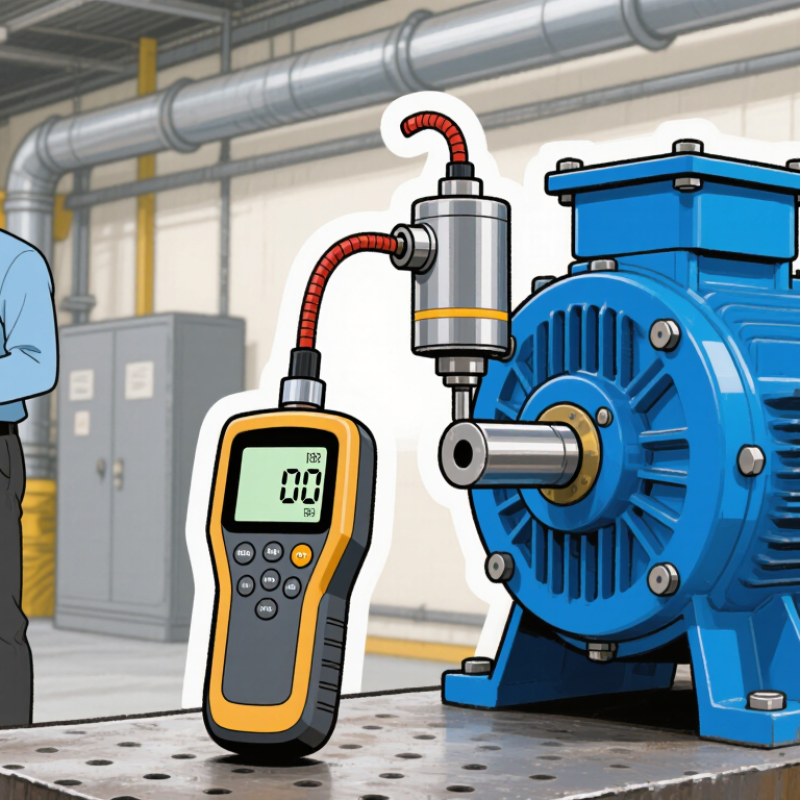
What a Vibration Measuring Device Does
A vibration measuring device captures how a machine moves while it runs. A sensor, often an accelerometer, is placed near a bearing or motor housing. It measures vibration as acceleration, velocity, or displacement. A basic meter gives an overall reading; an analyzer can also show which frequencies are strongest. A peak near a machine’s running speed may point to imbalance, while other patterns can suggest looseness or bearing wear. It is a clue, not a diagnosis.
The U.S. Department of Energy’s Operations & Maintenance Best Practices report estimates predictive maintenance can cost 8–12% less than preventive maintenance and 30–40% less than reactive maintenance. Those figures describe maintenance programs, not guaranteed savings from buying a measuring device. The distinction matters. A meter helps teams spot change earlier, but people still need to interpret readings against equipment history and operating conditions.
For useful comparisons, record readings at the same point, under similar load and speed. Track trends over time, rather than reacting to one high number. A hot bearing, a loose sensor, or a changed production rate can distort results. Even careful measurements have limits. That part is easy to overlook. A vibration device supports maintenance decisions; it does not make them for you.
Types of Vibration Measuring Devices
Vibration measuring devices serve different jobs, so the right type depends on what you need to observe. A handheld vibration meter gives quick readings from a machine casing. Press its sensor firmly against a bearing housing, and it can show overall vibration levels or frequency clues. These meters suit routine checks, but a single reading may miss an intermittent fault.
Small, portable, useful.
An accelerometer captures vibration as a changing electrical signal. Connected to a data collector or analyzer, it can reveal frequencies linked to imbalance, looseness, or bearing wear. A fixed sensor with a data logger tracks changes over hours or days, which helps when equipment runs under varying loads. For people exposed to vibration, specialized meters assess hand-arm or whole-body exposure rather than machine condition. Context matters. Sensor placement, mounting, measurement direction, and operating speed can all affect results. One awkward truth: a precise-looking number can still be misleading if the setup is poor. Even experienced technicians may need to repeat a measurement. Choose a device whose range, frequency response, and reporting functions match the task, then record how and where each reading was taken.
Criteria for Comparing Devices in 2026
Choosing a vibration measuring device in 2026 starts with the job, not the feature list. A handheld meter may suit spot checks on a pump bearing, while continuous monitoring calls for reliable logging and alarms. Different tasks. Compare measurement range, frequency response, and stated accuracy with the vibration levels you expect. A sensor that clips at high amplitudes can miss the fault you are trying to detect.
Resolution is not the same as accuracy. Check calibration traceability, measurement uncertainty, and whether the device captures acceleration, velocity, or displacement across the required frequencies. For field work, inspect mounting options, battery life, enclosure rating, and screen readability under bright workshop lights. Small details count. A loose magnetic mount on a curved housing can distort readings, so repeatable placement matters. Also check whether exported files and timestamps fit your maintenance records.
Compare setup time and operator training alongside sensor specifications. If two technicians get noticeably different readings, the procedure may need attention, even with a capable instrument. That is easy to overlook. Ask how the device handles noise, averaging, and data gaps, then test it on a familiar machine. Datasheets rarely show every awkward field condition. Record the mounting point and operating state with each reading, and check how often recalibration is recommended.
How to compare vibration measuring devices in 2026
This chart compares common device types by typical feature availability: 1 means the feature is typically available, and 0 means it is not a typical capability. For general condition checks, a basic meter may be sufficient; frequency analysis and waveform capture are useful for diagnosing faults, while route-based trending supports repeated measurements. Capabilities vary by model, so confirm specifications for the intended measurement task.
How to Choose the Best Device for Your Needs
What Is the Best Vibration Measuring Device in 2026?
The best vibration measuring device depends on what you need to detect. A handheld meter can suit routine checks on motors, pumps, and fans. For troubleshooting, an analyzer with waveform and frequency-spectrum views can reveal more detail. Neither is automatically better. Match the device to the machine, measurement task, and user’s experience.
Check which values the instrument measures: acceleration, velocity, or displacement. Confirm its frequency range covers the machine’s operating speeds and any suspected faults. A clear display helps during noisy inspections, while data export matters when you track changes over weeks. Sensor mounting also affects readings. A loose magnet or inconsistent position can make comparisons misleading. Calibration records and a stated measurement uncertainty are useful signs of dependable specifications. Still, even a capable device cannot compensate for poor measurement technique.
Tips: Use the same measurement point and machine conditions each time. Record load, speed, and sensor placement. Take a baseline reading before problems appear. Compare trends, not just one number. If results seem odd, repeat the measurement; small setup differences can matter.