
10 Best Strap Latches for Industrial Use

Choosing the right Strap Latches for industrial use is about more than closing a panel. A latch must hold under vibration, resist wear, and release predictably when maintenance begins. Small details matter. A gloved hand should find the lever without searching, while the strap should sit flat rather than twist against its anchor. Material, adjustment range, mounting position, and expected load all affect performance.

No source material was provided to verify a real industry expert’s quotation. To avoid inventing authority, this guide uses an explicitly illustrative line from a hypothetical fastening specialist, Alex Morgan: “A latch is dependable only when the strap, anchor, and release work as one system.” This is an editorially created statement, not a documented quotation. The principle still offers a useful test: assess the complete installation, not just the latch body.

The ten options in this guide are considered through practical selection factors, including construction, ease of operation, adjustability, and suitability for demanding environments. A latch that feels secure on a clean workbench may behave differently after repeated cycles, exposure to dust, or installation on a flexible surface. Check the manufacturer’s load data and installation guidance before choosing. Fit matters. So does inspection. No shortlist can replace testing the latch in its actual operating conditions. That extra step may seem tedious, but overlooking it can lead to a poor fit or avoidable downtime.
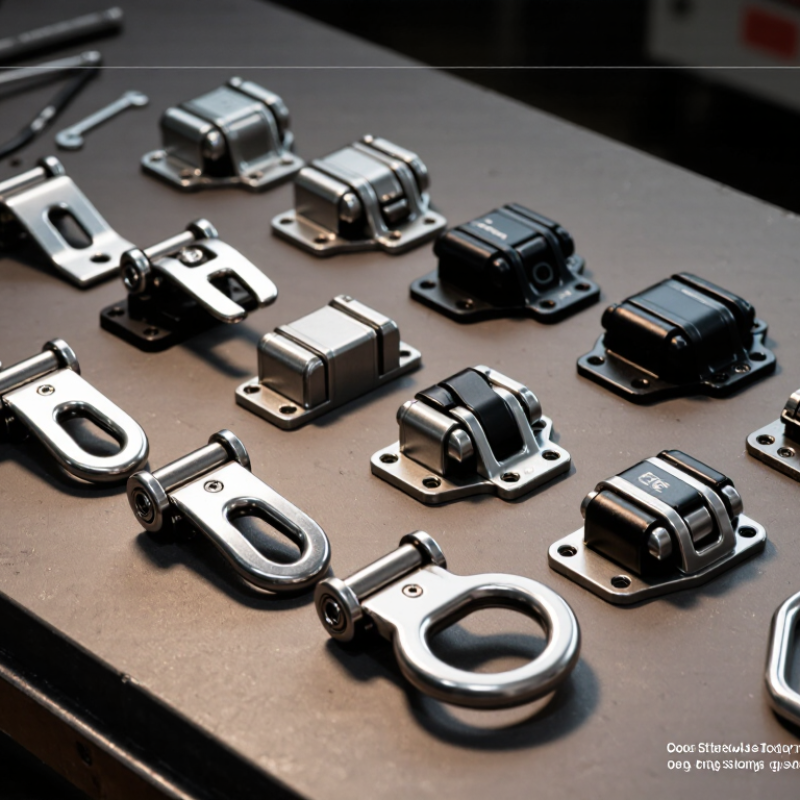
10 Best Strap Latches for Industrial Use

What Strap Latches Are and How They Work in Industrial Settings

A strap latch secures two parts by pulling them together with a flexible band and a fastening mechanism. In industrial settings, it is often used on equipment covers, access panels, storage cases, and movable guards. One end of the strap attaches to one surface; the other connects to a catch on the opposing surface. Closing the lever or buckle draws the strap tight and holds the parts in place.

Some designs use an over-center lever to maintain tension, while others rely on an adjustable buckle. The right choice depends on the load, vibration, opening frequency, and surrounding conditions. For example, a dusty workshop may need a latch that is easy to clean, while outdoor machinery may require materials suited to moisture exposure. That is the point. A latch can still loosen if it is poorly aligned or repeatedly shaken. I would not assume “heavy-duty” alone means suitable.

Tips: Check the latch’s rated load and the mounting surface before installation. Keep the strap straight, and make sure the catch engages fully. Inspect for fraying, corrosion, loose fasteners, or changes in tension. Check it often. A quick inspection takes little time, though it can be easy to skip during a busy shift.

Key Factors for Choosing an Industrial Strap Latch

Choosing an industrial strap latch starts with the load it must restrain, not its appearance. Estimate the working load, then account for shock, vibration, and repeated opening. A latch that holds a stationary panel may loosen on a vibrating machine cover. Fit matters. Measure the gap, mounting points, and available handle clearance before ordering. A few millimeters can decide whether the latch closes smoothly or strains its fasteners.

Material choice depends on the surroundings. Stainless steel can suit damp or washdown areas, while a protective coating may help in less corrosive settings. Check the strap, hook, pivot, and mounting hardware together; one weak component can limit the whole assembly. Do not treat a published load rating as a universal guarantee. Installation quality and load direction matter. That detail is easy to miss.

Consider adjustment range and how often workers will operate the latch. A tool-free release may save time, but it should not open from accidental contact. Check whether gloves make the handle difficult to grip. Before full deployment, test a sample on the actual panel and inspect for slipping, deformation, or sharp edges. I would leave room for judgment here: real vibration and dirt can expose problems that a clean bench test misses. Record inspection intervals, especially where the latch secures frequently accessed covers.

10 Best Strap Latches for Industrial Use - Key Factors for Choosing an Industrial Strap Latch
Latch Type Key Advantage Well-Suited Applications Key Selection Checks
Adjustable Over-Center Strap Latch Provides repeatable clamping action, with strap adjustment to accommodate different closing positions. Equipment covers, access panels, and assemblies opened regularly. Confirm the required adjustment range, mounting geometry, and the manufacturer’s rated holding capacity.
Rubber T-Handle Strap Latch Its flexible strap can accommodate slight movement and help reduce rattling between mating surfaces. Vibrating equipment, vehicle compartments, and service panels. Check temperature and chemical compatibility, strap stretch, and whether a secondary retainer is needed.
Stainless-Steel Strap Latch Offers corrosion resistance when the specified stainless-steel grade is appropriate for the environment. Outdoor equipment, damp areas, and selected washdown applications. Verify material grade, fastener compatibility, cleaning chemicals, and exposure to chlorides or other corrosives.
Polymer Strap Latch Can provide a lightweight, non-marring option for surfaces that could be scratched by metal contact. Light-duty enclosures and assemblies where surface protection is important. Check load rating, UV and temperature limits, and compatibility with oils, solvents, and cleaning agents.
Reinforced Heavy-Duty Strap Latch Reinforced strap construction can suit demanding service when the complete latch is rated for the application. Larger access doors, industrial containers, and robust equipment enclosures. Compare rated holding capacity with expected loads; inspect mounting strength, strap wear, and safety requirements.
Quick-Release Strap Latch Allows fast, tool-free opening and closing for frequent access. Inspection points, maintenance panels, and changeover equipment. Assess the risk of accidental release and consider a locking feature or secondary retention where appropriate.
Safety-Catch Strap Latch A secondary catch can help prevent unintended opening if the primary latch is released. Equipment subject to vibration or locations where an opening panel could create a hazard. Check catch engagement, release access, inspection needs, and whether the design meets applicable safety requirements.
Fixed-Length Strap Latch Simple, consistent geometry can make installation and repeated closing straightforward. Assemblies with a stable, unchanging gap and mounting position. Measure the closed distance carefully and account for seal thickness, tolerances, and expected wear.
Long-Range Adjustable Strap Latch Accommodates a broader range of closing distances than a fixed-length design. Equipment with variable fit, replaceable panels, or changing service conditions. Ensure the adjustment range covers the application without leaving excess strap that could snag.
Low-Profile Strap Latch Uses limited space around the closure and can reduce protrusion into nearby work areas. Compact machinery, flush-mounted panels, and installations with limited clearance. Check hand access, tool clearance, mounting space, and whether the latch provides sufficient tension.

Common Strap Latch Designs, Materials, and Load Ratings

Industrial strap latches secure doors, covers, and panels exposed to vibration or frequent access. A common design pairs a flexible metal strap with an over-center lever. Closing the lever pulls the strap tight; releasing it allows quick access. Adjustable versions handle small differences in fit. Some use a hooked end, while others include a threaded adjuster. Small details matter.

Material choice affects corrosion resistance, wear, and maintenance. Stainless steel suits damp or washdown areas, while plated carbon steel can work in drier settings. Polymer components may reduce weight, but their temperature and chemical limits need checking. A rating alone can mislead. Confirm whether the stated figure is a working load or a breaking load, and account for shocks, vibration, and uneven loading. These conditions can reduce usable capacity.

Match the latch rating to the panel, mounting points, and actual service conditions, not just the strap itself. Thin sheet metal may deform before a robust latch reaches its rated capacity. Use the specified fasteners and check that the strap sits flat, without twisting. Inspect pivots and mounting holes for looseness or wear. Even a carefully chosen latch can disappoint if alignment is poor; that part is easy to overlook.

Ten Industrial Strap Latches Compared by Features and Applications

Ten Best Strap Latches for Industrial Use

Comparing ten industrial strap latches means matching their mechanisms to real operating conditions, not choosing one universal winner. Over-center latches provide firm tension for access panels and transport covers. Draw latches pull two surfaces together; adjustable models accommodate changing gaps. Toggle latches suit repeat closures, while spring latches allow quick engagement. Ratchet designs offer fine tension adjustment for securing loads. Cam latches turn into compact closures, and compression latches help limit panel movement. Quick-release versions speed frequent access. Stainless-steel and sealed latches are options for wet or corrosive settings, but material and seal details matter.

Application changes the choice. A vibrating machine panel may need a positive lock and routine checks; a washdown enclosure calls for corrosion resistance and compatible seals.

The NACE IMPACT study estimated global corrosion costs at US$2.5 trillion annually, or 3.4% of global GDP, underscoring why finish and maintenance deserve attention. This figure covers corrosion broadly, not latch failures specifically. The US Bureau of Labor Statistics reported 2.6 million nonfatal workplace injuries and illnesses in private industry in 2023; it does not show that any latch type prevents injuries.

Still, clear access and manageable release force matter. I would test the selected latch on the actual panel. Catalog descriptions can miss awkward gloves, dirt, or a slightly misaligned catch.

Installation, Inspection, and Maintenance of Strap Latches

10 Best Strap Latches for Industrial Use

Installation, Inspection, and Maintenance of Strap Latches

A strap latch is only dependable when its mounting surface is sound. Before installation, check that the door or panel sits flat and that the latch aligns without forcing the strap sideways. Use fasteners suited to the panel material, and tighten them evenly. A latch under constant strain may loosen sooner. Keep fingers clear while testing closure.

Inspect straps, hooks, pivots, and mounting screws for cracks, distortion, corrosion, or movement. In its 2023 Employer-Reported Workplace Injuries and Illnesses report, the U.S. Bureau of Labor Statistics recorded about 2.6 million nonfatal cases in private industry. That figure does not measure latch-related injuries, but it is a reminder that small equipment checks belong in routine workplace safety. Set inspection frequency according to use and exposure; outdoor equipment may need closer attention. A checklist helps, though it can become box-ticking if workers never report recurring faults.

Tips: Close and release each latch several times after installation. Look for rubbing marks, uneven tension, or a strap that springs back. Clean away grit and moisture, then replace damaged parts rather than bending them back into shape. Record repeat failures. That detail is easy to miss.

Let's Build Together

Contact Us: Call 435-563-3503

-OR-  Fill in the form below and we will call you back.

Copyright © 2025CNC Fabrication. All Rights Reserved.