How to Choose the Best SMPS Power Supply Supplier in China?
Choosing the best Smps Power Supply supplier in China takes more than comparing prices. The right partner must understand your load, operating environment, and production schedule. A unit that looks suitable on paper may behave differently inside a warm control cabinet or under a sudden load change.
Check technical fit before discussing volume. Ask for clear specifications on output voltage, ripple, efficiency, hold-up time, protection features, and temperature range. Request test reports and sample units, then verify performance against your actual load. Small details matter. A loose terminal, noisy fan, or unclear label can create delays later.
Robert W. Erickson, a respected power-electronics researcher, describes the field this way: “Power electronics is the application of electronics to the control and conversion of electric power.” His definition is a useful reminder: a supplier’s engineering capability matters as much as its catalog. Ask how the team handles design changes, component traceability, quality checks, and warranty claims. If possible, review the production process and speak with customers who use comparable products.
Compare more than the quotation. Consider communication speed, sample consistency, lead times, and support after delivery. No supplier is perfect. That deserves attention. A very low price may reflect a genuine efficiency, but it may also leave questions about testing or service unanswered. A careful shortlist, backed by documents and practical testing, helps you choose an Smps Power Supply partner with fewer surprises—and clearer expectations.
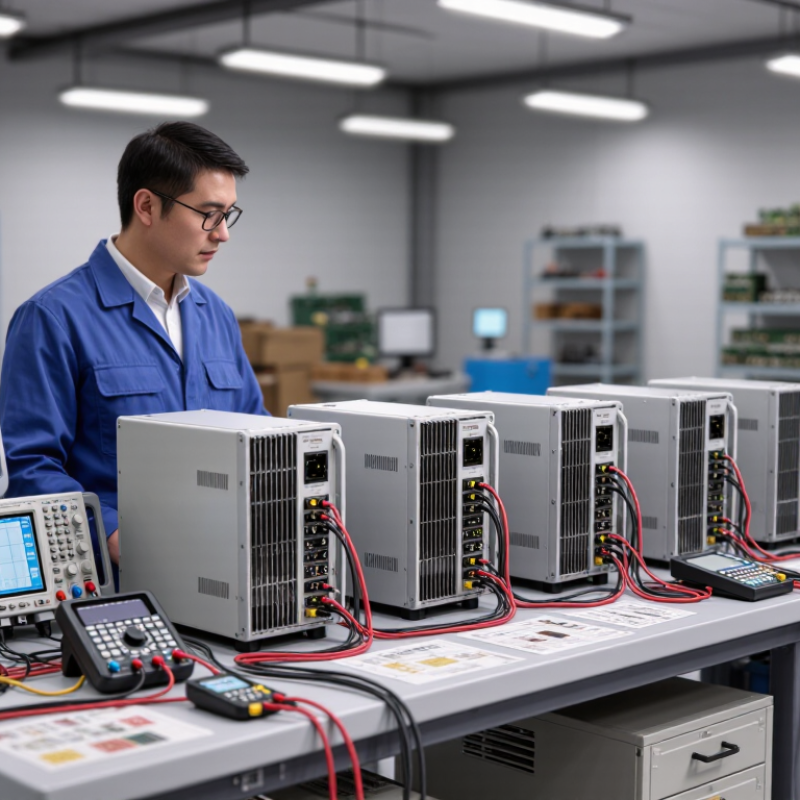
Define Your SMPS Power Supply Requirements
Before contacting an SMPS power supply supplier in China, map the actual demands of your equipment. Record the input voltage range, required output voltage, and continuous current. Start with the load. Measure twice. Include startup surges, not just the steady reading on a meter. A motor, LED array, or control board may draw much more current briefly. Note how many hours the unit runs each day and whether it sits in a hot cabinet, a dusty workshop, or a ventilated enclosure.
Set practical limits for ripple, noise, operating temperature, and physical size. Leave room for wiring and airflow around the power supply. A 20–30% power margin can be a useful starting point, but it is not a universal rule; check the load profile and test a sample.
That number matters.
Specify connector type, cable length, mounting method, and any required protection features, such as over-current or over-temperature protection. Small details cause delays. If the unit serves a sensitive instrument, request relevant test data and confirm how measurements were made. A polished specification can still miss a real operating condition. Review it against the equipment in use, then ask suppliers to identify any assumptions before quoting.
Assess the Supplier’s Technical and Manufacturing Capabilities
Assess the Supplier’s Technical and Manufacturing Capabilities
A credible SMPS supplier should explain how its design performs beyond the datasheet. Ask for efficiency curves at 10%, 50%, and full load, plus ripple, hold-up time, and thermal test results. IEA’s Electricity 2024 report says global electricity demand grew 2.2% in 2023 and is expected to average 3.4% annual growth through 2026. That wider demand makes conversion losses worth examining closely. Numbers matter. Request the test conditions, not just headline efficiency figures.
Factory discipline matters just as much. Review sample inspection records, component traceability, automated optical inspection, and end-of-line load-test coverage. Ask how the supplier handles failed units and verifies corrective actions across later batches. Look closely. A polished audit sheet may still hide uneven production. Compare pilot-run results with routine lot data, including yield and defect trends. If possible, inspect calibration labels on test equipment and observe a live production run. IEA figures provide context, not proof of product quality; supplier-specific evidence must carry the decision. A few missing records may be explainable, but repeated gaps deserve a harder question.
Verify Product Quality and Regulatory Compliance
How to Choose the Best SMPS Power Supply Supplier in China?
Verify Product Quality and Regulatory Compliance
A dependable SMPS supplier should provide test reports for the exact model you plan to buy. Check output voltage, load regulation, ripple, efficiency, and temperature results. Ask which safety and electromagnetic compatibility standards apply in your destination market. Then confirm that certificates and reports cover the same model, rating, and factory. A certificate alone is not enough. Check its issuing body and validity directly.
Tips: Request a sample, label photos, and a batch traceability record. During evaluation, test the unit under your real load. Monitor heat near the transformer and capacitors after several hours. Ask how the supplier handles failed inspections and production changes. Clear answers matter.
Quality also depends on repeatable production, not just a polished sample. Ask about incoming component checks, aging tests, and final inspection records. If possible, arrange an independent audit or pre-shipment inspection. Compare the production unit with the approved sample, including connectors and safety markings. Even careful buyers can miss small changes between batches. No checklist catches everything; treat a clean report as a useful starting point, not a guarantee.
Compare Pricing, Lead Times, and After-Sales Support
A useful supplier comparison starts with identical requirements. Send each factory the same input range, output voltage, wattage, ripple limit, and operating temperature. Request a line-item quote covering samples, minimum order quantity, packaging, and freight. A low unit price may exclude testing or protective features. Ask what is included. Check whether the quoted model matches your actual load, not just its headline wattage.
Lead times need the same scrutiny. Ask for separate estimates for sample approval, production, and shipping. Confirm whether the schedule depends on specific components or a deposit date. For example, a four-week production estimate means little if a key capacitor is not in stock. Request a realistic delivery window and ask how delays are reported. Estimates can still slip; suppliers do not control every component shortage.
After-sales support becomes important when a unit fails under real operating conditions. Ask who handles technical questions, how quickly they respond, and what information they need for fault analysis. A clear process may request photos, load details, or returned samples. Get warranty coverage, repair options, and replacement timing in writing. Polite promises are not enough. Compare the quality of the answers, too. One supplier may be cheaper, but vague replies can cost time later. I would not treat a polished quotation as proof of dependable support.
Evaluate Samples and Confirm Supplier Reliability
Request production-representative samples, not hand-selected units. Test each sample at low, nominal, and full load, then record output voltage, ripple, startup behavior, and temperature rise. Run the supply inside its intended enclosure; restricted airflow can change thermal results. Check overload and short-circuit protection under controlled conditions. Small details matter. Compare measured efficiency with the supplier’s datasheet, and keep photographs, serial numbers, and test conditions. A polished sample is useful, but it does not prove every production batch will match.
Supplier reliability needs evidence beyond a tidy specification sheet. Ask for documented quality checks, component traceability, change-control procedures, failure-analysis records, and a clear process for handling defective units. Request recent inspection reports and references from customers with similar load and volume requirements. If possible, audit the factory or arrange a live video review of incoming inspection and final testing. I still question flawless spreadsheets; real processes sometimes have gaps.
The risk is worth taking seriously. Uptime Institute’s 2024 Annual Outage Analysis reported that 54% of respondents said their most recent significant outage cost more than $100,000. This is not a power-supply-specific statistic, but it shows why component reliability deserves scrutiny. Ask the supplier to explain how sample results are tied to routine production tests, and put agreed test limits in writing. A certificate alone is not enough.
How to Choose the Best SMPS Power Supply Supplier in China? — Evaluate Samples and Confirm Supplier Reliability
Suggested buyer scorecard: use these relative weights to compare suppliers, then verify each item with sample tests and supporting records. The weightings are a practical framework, not industry statistics.
Test sample units under the conditions specified in the product datasheet. Check electrical performance, protection behavior, and consistency across samples; confirm compliance documents, traceability, communication, and delivery terms before placing an order.