
7 Best Powder Sieve Machines for Industrial Use?
A reliable Powder Sieve Machine helps manufacturers control particle size, remove unwanted agglomerates, and protect downstream equipment. These tasks matter in food, pharmaceutical, chemical, and mineral processing, where a few oversized particles can affect product consistency. The U.S. Chemical Safety and Hazard Investigation Board’s Combustible Dust Hazard Study documented 281 dust fires and explosions from 1980 to 2005, resulting in 119 deaths and 718 injuries. Not every powder presents this hazard, but the findings underline why dust containment and site-specific risk assessment belong in equipment selection.
“Best” depends on the material and the production line. A compact vibratory screener may suit a small batch, while a centrifugal sifter can support continuous processing. Mesh size, throughput, cleanability, noise, and changeover time all deserve close attention. So does the powder itself: a free-flowing granule behaves differently from a fine, moisture-sensitive blend. Published equipment specifications offer a useful starting point, not a guarantee under real operating conditions. A short material trial can expose blinding, dust escape, or capacity limits that a brochure will not show.
This guide compares seven industrial sieve-machine types by application, strengths, and practical trade-offs. It focuses on details buyers can verify, including screen access, sealing, and maintenance needs. The right choice is rarely the most powerful machine. Fit matters more.
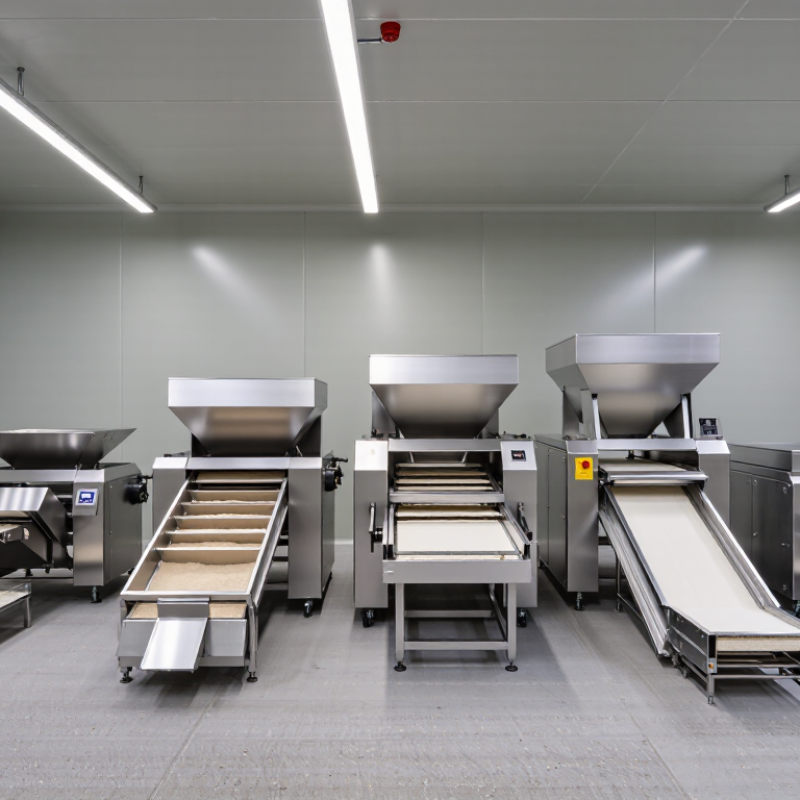
Understanding the Role of Industrial Powder Sieve Machines
Industrial powder sieve machines help control particle-size distribution before material reaches mixing, filling, or packaging. A mesh screen separates oversized particles and agglomerates from usable powder. This can improve flow through a hopper and reduce interruptions on a production line. Small changes matter. A few damp clumps can bridge a narrow chute, while excess fines may create dust or uneven dosing. Operators select screen openings according to the target size range, powder behavior, and downstream process—not simply the desired appearance.
A sieve also supports consistent production, but it cannot make every batch identical. Feed rate, vibration intensity, screen condition, and moisture all affect separation. A worn mesh may allow coarse particles through, while overloading can trap acceptable powder with rejects. Moisture matters. Routine checks should cover screen tension, seals, and a retained sample from each run. Recording settings alongside batch conditions makes results easier to assess. Still, sieve data can mislead if sampling is careless; one scoop from the top may not represent the whole lot. That deserves a second look. Operators need to verify performance with the actual material and adjust when conditions change.
7 Best Powder Sieve Machines for Industrial Use? - Understanding the Role of Industrial Powder Sieve Machines
| Machine Type | Screening Action | Best Suited For | Key Strength | Selection Consideration |
|---|---|---|---|---|
| Circular Vibrating Sieve | Uses vibration to move material across one or more circular screens. | General-purpose grading, scalping, and removal of oversize particles from free-flowing powders and granules. | Compact design and flexible use with different screen decks and configurations. | Fine or cohesive powders may need careful screen selection and measures to prevent blinding. |
| Ultrasonic Vibrating Sieve | Combines mechanical vibration with ultrasonic energy applied to the screen mesh. | Fine powders that tend to clog or blind conventional screens. | Ultrasonic vibration can help keep fine mesh openings clear during screening. | Requires compatible screens and an ultrasonic system; suitability depends on the powder and required cut size. |
| Centrifugal Sifter | A rotating rotor moves powder through a cylindrical screen. | Continuous screening of dry, free-flowing powders and granules in enclosed process lines. | Can be integrated into conveying and processing systems with a relatively compact footprint. | Not ideal for every fragile or heat-sensitive material; rotor speed and screen choice affect product handling. |
| Gyratory Sifter | Uses a gentle, gyratory motion to carry material across large horizontal screen areas. | High-throughput classification of dry materials where a larger screening area is useful. | Large screen area supports high-volume separation and multi-deck grading. | Typically needs more floor space than compact circular units; installation and screen access should be planned. |
| Linear Vibrating Screen | Directional vibration conveys material along a straight or slightly inclined screen deck. | Scalping, dewatering, and separation of powders or granules where conveying along the deck is required. | Provides a clear material-flow path and can be configured with multiple decks. | Screening performance depends on feed distribution, deck inclination, and material flow characteristics. |
| Tumbler Screening Machine | Uses a low-frequency, three-dimensional tumbling motion to move material over the screen. | Delicate, difficult-to-screen, or relatively fine materials that benefit from longer residence time. | Gentle screening action and a large effective screening area. | Often requires more space and may have lower throughput than some high-energy screening systems. |
| Inline Pressure Sieve | Moves material through an enclosed screen using a rotating element and process-line pressure or conveying force. | Continuous screening in closed pneumatic or process conveying systems. | Enclosed design can reduce dust release and support integration into a production line. | Must be matched to line pressure, feed conditions, material properties, and applicable safety requirements. |
Selection note: Actual screening efficiency and throughput vary with powder properties, moisture, feed rate, screen opening, machine configuration, and operating conditions. Confirm performance through material testing and process requirements.
Let's Build Together


Contact Us: Call 435-563-3503
-OR- Fill in the form below and we will call you back.