
7 Best Plastic Candy Stand Up Pouches for Bulk Buyers?
Choosing packaging for a large candy order involves more than comparing prices. Plastic Candy Stand Up Pouches can help products stay organized, visible, and easier to handle on shelves. Yet the right option depends on the candy itself, order size, filling process, and storage conditions. A pouch designed for chewy gummies may not suit sharp, hard sweets. Small details matter.
This guide explores seven pouch options for bulk buyers, including practical differences in material, size, closure, and display appeal. Look closely at seal strength, pouch dimensions, and whether the opening works with your packing equipment. A clear window can show colorful candy, while an opaque finish may offer a cleaner, more uniform look. Ask suppliers for product specifications and applicable food-contact documentation, then test samples with your actual candy before placing a large order. One thing is easy to overlook: a pouch that looks ideal in a sample can behave differently during filling, shipping, or repeated handling. No option is perfect. The aim is to find a dependable balance between product protection, presentation, and total cost.
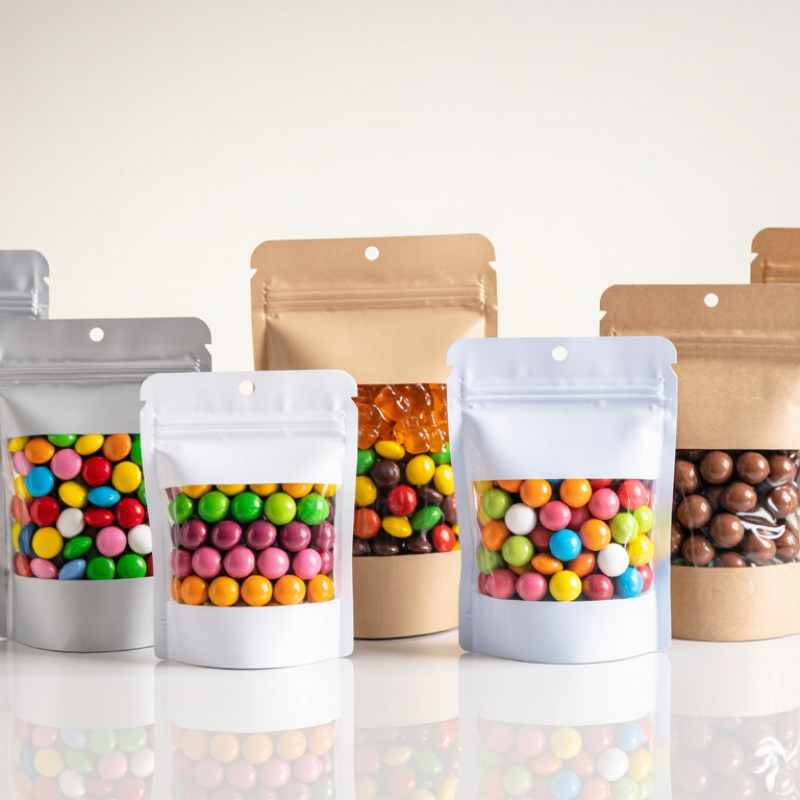
What Plastic Candy Stand-Up Pouches Are and How They Work
A plastic candy stand-up pouch is a flexible package with a bottom gusset that opens into a flat base. That base helps the pouch stay upright on a shelf, even when the candy shifts. The walls are usually made from joined plastic layers. One layer provides strength; another can help limit moisture, oxygen, or aroma transfer. The exact structure depends on the candy and its shelf-life needs. A thin pouch can work for individually wrapped sweets, but sticky gummies may need stronger moisture protection.
Small detail, big impact.
During packing, candy enters through an open top or a pre-made pouch opening. Heat seals then close the package, while a zipper may allow later reclosure. Seals need consistent pressure and temperature; otherwise, crumbs or sugar dust can interfere. Still, it is not foolproof. The Flexible Packaging Association’s 2023 State of the Industry report valued U.S. flexible packaging sales at $42.9 billion in 2022, about 21% of the packaging market. That figure shows the format’s broad commercial use, not that every pouch suits every candy. Buyers should check barrier performance, seal integrity, pouch dimensions, and filling-line compatibility with product samples before ordering in bulk.
How Bulk Buyers Can Evaluate Candy Pouches
Bulk buyers should evaluate candy pouches against the product, shipping route, and filling setup—not appearance alone. Start with dimensions and usable capacity. A pouch that looks roomy on a screen may leave little headspace once candies settle. Check gusset depth, opening width, and whether the filled bag stands steadily on a shelf. Bring actual candy samples to the supplier review. Small test, useful signal.
Next, inspect the film structure and seals. Ask about moisture and oxygen barriers, zipper performance, and the intended filling temperature. Inspect the seams closely. Hard candies can chip against weak corners; chewy sweets may stick when humidity enters. Request food-contact documentation and a specification sheet, then compare them with your product and storage conditions. Do not assume a thicker pouch is automatically better. It can cost more and still miss the needed barrier. Run a pilot fill, seal, and drop test before placing a large order. Record leaks, wrinkles, and closure failures. A few samples cannot predict every shipment, and that uncertainty is easy to underestimate. Measured tests beat guesswork.
Seven Pouch Styles for Different Candy Types and Selling Needs
For bulk candy buyers, pouch style should match the candy’s size, texture, and shelf life. A clear-window pouch lets shoppers see gummies or wrapped sweets; a stand-up gusset pouch gives bulky pieces room to settle. Flat-bottom pouches hold their shape on crowded shelves, while foil-laminate pouches offer a stronger barrier against light and moisture for sensitive chocolates. Resealable zipper pouches suit snacks sold for sharing over several days. Small portion pouches help control serving sizes, and recyclable mono-material options may support simpler material sorting where local facilities accept them.
The Flexible Packaging Association’s 2023 State of the U.S. Flexible Packaging Industry report puts U.S. flexible-packaging sales at $42.9 billion in 2022. That figure shows the scale of the category, not proof that every pouch suits every candy.
Test samples with real product: shake them, check seals, and leave them in warm storage. Even a neat-looking pouch can fail when sugar dust gathers near the zipper. There is no perfect format.
Tips: Ask suppliers for barrier and seal-test specifications, then compare samples using the actual fill weight. Keep graphics readable from a few feet away, and leave enough headspace for easy closing. A small trial run can reveal awkward filling or weak seals before a bulk order.
How Materials, Barriers, Closures, and Sizes Compare
For bulk candy, pouch material should match the product’s shelf-life needs, not just its price. PET/PE laminates offer a sturdy feel and reliable heat sealing. Clear film shows colorful sweets, while metallized layers help limit light and moisture exposure. Some structures also use oxygen-barrier layers, which may matter for candies with sensitive flavors. Check the full packaging specification; “high barrier” alone is not a useful comparison.
Closures affect both filling and everyday use. A press-to-close zipper helps customers reopen a pouch, but it does not replace the initial heat seal. Tear notches make opening easier, though they can weaken the top edge if placed poorly. Small detail, big impact. Ask for samples and test them with your own candy and sealing equipment. A pouch that looks right online may wrinkle or seal unevenly on a production line.
Size should be based on actual fill weight and candy shape. A kilogram of small drops packs differently from a kilogram of large, individually wrapped pieces. Compare pouch width, gusset, and usable height, then leave enough headspace for a clean seal. Oversized bags can look underfilled; tight ones may strain seams. I would avoid choosing by volume alone—it is an easy shortcut, but not always a good one. Bulk buyers should compare material layers, closure quality, dimensions, and sample performance together.
7 Plastic Candy Stand-Up Pouch Structures for Bulk Buyers
Compare typical oxygen-barrier performance, common closure options, and illustrative fill-size ranges. Barrier ratings are qualitative comparisons, not standardized measurements; actual performance depends on film grades, thickness, pouch design, and sealing quality.
| Pouch structure | Common closure | Illustrative fill-size range |
|---|---|---|
| PE / PE | Press-to-close zipper or heat seal | 250 g–2 kg |
| BOPP / CPP | Press-to-close zipper or heat seal | 100 g–1 kg |
| PET / PE | Press-to-close zipper or heat seal | 250 g–2 kg |
| BOPP / metallized BOPP / CPP | Press-to-close zipper or heat seal | 100 g–1.5 kg |
| PET / metallized PET / PE | Press-to-close zipper or heat seal | 250 g–2 kg |
| PET / AlOx-coated PET / PE | Press-to-close zipper or heat seal | 250 g–2 kg |
| PET / aluminum foil / PE | Press-to-close zipper or heat seal | 250 g–2 kg |
Metallized, oxide-coated, and foil layers generally provide stronger oxygen barriers than uncoated film structures. Select pouch dimensions by candy type, piece size, and target net weight: the fill ranges above are examples, not fixed capacity standards.
What to Check Before Storing, Filling, and Ordering in Bulk
Before filling plastic candy stand-up pouches, check the product’s moisture sensitivity and the pouch’s barrier specifications. Hard candies can become sticky when humidity enters; chocolate may need protection from oxygen and light. Ask suppliers for the film structure, thickness, and water-vapor and oxygen transmission rates. A zipper helps with repeated access, but it does not replace a reliable heat seal. The Flexible Packaging Association’s 2023 State of the U.S. Flexible Packaging Industry report estimated U.S. industry sales at $42.9 billion in 2022, reflecting how widely these materials are used. Still, broad industry figures cannot tell you whether a specific pouch suits your candy.
For storage, keep cartons off the floor and away from direct sunlight, damp walls, and sharp edges. Check the recommended temperature range with the supplier, especially if your workspace heats up during the day. Before a bulk run, fill sample pouches and test the actual sealing settings on your line. Look for wrinkles, weak corners, and candy dust trapped in the seal. Small flaws matter.
Tips: Request samples from the production lot, not only display samples. Confirm pouch dimensions, fill weight, print details, food-contact documentation, and delivery lead time in writing. Order a modest trial quantity first when possible. It may feel slower, but a minor fit problem becomes expensive at scale.
7 Best Plastic Candy Stand Up Pouches for Bulk Buyers? - What to Check Before Storing, Filling, and Ordering in Bulk
| Pouch Type | Common Film Structure | Best Suited For | Storage and Barrier Considerations | Filling and Closure Checks | Bulk-Order Checks |
|---|---|---|---|---|---|
| Clear high-visibility pouch | Clear PET/PE laminate or another clear, heat-sealable multilayer film | Colorful hard candies, jelly beans, and other products where shoppers benefit from seeing the contents | Offers product visibility, but clear film does not provide the light protection of opaque or foil-containing structures. Confirm that the selected film’s moisture and oxygen barrier suits the candy and its intended shelf life. | Check that the zipper opens and closes smoothly and that the top seal area remains clean during filling. Allow enough headspace for a reliable heat seal. | Request samples to check clarity, pouch dimensions, bottom-gusset stability, and seal performance on the filling line. |
| Metallized barrier pouch | Commonly PET/metallized PET/PE or a comparable laminated structure | Individually wrapped sweets, gummies, and candies needing more protection from light and moisture than a clear pouch generally provides | A metallized layer can improve light and gas barrier compared with a basic clear structure. Barrier performance depends on the complete laminate and seal quality; it is not the same as a solid aluminum-foil layer. | Verify heat-seal compatibility with the equipment and check that the zipper and seals are not contaminated by sugar, oil, or candy pieces. | Ask for the full film specification and confirm whether the quoted structure and thickness will remain consistent across production runs. |
| Opaque foil-laminate pouch | Often PET/aluminum foil/PE or another foil-containing laminate | Light-sensitive or aroma-sensitive candies, and products requiring a stronger barrier against moisture, oxygen, and light | Foil laminates can provide a strong barrier when intact and properly sealed. They conceal the product and should be checked for pinholes, fold damage, and seal integrity. | Check the recommended sealing temperature, pressure, and dwell time with the actual filling equipment. Avoid overfilling or placing candy in the seal zone. | Compare the required barrier with the supplier’s technical data, and test filled samples through the planned storage and distribution conditions. |
| High-puncture-resistance pouch | May use a nylon-containing laminate, such as PET/NY/PE, depending on the supplier’s design | Hard or irregular candies that may stress the pouch during handling and transport | A tougher structure can help resist punctures, but it does not automatically provide the barrier level needed for every candy. Confirm both mechanical and barrier requirements. | Test the filled pouch for sharp edges, corner pressure, zipper function, and leaks after handling. Use a seal width suitable for the product and filling process. | Request filled samples, not just empty pouches, and assess them after case packing and representative shipping handling. |
| Wide-mouth, easy-fill pouch | Typically a clear or printed PET/PE-based laminate; structure varies by required barrier | Bulkier gummies, mixed candies, or manual filling where a wider opening makes loading easier | Choose the barrier based on the candy’s sensitivity to humidity, oxygen, and light. A wide opening is convenient but must be fully resealed after filling. | Check opening width, zipper position, and usable fill space. Confirm that the filling method does not leave candy or crumbs across the zipper or top-seal area. | Measure the filled pouch rather than relying only on nominal dimensions, since product size and fill method affect how the pouch stands. |
| Window pouch | Printed or opaque laminate with a clear-film window, commonly built from laminated plastic layers | Assorted candies where a product view is useful but a fully clear pouch is not preferred | The window area may have different light-barrier properties from the rest of the pouch. Check that the window size and placement fit the product’s storage requirements. | Inspect window seals and pouch seams for defects. Keep the zipper and heat-seal area clear of candy during filling. | Confirm window dimensions, print registration, and appearance with a production sample; printed artwork can make inspection of contents less straightforward. |
| Reclosable zipper pouch | Often PET/PE or a higher-barrier laminate with a zipper fitted above the gusset | Multi-serving candy packs intended to be opened and closed by consumers | A zipper helps with repeated opening and closing but is not a substitute for the initial hermetic heat seal or for selecting an appropriate barrier film. | Check zipper alignment, opening force, and closure after filling. Verify that the first-opening seal is intact and that the consumer can separate it as intended. | Test zipper operation across a representative production sample and confirm the pouch’s finished dimensions, zipper position, and case-pack requirements. |
Bulk-buyer note: Film structures and barrier performance vary by supplier and construction. Candy capacity depends on piece size, shape, settling, and target fill weight, so confirm dimensions and fit with filled samples. Before ordering, request the technical specification, food-contact documentation applicable to the destination market, minimum order quantity, lead time, and confirmation that the pouch is compatible with your filling and sealing equipment.
Article Source:
Let's Build Together
Contact Us: Call 435-563-3503
-OR- Fill in the form below and we will call you back.