
10 Best Laminated Safety Glass Manufacturers Worldwide?
Laminated Safety Glass is more than two panes joined by a clear interlayer. In a real building, that layer can help hold broken fragments together after impact, while the glass must still meet the project’s demands for light, appearance, and durability. The right manufacturer matters.
Fenestration expert Dr. Helen Sanders has emphasized matching glazing performance to project needs. A useful principle for this guide is: “Choose the glass for the risk, the building, and the people who use it.” This is an editorial summary, not a direct quotation from Dr. Sanders. It captures a practical point: specifications should follow the application, not a sales claim.
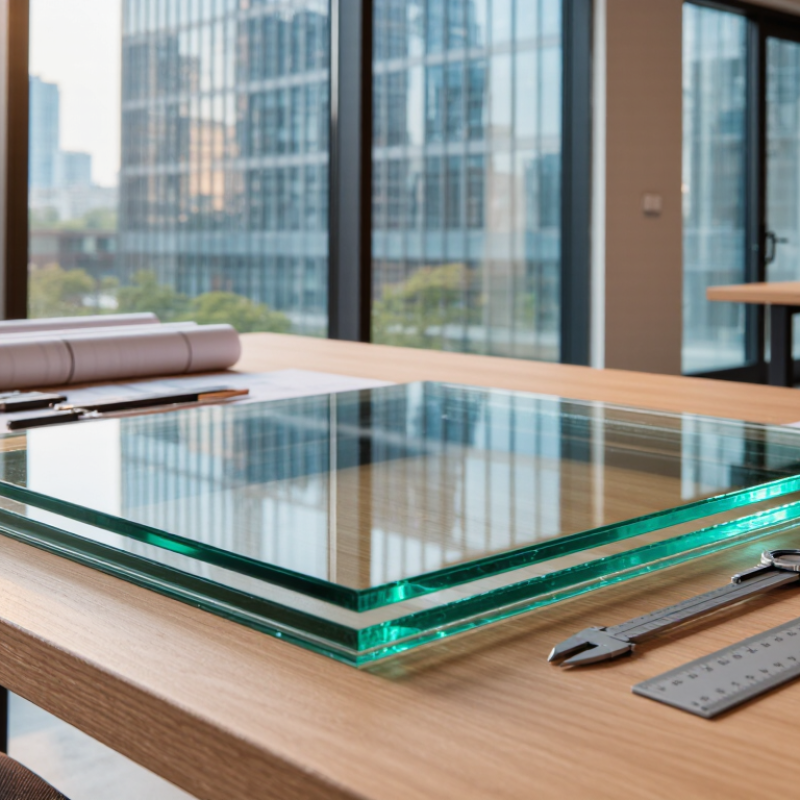
This overview compares ten manufacturers worldwide, examining product range, technical support, customization, quality controls, and experience with architectural projects. A clear interlayer sample on a desk may look much like another, yet performance can vary with glass make-up, edge quality, processing, and installation details. Small differences matter.
No ranking can replace project-specific review. Buyers should confirm test documentation, applicable performance requirements, lead times, and local service before making a decision. Those details are easy to overlook. They can also determine whether a product is suitable. The manufacturers profiled here offer a starting point for informed comparison, not a universal verdict.
What Laminated Safety Glass Is and How It Works
Laminated safety glass is made by bonding two or more glass panes around a clear plastic interlayer. Heat and pressure help the layers form a single panel. The glass may crack under impact, but the interlayer can hold many fragments in place. Think of a broken windshield: the surface may look damaged, yet loose shards are less likely to scatter across the cabin. That matters.
The interlayer also helps the panel resist penetration, though it does not make glass unbreakable. Performance depends on the glass thickness, interlayer material, and how the panel is tested. Some constructions can reduce certain sounds or block much of the sun’s ultraviolet radiation. Those benefits vary. A specification sheet is more useful than a broad claim.
Manufacturing details matter in ways that are easy to overlook. Tiny bubbles, poor bonding, or uneven edges can affect appearance and durability. The frame and installation matter too; even a well-made panel can perform poorly if it is unsupported. In practice, I would inspect sample edges and ask how quality is checked. I would also question any promise that laminated glass will never fail. It can still crack, and the damaged panel may need replacement.
10 Best Laminated Safety Glass Manufacturers Worldwide? — What Laminated Safety Glass Is and How It Works
This is a manufacturer-selection guide, not a company ranking. It summarizes verifiable product features and standards to check; performance depends on the complete glass build-up, testing, and intended application.
| No. | Evaluation Dimension | Fact-Based Information | What to Verify with a Manufacturer |
|---|---|---|---|
| 1 | How laminated safety glass works | Two or more glass plies are bonded with one or more interlayers. If the glass breaks, the interlayer can help hold fragments together and keep the panel in place. | Ask for test reports for the exact glass, interlayer, thickness, and panel size—not just a general product description. |
| 2 | Glass build-up and thickness | A common nominal build-up is 3 mm glass + 0.38 mm interlayer + 3 mm glass, often designated 6.38 mm. Available constructions vary by market and application. | Confirm the actual ply and interlayer thicknesses, overall tolerances, maximum sizes, and whether the proposed make-up meets local code. |
| 3 | Interlayer options | Polyvinyl butyral (PVB), ethylene-vinyl acetate (EVA), and ionoplast interlayers are used in laminated-glass products. Their properties and suitable applications differ. | Request the interlayer type, intended use, compatibility requirements, and supporting technical data for the proposed assembly. |
| 4 | Safety-glazing compliance | Relevant requirements may include ANSI Z97.1 in the United States, CPSC 16 CFR Part 1201 in the United States, and EN 14449 in Europe. Applicable rules depend on location and use. | Check current certificates or reports, the precise product configuration tested, and whether the project’s jurisdiction accepts that standard. |
| 5 | Product and quality standards | ISO 12543 covers laminated glass and laminated safety glass; ASTM C1172 covers laminated architectural flat glass. These documents address product requirements and testing, not a universal performance level for every product. | Confirm the standard edition, declared product classification, inspection process, and traceability of supplied panels. |
| 6 | Impact performance | Impact classification is established through specified tests. A pass under one test method or class does not automatically establish compliance with a different standard or application. | Match the test report’s impact method, classification, specimen construction, and mounting conditions to the project requirements. |
| 7 | Post-breakage behavior | Laminated glass can retain broken fragments, but it may still crack, deflect, or lose some load capacity after impact. Retention and structural performance depend on the full assembly. | For overhead, guard, or other critical glazing, obtain design-specific engineering and post-breakage performance documentation. |
| 8 | Optical quality and appearance | Visible distortion, color, haze, and edge appearance can vary with glass selection, interlayer, processing, and viewing conditions. | Review representative samples and agree on project-specific visual tolerances before production. |
| 9 | Fabrication and edge quality | Cutting, edge finishing, drilling, and other fabrication generally need to be completed before lamination. Fabrication limits depend on the product and equipment. | Confirm drawings, hole and cut-out limits, edge finish, dimensional tolerances, and handling requirements before order approval. |
| 10 | Durability and documentation | Long-term performance depends on suitable materials, processing, installation, and exposure conditions. Product documentation should identify the construction and relevant performance data. | Request installation and maintenance guidance, warranty terms, batch identification, and project-specific compliance documents. |
Let's Build Together


Contact Us: Call 435-563-3503
-OR- Fill in the form below and we will call you back.