
7 Best Horizontal Ribbon Mixers for Industrial Mixing
A Horizontal Ribbon Mixer can look simple from the outside: a trough, a shaft, and a pair of helical ribbons. Inside, those ribbons move ingredients in opposing directions, helping distribute powders and other compatible materials throughout the batch. The result depends on more than the mixer’s name or capacity. Ribbon geometry, fill level, batch size, material flow, and discharge design all affect performance. Small choices matter.
This guide compares seven industrial models through practical selection criteria, including construction, operating flexibility, cleanout access, and suitability for different production needs. Look closely at how each machine handles your actual ingredients, not just a specification sheet. A dry, free-flowing powder behaves differently from a cohesive blend. Ask suppliers about test results, wear parts, and maintenance access. Those details can change the long-term value of a mixer.
A named expert quotation was not included in the supplied material, so attributing one here would risk inventing a source. That deserves a pause. The comparison below focuses instead on verifiable design considerations and questions buyers can confirm with manufacturers before selecting a Horizontal Ribbon Mixer.
How Horizontal Ribbon Mixers Work
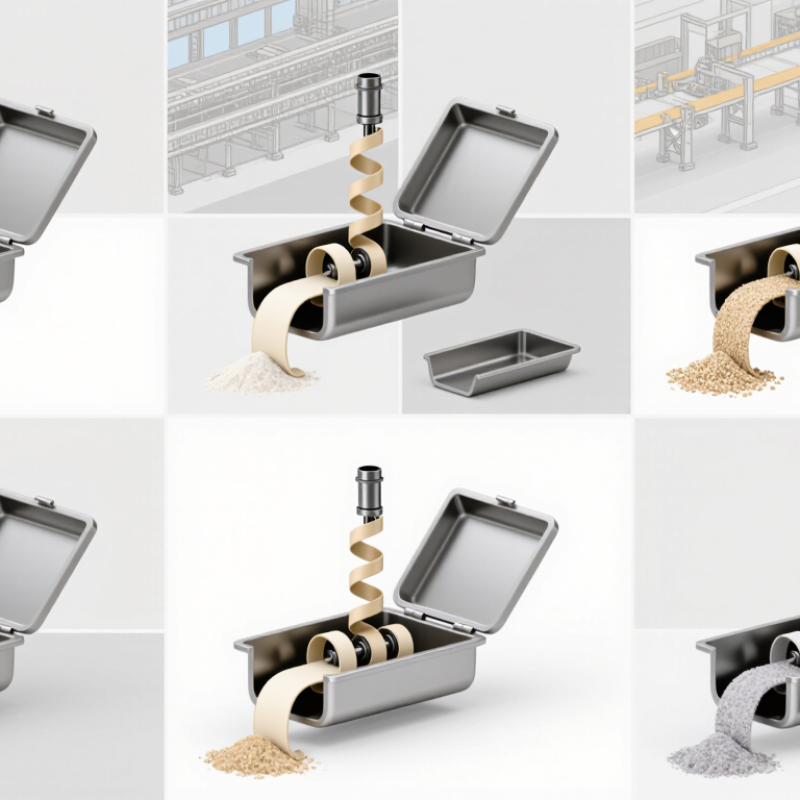
A horizontal ribbon mixer uses a U-shaped trough and a rotating shaft fitted with inner and outer helical ribbons. The outer ribbon pushes material toward one end; the inner ribbon moves it back. This opposing axial flow creates circulation, while particle movement across the trough adds blending. Picture dry ingredients lifting and folding like a slow, continuous wave. The action is mechanical, not magic: particle size, fill level, and mixing time all affect uniformity.
Operators should judge the blend with samples, not appearance alone. The NIST/SEMATECH e-Handbook of Statistical Methods defines the coefficient of variation as standard deviation divided by the mean, multiplied by 100. That gives teams a useful way to compare sample results, though no single CV target suits every product. Sampling location matters, too. A scoop from the center may miss uneven material near the discharge. Small detail, big consequence.
The U.S. FDA’s 2011 Process Validation guidance emphasizes using scientific evidence to show a process performs consistently. Applied to ribbon mixing, that means recording batch size, speed, time, and sample results across repeat runs. A longer cycle may improve distribution, but it can also damage fragile particles or waste energy. And a familiar recipe is not proof. Recheck the blend when ingredients or loading conditions change.
Key Features of Industrial Ribbon Mixers
A horizontal ribbon mixer combines a U-shaped trough with inner and outer helical blades. As the shaft turns, the ribbons move material in opposing directions and help distribute ingredients along the mixer’s length. This design suits many dry blends, including powders and small granules. The trough, shaft, and ribbons should match the product’s abrasiveness, moisture level, and cleaning requirements. Material choice matters. Stainless steel is common where corrosion resistance and washdown are priorities, while seals help limit dust around the shaft.
Drive power and mixing speed affect performance, but faster is not always better. A variable-frequency drive can help operators adjust speed for different recipes. Still, product tests are essential: particle size, bulk density, and fill level can change mixing time. Too little material may not engage the ribbons well; too much can leave dead zones. A bottom discharge valve supports controlled unloading, while access doors make inspection easier. Interlocks can stop the mixer when a cover opens. That matters. Before selecting a unit, check how the blades, bearings, seals, and discharge area can be inspected and cleaned. Even a well-built mixer may need recipe-specific adjustments.
Criteria for Comparing Horizontal Ribbon Mixers
A useful comparison starts with the powder, not the mixer’s advertised capacity. Record each ingredient’s bulk density, particle size, flow behavior, and moisture sensitivity. ASTM D7481 provides methods for measuring loose and tapped bulk density; these figures help estimate practical batch volume. Leave room for the ribbons to circulate material. A vessel filled too high may develop slow-moving zones near the top.
Compare ribbon geometry, shaft speed, motor torque, discharge design, and cleanability under the same batch conditions. Ask suppliers for blend samples and test them at several sampling points, including near the vessel wall and discharge. For regulated-dose products, USP General Chapter <905> uses an L1 acceptance value of 15.0 in its content-uniformity calculation. That is a finished-product test, not proof that a mixer alone will meet the target. It is easy to miss.
I would not rank capacity alone; that shortcut can mislead. Check how much material remains after discharge, how long cleaning takes, and whether seals tolerate the actual ingredients. A brief trial with a difficult, low-flow powder can reveal more than a polished specification sheet. Compare results at the intended fill level, not just at a convenient pilot scale. Some results may be inconsistent; repeat the test before treating them as decisive.
Seven Best Horizontal Ribbon Mixers for Industrial Mixing
Seven best horizontal ribbon mixers for industrial mixing are better understood as seven useful configurations, not a universal ranking. A standard batch model suits dry powders with similar flow behavior. A heavy-duty design may handle denser loads, provided its drive and shaft are sized for the material. Jacketed vessels help control product temperature during blending. For moisture-sensitive powders, a sealed or vacuum-capable configuration can limit exposure to air. Fit matters.
Sanitary designs offer smoother product-contact surfaces and easier cleaning access. Abrasion-resistant liners can reduce wear when ingredients are gritty, though they may not solve every maintenance problem. Continuous horizontal ribbon mixers suit steady production, while batch machines allow clearer control over each recipe. The right choice depends on how ingredients move, not only on the vessel’s capacity.
Before comparing equipment, check working fill level, ribbon clearance, discharge time, seal design, and access for inspection. Ask for a trial using representative material; a free-flowing sample may behave very differently from a cohesive powder. Not always. A larger motor alone does not guarantee a uniform blend. Verify sampling methods and cleaning requirements, too. These details can reveal a poor fit before installation, though real production conditions may still expose surprises.
7 Best Horizontal Ribbon Mixers for Industrial Mixing
Indicative blending-time ranges by application
The chart shows approximate planning ranges, not a ranking or guaranteed performance for specific mixers. Actual cycle times depend on formulation, batch size, fill level, ribbon speed, and the required blend uniformity; confirm them with application testing.
How to Select and Maintain a Ribbon Mixer
Selecting a horizontal ribbon mixer starts with the material, not the advertised capacity. Check bulk density, particle size, moisture, and abrasiveness. Consider whether the blend changes during processing. A mixer filled to nominal capacity may leave too little room for circulation. Ask for the usable batch volume and, where possible, test with representative material. Review the discharge design, shaft seals, and cleaning access. For heat-sensitive ingredients, check mixing time and temperature rise under realistic loads. A tidy specification sheet can mislead. Testing matters.
For maintenance, inspect ribbon clearance, bearings, seals, fasteners, and gearbox oil on a set schedule. Track motor current, unusual vibration, and changes in mixing time; small shifts can signal wear or buildup. Before opening the mixer, isolate energy and follow site safety procedures. Clean thoroughly after product changes, especially around the discharge gate and shaft seals. Avoid adjusting clearances without qualified guidance. Keep inspection records. Even a good checklist misses things, so operator observations deserve attention too.
7 Best Horizontal Ribbon Mixers for Industrial Mixing — How to Select and Maintain a Ribbon Mixer
| Mixer Type | Typical Vessel Volume | Typical Working Fill | Key Design Features | Best Suited For | Selection Checks | Maintenance Priorities |
|---|---|---|---|---|---|---|
| Laboratory and Pilot-Scale Ribbon Mixer | Approximately 10–100 L | Often 30–70% of vessel volume | Compact trough, small batch capacity, and accessible controls for process trials. | Recipe development, sample production, and scale-up testing with free-flowing powders. | Confirm that test batches are large enough to reproduce the intended production fill level and mixing sequence. | Check shaft seals, fasteners, and ribbon clearance; clean the trough between trials to prevent cross-contamination. |
| Small Production Ribbon Mixer | Approximately 100–500 L | Often 30–70% of vessel volume | Compact horizontal trough with a central shaft and inner and outer helical ribbons. | Small production runs of dry blends, premixes, and granular products. | Assess batch frequency, discharge arrangement, access for cleaning, and whether ingredients are added through the cover. | Inspect bearings, seals, drive components, and discharge gates on a regular schedule; remove product buildup. |
| Medium-Duty General-Purpose Mixer | Approximately 500–2,000 L | Often 30–70% of vessel volume | Production-scale trough and ribbon assembly; available with different drive and discharge arrangements. | Routine blending of powders and granules in food, chemical, agricultural, and building-material processes. | Size by required batch mass, bulk density, mixing time, ingredient ratio, and discharge needs—not vessel volume alone. | Monitor unusual vibration, noise, temperature, seal leakage, and changes in mixing or discharge performance. |
| Large-Capacity Production Mixer | Approximately 2,000–5,000 L | Often 30–70% of vessel volume | Larger trough and drive system; may include multiple discharge points or automated batch controls. | High-throughput blending where batch consistency and repeatable loading and discharge are important. | Verify structural support, motor and gearbox duty, ingredient loading method, and downstream handling capacity. | Follow the equipment manual for drive and gearbox service; inspect welds, shaft supports, and discharge components. |
| Heavy-Duty or Abrasion-Resistant Mixer | Approximately 1,000–5,000 L; application-specific | Set according to product behavior and mixer design | May use wear-resistant contact surfaces or replaceable wear parts for abrasive materials. | Mineral powders, abrasive compounds, and other blends that can accelerate wear. | Review particle hardness, abrasiveness, bulk density, and any risk of product degradation or heat generation. | Measure wear at ribbons, trough liners, and discharge areas; replace worn parts before clearances affect performance. |
| Sanitary or Easy-Clean Mixer | Approximately 100–2,000 L; application-specific | Often 30–70% of vessel volume, subject to product and cleaning requirements | May feature smooth product-contact surfaces, hygienic seals, and cleaning-friendly access or surface finishes. | Products requiring controlled cleaning, reduced residue retention, or frequent product changeovers. | Confirm the required surface finish, cleaning method, seal design, and access to product-contact areas. | Inspect seals and contact surfaces for damage or residue; verify cleaning procedures and reassembly after maintenance. |
| Jacketed or Temperature-Controlled Mixer | Approximately 100–3,000 L; application-specific | Determined by the process, heat-transfer needs, and vessel design | A jacket around the trough can support heating or cooling through a compatible thermal-fluid system. | Blends that require temperature management during mixing or need help controlling heat-sensitive ingredients. | Specify the target temperature range, heat-transfer medium, available heating or cooling duty, and process time. | Check the jacket and connections for leaks; maintain the thermal-fluid circuit according to its separate service requirements. |
The figures are indicative ranges, not guaranteed specifications for every design. Actual capacity, working fill, mixing time, and power requirements depend on bulk density, particle size, flowability, ingredient ratios, and equipment geometry. Confirm final operating limits with the mixer manufacturer and the product-process trial.
Article Source:
Let's Build Together
Contact Us: Call 435-563-3503
-OR- Fill in the form below and we will call you back.