
10 Best Corrosion Resistant Metal Cable Glands for Buyers
Choosing a cable gland is not just a matter of matching thread size. In wet factories, coastal installations, and washdown areas, corrosion can weaken fittings and compromise cable protection. A Corrosion-Resistant Metal Cable Gland must suit the environment, cable diameter, enclosure, and installation method. Small details matter.
In Corrosion Engineering, corrosion specialist Mars G. Fontana described corrosion as “the destructive attack of a metal by chemical or electrochemical reaction with its environment.” That definition helps explain why one material cannot serve every site. Salt spray, cleaning chemicals, temperature swings, and dissimilar metals can all affect gland performance. Stainless steel, nickel-plated brass, and other finishes each have trade-offs. No coating is a cure-all.
This guide compares 10 options for buyers, with attention to construction, sealing components, thread types, cable ranges, and stated ingress protection. It also highlights practical checks: confirm the manufacturer’s datasheet, match the seal to the cable jacket, and inspect installation instructions before ordering. Do not assume a rugged-looking body guarantees a durable seal. That is an easy mistake.
The best choice depends on actual exposure, not a product label alone. Where conditions are uncertain, ask the supplier for test data and material details. A careful comparison can prevent costly replacement. Still, specifications cannot predict every installation perfectly. That deserves a second look.
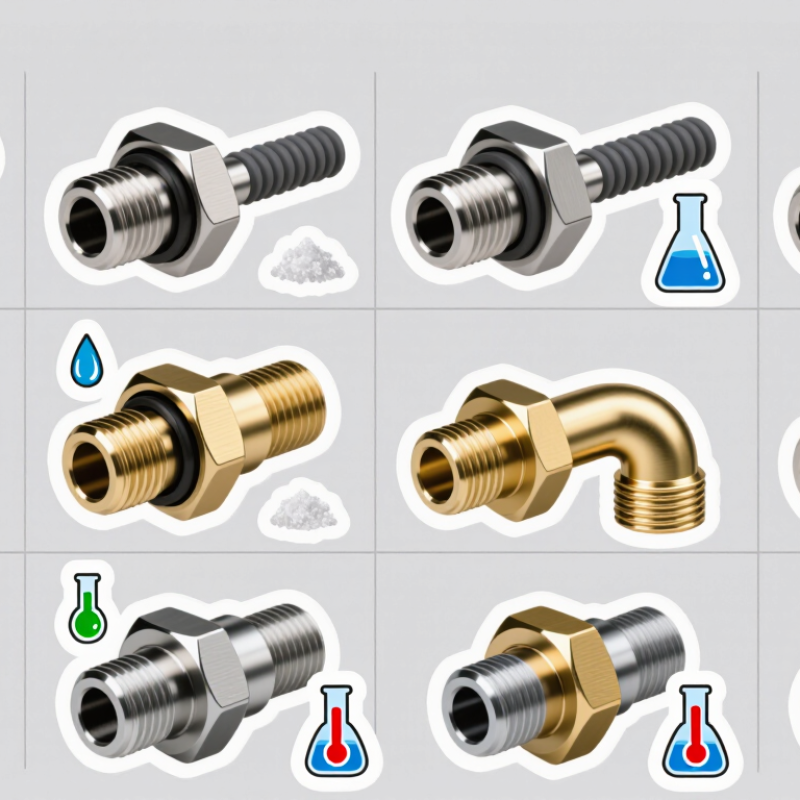
What Corrosion-Resistant Metal Cable Glands Are and How They Work
A corrosion-resistant metal cable gland forms a controlled entry point where a cable passes through an electrical enclosure. Its threaded body fixes to the enclosure, while a sealing insert compresses around the cable as the cap tightens. This helps limit water and dust entry and reduces strain on the cable. For armored cable, a suitable gland can also clamp the armor and maintain electrical continuity. Design details matter.
Materials such as stainless steel or nickel-plated brass can withstand many damp or corrosive settings, but no metal is corrosion-proof. Salt spray, cleaning chemicals, trapped moisture, and contact between dissimilar metals can still cause damage. A gland that looks robust may fail early if its material, seal, or thread does not suit the installation.
Tips: Check the cable’s actual outer diameter and the enclosure thread before ordering. Tighten to the specified torque; overtightening can deform the seal. Small details matter. After installation, look for uneven compression, exposed threads, or water trails near the entry. Inspection helps, though it cannot compensate for a poor material match.
10 Best Corrosion Resistant Metal Cable Glands for Buyers - What Corrosion-Resistant Metal Cable Glands Are and How They Work
Corrosion-resistant metal cable glands secure cables where they enter an enclosure. Their body, sealing components, and cable-clamping mechanism help maintain cable retention and, when designed and installed for the purpose, the enclosure’s ingress protection. The options below are material choices rather than a universal ranking; suitability depends on the exact gland design, environment, and required certifications.
| No. | Material or finish | Corrosion characteristics | Typical environments | Buyer considerations |
|---|---|---|---|---|
| 1 | 316 stainless steel | Molybdenum-bearing stainless steel generally offers better resistance to chloride pitting and crevice corrosion than 304 stainless steel. It is not immune to corrosion. | Coastal installations, outdoor equipment, and many wet or washdown areas. | Check the full gland specification and surface condition. Salt deposits, stagnant crevices, and incompatible metals can still cause problems. |
| 2 | 316L stainless steel | A low-carbon variant of 316; its corrosion behavior is broadly similar. The lower carbon content can reduce sensitization during welding. | Marine and process installations where a 316-family alloy is specified. | For a machined gland, the low-carbon designation alone does not guarantee better performance; verify the alloy grade and manufacturing details. |
| 3 | 304 stainless steel | Good general corrosion resistance in many indoor and mild outdoor settings, but typically less resistant to chloride pitting than 316. | General industrial enclosures and locations with limited exposure to salt or chlorides. | A practical choice when the environment is not highly chloride-rich. Consider 316 or another alloy for regular seawater or salt-spray exposure. |
| 4 | Nickel-plated brass | The nickel coating provides a barrier and a durable finish when intact. Corrosion protection can decline if the coating is damaged or unsuitable for the exposure. | General industrial, indoor, and moderate outdoor applications. | Check plating quality, coating coverage, and the manufacturer’s stated environmental limits; do not assume it is suitable for continuous seawater exposure. |
| 5 | Brass | Brass can resist corrosion in many ordinary environments, but its performance depends on alloy composition and exposure. Some brasses may be susceptible to dezincification in particular waters. | Indoor equipment and general industrial settings without severe chemical or marine exposure. | Confirm the brass alloy and compatibility with the surrounding enclosure, fittings, and process environment. |
| 6 | Anodized aluminum | Aluminum naturally forms an oxide layer; anodizing thickens the protective oxide surface. Performance depends on alloy, anodizing quality, and coating damage. | Weight-sensitive equipment and many outdoor applications with appropriate finish selection. | Assess salt exposure and galvanic compatibility with adjacent metals. Avoid assuming all aluminum finishes provide equal protection. |
| 7 | Duplex stainless steel (e.g., 2205) | A ferritic-austenitic stainless steel that can offer higher strength and improved resistance to chloride stress-corrosion cracking and pitting compared with common 300-series grades. | Selected marine, chemical-process, and other demanding chloride environments. | Confirm the exact alloy, product availability, and suitability for the specific chemical and temperature conditions. |
| 8 | Super duplex stainless steel (e.g., 2507) | Higher-alloy duplex stainless steel designed for demanding environments; it can provide strong resistance to chloride pitting and crevice corrosion when correctly specified. | Severe marine or process environments where standard stainless grades may be insufficient. | Use only when the exposure and engineering requirements justify it. Verify the material certificate and the gland’s complete performance ratings. |
| 9 | Titanium | Titanium forms a stable passive oxide film and has excellent corrosion resistance in many oxidizing environments, including seawater. Performance depends on grade and chemistry. | Specialized marine, chemical, and weight-sensitive applications. | Often a higher-cost, specialized option. Check availability, grade, and compatibility with other metals in the assembly. |
| 10 | Nickel-copper alloy (e.g., Alloy 400) | Nickel-copper alloys can provide useful resistance in seawater and some reducing chemical environments; suitability depends on the specific chemistry and conditions. | Specialized marine and chemical-process applications. | A niche material rather than a general-purpose choice. Confirm that the exact alloy is available for the required gland design and approvals. |
Selection note: Corrosion resistance is only one part of gland selection. Match the thread, cable diameter, sealing range, temperature limits, ingress-protection requirements, hazardous-area approvals (where applicable), and enclosure material to the installation. Follow the product’s installation instructions and consider galvanic corrosion where dissimilar metals are in contact.
Let's Build Together

Contact Us: Call 435-563-3503
-OR- Fill in the form below and we will call you back.