What Is the Best China Lithium Ion Car Battery?

Choosing the best Lithium Ion Car Battery from China requires more than comparing price tags. The right pack must balance safety, usable range, charging speed, durability, and after-sales support. It should also match the vehicle’s software, motor, and thermal-management system. A battery that performs well in Shenzhen may behave differently during a freezing northern winter.

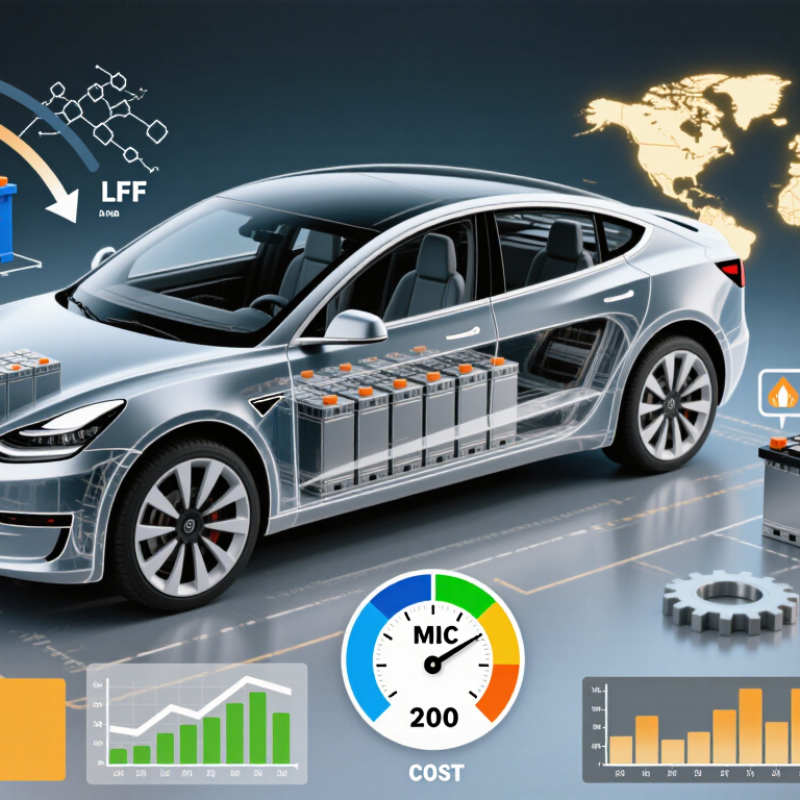
Industry data shows why China matters. The International Energy Agency’s Global EV Outlook 2024 reported that China represented nearly 60% of global electric car sales in 2023. The same report identified China as the leading producer across most battery supply-chain stages, including cathode materials and battery cells. BloombergNEF’s 2024 Battery Price Survey placed average global battery-pack prices at 115 dollars per kilowatt-hour. China’s average was lower, at about 94 dollars per kilowatt-hour. These figures demonstrate manufacturing strength, but they do not prove that every Chinese battery is reliable.

Real-world evaluation must examine chemistry and construction. LFP batteries generally offer strong thermal stability and long cycle life. NMC packs may provide higher energy density, which helps when cabin space is limited. However, specifications can hide weaknesses. A glossy range figure means little if rapid charging slows after ten minutes. Warranty terms, battery-management software, independent safety testing, and replacement availability deserve equal attention.

There is no universal winner.

My assessment may also be incomplete. Battery performance changes with climate, driving habits, charging limits, and vehicle integration. Therefore, this guide compares leading Chinese technologies through published data, practical ownership factors, and transparent limitations. The goal is not to praise a brand, but to identify the most dependable choice for a specific driver and vehicle.
What Is the Best China Lithium Ion Car Battery?

What Makes a China Lithium-Ion Car Battery the Best Choice?

The best China lithium-ion car battery is not chosen by price alone. Its value comes from balanced engineering, verified safety, and dependable daily performance. Many Chinese battery manufacturers now combine automated production with strict cell testing. However, factory scale does not guarantee quality.

A strong battery uses consistent cells and a responsive battery management system. The system should monitor voltage, temperature, charging, and current flow. Thermal control matters during summer traffic and winter starts.

A well-designed enclosure should resist vibration, dust, and moisture. Independent testing and clear certification records provide stronger evidence than advertising claims. Traceable production data also helps technicians identify problems quickly.

Tips: Check the usable capacity, not only the advertised capacity. Ask about cycle-life testing and low-temperature performance. Confirm the warranty terms, service process, and replacement policy. Compare weight carefully, because a lighter battery may use less protective material. Also inspect the battery management software before purchase. It should provide readable fault information. Small details matter.

One point deserves reflection: laboratory results may not match every driver’s experience. Driving habits, charging conditions, and climate can change battery life significantly. A battery that performs well in a controlled test may struggle in heavy traffic or extreme cold. The most reliable choice combines transparent data, professional installation, and realistic expectations. Perfect performance is unlikely. Consistent performance is the real goal.

Which Lithium-Ion Battery Chemistries Are Used in Chinese Cars?

Chinese cars mainly use lithium iron phosphate (LFP) and ternary lithium batteries, such as nickel-manganese-cobalt (NMC). According to the China Automotive Power Battery Industry Innovation Alliance, China installed about 548.4 GWh of power batteries in 2024. LFP supplied approximately 405.5 GWh, or 73.9% of the total. Ternary batteries represented about 142.9 GWh. This shift reflects practical priorities: lower cost, strong thermal stability, and long cycle life.

LFP packs suit daily commuting and frequent charging. In real use, their battery gauge can feel less precise during cold mornings. That remains an engineering inconvenience. Ternary batteries usually provide higher energy density, which helps smaller packs deliver longer driving ranges. However, nickel-rich chemistry can cost more and requires careful thermal management. The International Energy Agency reported that LFP reached roughly 40% of the global electric-car battery market in 2023, driven heavily by Chinese production.

Sodium-ion batteries are also entering limited automotive applications. They use more abundant materials and can perform better in low temperatures, but their energy density remains lower than LFP. Lithium manganese iron phosphate, or LMFP, is another developing option. It aims to improve LFP energy density without abandoning its cost advantages. The chemistry choice is not always obvious. A heavier LFP pack may be the wiser choice for urban driving, while ternary chemistry can better serve long-distance routes. Testing temperature, charging habits, warranty terms, and usable capacity matters more than chemistry labels alone.

What Is the Best China Lithium-Ion Car Battery?

Lithium iron phosphate (LFP) is widely favored for its long cycle life, strong thermal stability, and lower cost. Nickel-manganese-cobalt (NMC) and nickel-cobalt-aluminum (NCA) generally provide higher cell-level energy density, which can support longer driving range but usually involves greater cost and thermal-management requirements. Lithium manganese iron phosphate (LMFP) offers a compromise between LFP durability and higher energy density.

The chart shows representative midpoint values from commonly reported cell-level specific-energy ranges. Actual results vary by cell design, and complete battery-pack energy density is lower because of structural, cooling, safety, and electrical components.

How Chinese Car Battery Makers Compare in Safety and Performance

What Is the Best China Lithium Ion Car Battery?

How Chinese Car Battery Makers Compare in Safety and Performance

Safety and performance depend on chemistry, cell design, thermal control, and manufacturing consistency. The IEA’s Global EV Outlook 2024 estimated China’s share of global battery-cell production at about 75% in 2023. Lithium iron phosphate cells dominate much domestic volume, offering strong thermal stability and lower material costs. However, energy density is usually lower than nickel-rich alternatives. That can mean a heavier pack or less winter range.

Small detail. Pack weight affects handling.

BloombergNEF’s 2024 Battery Price Survey placed China’s average pack price near 94 dollars per kilowatt-hour, below the global average. Lower cost does not prove better safety. Independent testing should examine crush impact, overcharge protection, thermal propagation, and abuse after cycling. UNECE Regulation No. 100 and China’s GB 38031-2020 provide useful safety benchmarks.

Laboratory compliance still cannot predict every crash. A practical inspection should check weld uniformity, coolant paths, insulation readings, and software fault logs.

Performance claims need context. Cycle-life figures often use controlled temperatures, shallow charging, and ideal current rates. Real drivers face cold starts, fast charging, steep roads, and aging cells. The IEA repeatedly highlights temperature management and charging behavior as major factors in battery durability.

Warranty data would strengthen comparisons, but manufacturers rarely publish it consistently. I would not choose a battery by range alone. Long-term field evidence matters more, and that evidence remains uneven.

What Battery Features Affect Range, Charging, and Service Life?

The best China lithium ion car battery is not chosen by capacity alone. Usable energy, cell chemistry, and pack efficiency directly affect driving range. A larger pack may add weight, reducing some efficiency gains. In practical driving, cold mornings, high speeds, and steep roads can cut range noticeably. Heat matters. A reliable battery management system should monitor voltage, temperature, and cell balance continuously.

Charging performance depends on more than a high peak charging rate. The pack needs stable thermal control before accepting strong current. Liquid cooling can reduce heat during repeated fast charging, while careful software limits protect the cells. Charging from 20% to 80% is usually gentler than frequent full charging. Still, real charging times vary with temperature, charger output, and battery condition. Published figures are useful, but they are not the whole story.

Service life depends on daily use, storage temperature, and charging habits. Lithium iron phosphate cells often provide strong cycle durability, while other chemistries may offer higher energy density. The better choice depends on vehicle weight and driving needs. Inspectors should review cycle-test data, warranty terms, diagnostic access, and replacement procedures. A battery with modular repair options can reduce long-term service costs. I would not trust impressive laboratory numbers without field records. Even careful testing has limits, and unexpected degradation can still appear after several winters.

How to Choose the Best China Lithium-Ion Car Battery for Your Needs

Choosing the best China lithium-ion car battery starts with your vehicle, not a sales page. Check the original voltage, battery dimensions, connector layout, and usable capacity. A larger capacity is not always better. It may add weight, strain the charging system, or reduce cabin space. The International Energy Agency reported that China produced nearly 80% of global battery cells in 2023, so manufacturing scale is significant. However, scale alone does not prove quality.

Ask for cell chemistry, tested capacity, cycle-life results, and battery-management-system protections. Lithium iron phosphate cells usually offer strong thermal stability and long cycle life, while nickel-based cells can provide higher energy density. Your climate matters too. In cold regions, confirm low-temperature charging protection and heating control. Request independent test records using recognized standards, such as IEC 62660 or applicable automotive safety requirements. Do not accept vague phrases like “premium grade.”

Small details matter.

Inspect the enclosure for sealed joints, secure terminals, and clear service labels. Confirm warranty length, replacement conditions, and who handles failure analysis. The IEA also noted that battery pack prices fell sharply in 2023, but a lower price can reflect fewer safeguards or weaker after-sales support.

My selection rule is imperfect: I value tested performance over impressive specifications. Still, I would compare at least three written quotations and ask the supplier to explain every missing figure. A battery that performs well on paper may disappoint during winter mornings, repeated fast charging, or heavy highway use.

Let's Build Together

Contact Us: Call 435-563-3503

-OR-  Fill in the form below and we will call you back.

Copyright © 2025CNC Fabrication. All Rights Reserved.