What Are the Best Chicken Layer Cage Types in 2026?

Choosing a Chicken Layer Cage in 2026 is a production decision, not merely a purchase. FAOSTAT data show that global egg production grew from roughly 15 million tonnes in 1961 to more than 90 million tonnes in 2021. That scale puts daily housing performance under close scrutiny. Yet a large market does not make one cage system right for every farm.

This guide compares conventional, enriched, and colony-style cage designs alongside cage-free alternatives where relevant. EFSA’s 2023 scientific opinion on laying-hen welfare highlights concerns associated with restricted movement and limited opportunities for natural behaviours. These findings make usable space, perch access, nest design, and flock condition important points to assess—not just the number of birds a unit can hold. Practical performance matters too. Hy-Line International’s commercial layer management guidance stresses steady ventilation, dependable water supply, and regular flock monitoring. Small details count. A drinker line that is hard to inspect can become a daily headache.

The best option depends on climate, labor, building layout, egg-handling equipment, and local welfare requirements. No design is perfect. A system that works well in a dry, well-ventilated house may disappoint in a humid building with uneven airflow. The comparisons ahead focus on measurable trade-offs, operating needs, and welfare considerations. They are a starting point, not a substitute for site-specific engineering or current local guidance.
What Are the Best Chicken Layer Cage Types in 2026?

Understanding Chicken Layer Cage Systems

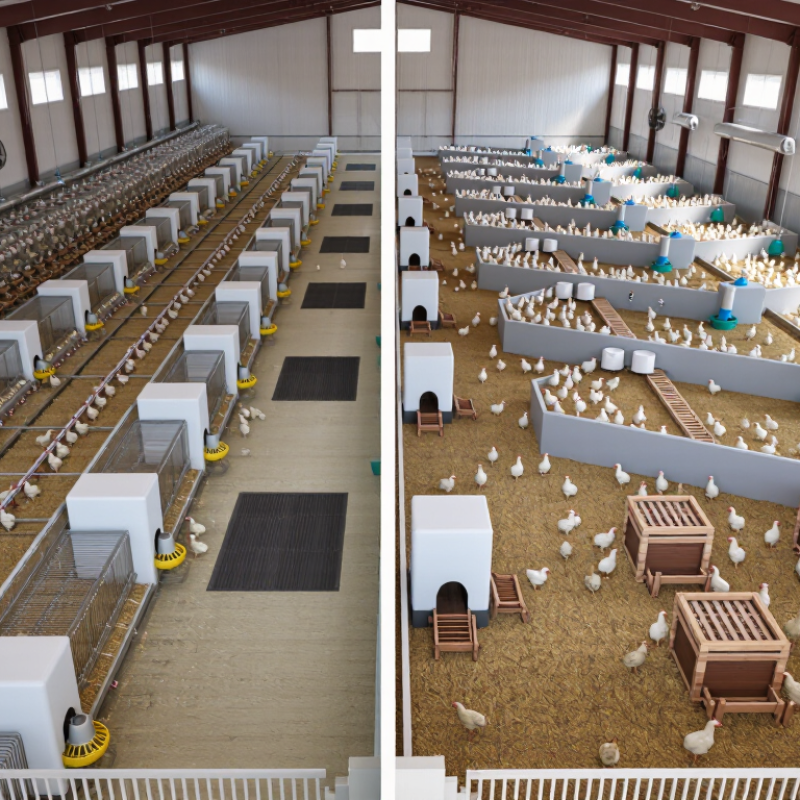
Understanding chicken layer cage systems means comparing bird space, access to feed and water, egg collection, manure handling, and daily inspection. Conventional cages use compact rows and automated belts. Enriched colony cages add features such as nests, perches, and scratch areas. Aviary systems are cage-free, with birds moving among tiers; they need different ventilation and litter management. These are not interchangeable layouts.

The European Union’s Council Directive 1999/74/EC sets a minimum of 750 cm² per hen in an enriched cage, including at least 600 cm² of usable area. This is a regional legal standard, not a universal design target. FAOSTAT reported roughly 91 million tonnes of hen eggs worldwide in 2022, showing the scale of production systems that must manage reliably. Still, output alone cannot tell a farm which housing system will work best. Consider flock size, labor, climate, bird behavior, and maintenance access. A tidy drawing can conceal awkward corners where eggs crack or manure builds up. That detail deserves a site-level check.

Tips: Before choosing, map the daily route from nest to egg belt and check whether workers can reach every row. Small access problems become routine problems.

EU Minimum Usable Area per Laying Hen

A comparison of minimum space requirements across layer housing systems, measured in cm² per hen.

EU rules specify at least 550 cm² of usable area per hen in conventional cages (a historical standard; unenriched cages have been prohibited in the EU since 2012), 600 cm² of usable area in enriched cages, and a maximum density of 9 hens per m² of usable area in alternative systems—about 1,111 cm² per hen. Requirements vary by jurisdiction.
Source: EU Directive 1999/74/EC.

Main Types of Layer Cages Used in 2026

What Are the Best Chicken Layer Cage Types in 2026?

Main Types of Layer Cages Used in 2026

Layer-cage systems are commonly described as conventional, enriched, or colony designs. Conventional cages use compact groups and simple fittings, such as feed troughs and drinker lines. They can make egg collection and daily checks straightforward, but provide limited room for natural behaviors. Their availability and permitted use vary by location, so check current local requirements before planning a facility.

Enriched cages add features such as perches, nest areas, and scratch pads. These details matter in daily use: a nest needs enough space, and drinkers should be easy to inspect for leaks. Colony cages house larger groups and may include similar enrichments, with the layout designed to support movement and flock management. More space alone does not guarantee good outcomes. Stocking density, ventilation, litter condition, and staff routines still need careful attention.

A-frame and H-frame describe cage arrangements, not separate welfare categories. A-frame rows are often easier to view from the aisle, while H-frame systems can use vertical space efficiently. The right fit depends on the building, equipment access, and how workers collect eggs and monitor birds. Small details can be overlooked. A promising layout may still create awkward inspection points, so review a scaled plan and assess daily tasks before choosing.

What Are the Best Chicken Layer Cage Types in 2026? — Main Types of Layer Cages Used in 2026

Housing Type Basic Layout Space and Regulatory Benchmarks Key Features Practical Considerations in 2026
Conventional (Battery) Cage Small groups of hens are kept in wire-sided cages, usually arranged in rows and tiers. The basic design does not provide a dedicated nest or perch. Under the former EU conventional-cage standard, the minimum was 550 cm² of cage area per hen. Conventional cages have been prohibited in the EU since 1 January 2012. Compact layout; automated feeding, watering, and manure removal can be incorporated. It offers fewer opportunities for nesting, perching, and scratching than enriched designs. Still found in some markets, subject to local rules and buyer requirements. Check current national regulations before selecting or operating this system.
Enriched Cage A cage system with additional facilities such as a nest area, perches, and litter or scratching space. EU rules require at least 750 cm² of cage area per hen, including at least 600 cm² of usable area. Each cage must provide at least 2,000 cm² of total cage area, along with specified nest, perch, and litter provisions. Provides more behavioral resources than a conventional cage while retaining a managed group-cage layout. May be called a furnished cage in some markets. The term “enriched” does not replace the need to verify local space, equipment, and welfare requirements.
Colony Cage A larger-group version of an enriched cage, with hens housed together in a shared cage compartment. “Colony cage” is not a separate EU legal space category: where EU enriched-cage rules apply, the enriched-cage minimums apply. Requirements differ by jurisdiction. Typically combines group housing with facilities such as perches, nest areas, and litter or scratching areas. Exact layouts and group sizes vary. Compare the actual usable floor area, group size, nest access, and equipment—not just the “colony” label—when evaluating a system.
Convertible (Combi) System A configurable housing design that may operate as a cage system or be opened or converted to provide a cage-free layout, depending on its design and management. There is no single universal space figure for all combi systems. Applicable requirements depend on the operating configuration and the rules in the installation’s jurisdiction. Can offer operational flexibility, but conversion may require changes to access, equipment, flock management, and the way usable space is calculated. Confirm that the system’s intended configuration is permitted locally and that conversion instructions and welfare provisions are clearly specified.
Multi-Tier Aviary (Cage-Free Comparator) Hens move freely in an indoor house with several levels, commonly including perches, nest areas, and littered floor space. This is a cage-free system, not a cage type. Space requirements and stocking limits are set by the applicable local rules and standards. Allows movement between levels and access to different resources; management must address litter condition, bird movement, and access to nests and perches. Included as a common alternative when comparing layer housing. Its performance depends on house design, flock management, and compliance with local requirements.

Note: Regulatory figures shown are EU benchmarks from Council Directive 1999/74/EC, not universal 2026 requirements. Local laws, certification schemes, and customer specifications may set different or stricter conditions. Verify current requirements for the farm’s location.

How Layer Cage Types Compare in Practice

Conventional layer cages use a compact footprint and straightforward equipment layout. Feed lines and drinkers are easy to reach, while fewer fixtures can mean simpler daily checks. During a busy morning, staff may spot a blocked nipple or uneven feed distribution quickly. But higher bird density can make small problems harder to notice across a large flock. Small details matter.

Enriched or colony-style cages add features such as perches, nest areas, and scratch spaces. These give hens more room for some natural behaviors, but they also require careful inspection for damaged fittings and litter buildup. Extra equipment can complicate cleaning, and poorly placed nest areas may lead to floor eggs. Egg belts, ventilation, and access to feed and water should be compared alongside cage space. A single clean inspection can mislead; repeated checks across different areas reveal more. The best fit depends on flock size, labor capacity, building layout, and the daily routines staff can maintain consistently.

Key Factors for Choosing a Layer Cage System

Choosing a layer cage system begins with the flock, the building, and the daily work—not a headline capacity figure. Measure aisle widths, ceiling height, and door openings before comparing layouts. Check that workers can reach drinkers, inspect birds, and remove eggs without awkward stretching. Small details matter.

Bird comfort and consistent care depend on more than cage dimensions. Look at usable space, access to feed and water, ventilation around each tier, and how quickly staff can spot an injured or unwell hen. Ask how manure is removed and whether belts or other moving parts are easy to clean and maintain. A system that saves labor on paper may create extra work when access is poor. Not always obvious.

Match the equipment to reliable production goals and the skills available on site. Compare the full installation needs, including structural support, lighting, egg handling, and backup plans for equipment failures. Ask suppliers for clear specifications, maintenance guidance, and references from farms with similar flock sizes and housing conditions. Then verify local welfare and building requirements with qualified advisers. I would still leave room for doubt: projected labor savings can be hard to reproduce during busy seasons. A practical trial or detailed site review may reveal problems that a brochure cannot.

Matching Cage Types to Farm Size and Management Needs

For a small farm, a compact cage layout may seem easier to manage, but access matters more than a low equipment price. You need room to inspect birds, collect eggs, and remove manure without awkward reaching. A conventional cage system can simplify routine checks, while enriched cages add features such as perches and nesting areas. Those features also require thoughtful cleaning and bird monitoring. Small scale is not always simple.

Larger farms may consider colony-style systems when their staff can manage bigger groups and maintain consistent daily checks. Walkways should let workers see feed and water lines, spot injured birds, and respond quickly to equipment problems. Measure the building before choosing: ceiling height, ventilation, and service access can rule out a layout that looks suitable on paper. There is no perfect type. I would check the workflow twice, because a rushed decision can make ordinary chores harder.

Tips: Match cage capacity to the number of birds your team can inspect carefully. Ask suppliers for layout drawings, then walk the proposed route with a feed bucket or egg tray. Check current local welfare requirements before buying; standards vary.

Let's Build Together

Contact Us: Call 435-563-3503

-OR-  Fill in the form below and we will call you back.

Copyright © 2025CNC Fabrication. All Rights Reserved.