What Is an Aluminium Casting Mold and How Does It Work?
An Aluminium Casting Mold is a shaped cavity used to produce metal parts with consistent dimensions and repeatable surface details. It guides molten aluminium into a controlled form, then supports cooling until the part becomes solid. In a working foundry, the mold may resemble a simple block, yet its internal channels demand careful engineering. Gates direct the metal, runners distribute flow, and vents release trapped air. Small design errors can create porosity, incomplete filling, or visible seams.
The mold material depends on production volume, part complexity, and expected temperature exposure. Steel molds suit repeated pressure casting because they resist wear and thermal cycling. Sand molds remain useful for larger components and lower-volume work. Before casting, technicians inspect cavity surfaces, apply suitable release agents, and check alignment. They also monitor melt temperature rather than relying on appearance alone. Aluminium can look ready while still producing inconsistent results.
Experience matters because casting rarely behaves perfectly. Cooling may warp thin sections, and sharp corners can concentrate stress. A reliable process therefore combines simulation, inspection, and practical adjustment. Measurements from calipers, gauges, or three-dimensional scanners help confirm the final part. Still, inspection cannot replace sound mold design. It is easy to overvalue a clean surface while missing internal defects. This article explains how an Aluminium Casting Mold works, where its limitations appear, and which decisions improve safety, accuracy, and service life. The goal is not to present casting as effortless. Good results usually come from controlled variables, skilled observation, and a willingness to revise the process.
What Is an Aluminium Casting Mold?
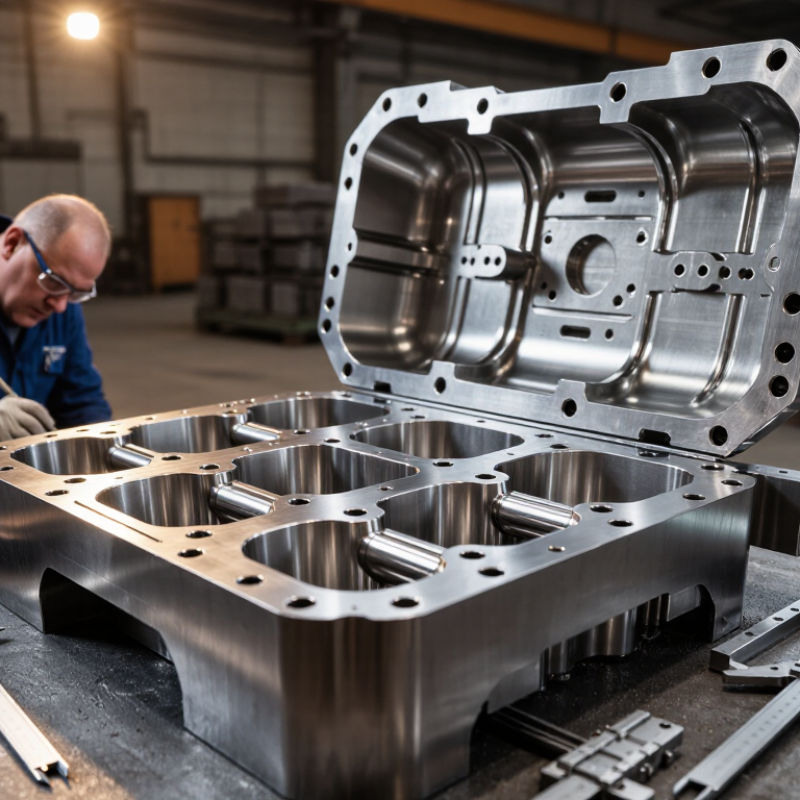
An aluminium casting mold is a shaped cavity that forms liquid aluminium into a usable component. It provides the part’s outer profile, internal openings, and essential dimensions. Depending on production needs, molds may use steel, iron, plaster, or bonded sand. Permanent molds support repeated production, while sand molds offer greater design flexibility. The choice affects surface finish, accuracy, cost, and cooling speed.
During casting, heated aluminium enters through a pouring cup, runner, and gate. Vents help trapped air escape. The mold must control metal flow and heat removal. Otherwise, shrinkage, pores, or incomplete filling may appear. After solidification, workers open the mold or remove the sand. They then trim gates and inspect the casting. Small defects can expose weak mold design.
In practical workshops, the difficult part is rarely pouring alone. A tiny vent can influence a large surface. A poor draft angle may damage the part during removal. The U.S. Geological Survey’s Mineral Commodity Summaries 2024 estimated global primary aluminium production at about 70 million metric tons in 2023. This scale increases pressure for efficient, repeatable tooling. The International Aluminium Institute reports that recycled aluminium typically requires about 5% of the energy used for primary production. That statistic supports better mold design, but it does not solve every problem. Reusable molds still need maintenance, temperature control, and honest inspection records.
What Is an Aluminium Casting Mold and How Does It Work?
An aluminium casting mold is a reusable cavity, commonly made from metal, that shapes molten aluminium as it cools and solidifies. Its high thermal conductivity helps transfer heat away from the casting, supporting faster solidification and repeatable production.
Representative thermal conductivity values at approximately room temperature. Higher conductivity generally allows a mold material to remove heat more quickly, although actual performance also depends on mold design, temperature, coating, and cooling conditions.
What Materials and Designs Make Up the Mold?
An aluminium casting mold is a shaped cavity that controls molten metal during filling, cooling, and ejection. Its material depends on production volume, casting pressure, and required surface quality. Heat-treated tool steel is common for high-pressure die casting because it resists wear and thermal shock. Sand molds use bonded silica or ceramic particles, while ceramic cores create internal passages and hollow sections. For short production runs, aluminum or polymer tooling can reduce cost, although these materials may deform sooner.
Mold design is more than copying the final part. Engineers add draft angles so the casting leaves the cavity cleanly. They also position the parting line, runners, gates, vents, cooling channels, and ejector pins. A small vent near a thin rib can prevent trapped air and cold shuts. The International Aluminium Institute reports that recycled aluminum requires roughly 5% of the energy used for primary aluminum production. The USGS Mineral Commodity Summaries 2025 estimated global primary aluminum output at about 73 million metric tons in 2024. These figures make durable tooling and scrap control important, not optional. Still, a perfect CAD model can fail on the shop floor. Uneven cooling remains a stubborn problem.
Tips: Keep walls reasonably uniform, avoid sharp internal corners, and inspect vent locations early. Check the first casting for porosity, distortion, and incomplete filling. A mold may need redesigning, even when its dimensions appear correct.
How Is an Aluminium Casting Mold Prepared?
An aluminium casting mold is a shaped cavity that receives molten aluminium and forms a precise component. Preparing it carefully affects surface quality, dimensions, and production safety. The process starts with a clean pattern or mold design. Engineers add draft angles so the solidified part can leave without damage. They also allow for aluminium shrinkage during cooling. Small details matter.
The mold surface must be cleaned and checked for cracks, moisture, and unwanted particles. Moisture can create dangerous steam when it contacts molten metal. Vents and gates are positioned to guide metal flow and release trapped air. The mold is then assembled firmly and preheated when the material requires it. A controlled temperature helps reduce thermal shock. It also supports more consistent filling. In practice, preparation is not always perfect. A gate may seem suitable on paper but produce turbulence during a real pour. That result should lead to inspection and adjustment, not guesswork.
Tips: Keep the cavity dry. Check alignment before pouring. Use suitable protective equipment. Record temperature and defect patterns. Do not rush mold release. A slightly rough surface can hide a larger preparation problem. Experienced technicians often inspect the first casting closely, because it reveals issues that drawings cannot show.
What Is an Aluminium Casting Mold and How Does It Work? – How Is an Aluminium Casting Mold Prepared?
| Stage or Dimension | Description | Typical Materials or Parameters | Purpose and Quality Considerations |
|---|---|---|---|
| Mold definition | An aluminium casting mold is a cavity or mold assembly that gives molten aluminium its required shape as it solidifies. | Sand, permanent metal, ceramic, plaster, or investment mold systems. | The selected mold type affects surface finish, dimensional accuracy, production rate, and tooling cost. |
| Pattern or tooling design | A pattern, model, or engineered tool is created to define the external geometry of the casting. | Pattern materials may include wood, polymers, or metal; draft angles and shrinkage allowance are incorporated. | Draft allows the pattern or casting to be removed without damaging the mold. Shrinkage compensation helps maintain final dimensions. |
| Mold material selection | The mold material is selected according to the casting method, part geometry, production volume, and required finish. | Green sand commonly contains silica sand, clay, water, and additives. Permanent molds are generally made from heat-resistant metals. | The mold must withstand thermal shock, resist erosion, and permit controlled heat transfer during solidification. |
| Mold preparation | The cavity is formed, cleaned, assembled, and checked before molten aluminium is introduced. | Core placement, parting-surface alignment, venting, gating, risers, and release coating may be required. | Correct alignment prevents mismatches, while vents and feeders help reduce trapped gas and shrinkage defects. |
| Core installation | A core is placed inside the mold when the casting requires internal holes, passages, or hollow sections. | Common core materials include chemically bonded sand and resin-coated sand. | The core must be accurately positioned and adequately supported so it does not shift during filling. |
| Gating and feeding system | Channels guide molten aluminium into the cavity, while risers supply additional metal as the casting contracts. | Sprue, runners, gates, filters, vents, and risers are sized according to part geometry and filling behavior. | A balanced system promotes smooth filling and reduces turbulence, oxide entrainment, misruns, and porosity. |
| Mold preheating | Reusable molds are often heated before pouring to reduce thermal shock and improve metal flow. | Preheating temperature depends on mold design, alloy, coating, and casting method; it is commonly controlled within a moderate elevated-temperature range. | Excessive or uneven heating can increase sticking, distortion, oxidation, and local changes in solidification. |
| Release coating | A suitable coating may be applied to the mold surface to assist release and regulate heat transfer. | Water-based or solvent-based refractory coatings may contain fine mineral particles and binders. | The coating should be uniform, dry, and compatible with the alloy and mold material. |
| Aluminium melting | Aluminium charge material is melted in a suitable furnace before transfer to the prepared mold. | Pure aluminium melts at approximately 660°C; casting alloys are poured above their liquidus temperature, often within a controlled range around 680–760°C depending on alloy and process. | Temperature must be controlled to maintain fluidity while limiting oxidation, hydrogen pickup, and excessive grain growth. |
| Melt treatment | The melt may be cleaned and treated before pouring to improve internal soundness. | Skimming, filtration, and degassing are common practices; treatment details depend on alloy and equipment. | Removing dross and dissolved hydrogen helps reduce inclusions and gas porosity. |
| Pouring and filling | Molten aluminium flows through the gating system and fills the mold cavity. | Pouring speed, metal temperature, mold temperature, and filling time are controlled according to the casting design. | A steady, non-turbulent flow helps prevent air entrapment, cold shuts, and incomplete filling. |
| Solidification | The aluminium loses heat to the mold and changes from liquid to solid inside the cavity. | Cooling rate depends on mold material, section thickness, mold temperature, and local heat extraction. | Directional solidification toward risers helps compensate for metal contraction and limits shrinkage cavities. |
| Mold opening and shakeout | After sufficient cooling, the casting is removed from the mold. | Sand molds may be broken during shakeout; permanent molds are opened and reused. | Removal temperature and handling method should prevent distortion, cracking, and damage to thin sections. |
| Finishing operations | Excess metal and surface residues are removed after demolding. | Typical operations include cutting gates and risers, grinding, shot blasting, machining, and deburring. | Finishing restores the specified geometry and prepares surfaces for inspection or further treatment. |
| Inspection criteria | The finished casting and mold process are evaluated against dimensional, surface, and structural requirements. | Visual inspection, dimensional measurement, radiography, dye penetrant testing, and leak testing may be used. | Inspection verifies mold alignment, surface quality, dimensional accuracy, and the absence of unacceptable porosity, cracks, inclusions, or misruns. |
How Does Molten Aluminium Flow and Solidify in the Mold?
What Is an Aluminium Casting Mold and How Does It Work?
Molten aluminium enters the mold through a designed gating system. Its temperature usually stays above 660.3°C, the melting point of pure aluminium listed by NIST. The stream must remain smooth. Turbulence can trap air and create oxide films inside the casting. A sprue, runner, and gate control the metal’s speed and direction. Too fast, and erosion or air entrapment may occur. Too slow, and the front can freeze early.
Inside the mold, heat moves from the aluminium into the mold wall. NIST reference data lists pure aluminium’s thermal conductivity near 237 W/m·K at room temperature. This high conductivity helps form a solid shell quickly. Solidification then advances toward the hottest remaining region.
Feeders must supply extra metal as the alloy contracts. Industry casting guidance commonly treats shrinkage control as a central design issue, not a minor correction. The exact amount depends on alloy chemistry, mold temperature, and cooling conditions.
In practice, the flow rarely behaves perfectly. A small temperature loss can change the filling pattern. Poor venting may leave a visible cavity. I have found that simulation is useful, but it cannot replace a cut-section inspection. The Aluminum Association’s statistical reviews show aluminium production at a massive industrial scale, yet every mold still depends on local heat transfer. That detail is easy to underestimate. A sound casting comes from balancing velocity, pressure, feeding, and solidification time.
How Is the Finished Casting Removed and Inspected?
After cooling, the mold opens along its parting line, and ejector pins push the aluminum casting forward. Draft angles help the part separate without tearing edges or damaging the cavity. Operators watch the first movement closely. A sticking sound can reveal distortion before measurements confirm it.
The casting then receives trimming, shot blasting, or light deburring. Workers remove runners, gates, and flash around the parting line. They inspect for cold shuts, cracks, gas porosity, and incomplete filling. Dimensional checks compare critical surfaces with the drawing or digital model. A height gauge may find a warped flange, while coordinate measurement checks hole location. According to the 2023 Modern Casting Census, U.S. foundries shipped about 10.8 million tons of castings in 2022. At that scale, repeatable inspection prevents small mold problems from becoming expensive batches.
Non-destructive testing depends on the casting’s risk. Radiography can reveal internal voids, while dye penetrant testing exposes surface-breaking cracks. Inspectors often use ASTM E505 reference images for aluminum die-casting discontinuities. Pressure-tested parts require controlled air or liquid tests, followed by careful leak evaluation. No method sees everything. A visually clean surface may still hide internal porosity. Even experienced inspectors can miss a subtle defect under poor lighting. That weakness deserves review, not denial. Record keeping, calibrated tools, and photographed evidence make the release decision more reliable.
Article Source:
Let's Build Together
Contact Us: Call 435-563-3503
-OR- Fill in the form below and we will call you back.