7 Best RF Coaxial Connectors for Global Buyers?
Choosing the right Rf Coaxial Connector is not a simple price comparison. Global buyers must match performance, durability, certification, and supply reliability with the real application.
A connector used beside a 5G antenna faces different demands from one installed inside a laboratory instrument. Frequency range matters. So do impedance, return loss, insertion loss, shielding effectiveness, and mating cycles. A tiny gap at the interface can create measurable signal leakage. Poor plating may look acceptable, then corrode after months in humid air. Cable size and termination method also deserve attention. SMA, N-type, TNC, BNC, and other families each serve different mechanical and electrical needs.
EMC specialist Henry Ott wrote, “The best way to solve a problem is to prevent it.” This principle fits connector selection well. Buyers should check datasheets, test reports, material specifications, and supplier traceability before ordering. Independent verification is valuable, especially when products cross markets with different compliance expectations. RoHS, REACH, ISO-controlled production, and documented quality procedures can reduce avoidable risk.
This guide reviews seven strong Rf Coaxial Connector choices for international buyers. It considers high-frequency performance, weather resistance, installation effort, compatibility, and long-term availability. No ranking is perfect. A connector that excels in a telecom tower may be excessive for a compact test cable. I may also favor practical availability over laboratory-level performance, because production delays are real. Compare the details carefully. The lowest unit price is rarely the complete cost.
RF Coaxial Connector Basics and Key Performance Characteristics
7 Best RF Coaxial Connectors for Global Buyers
RF coaxial connectors transfer high-frequency signals between cables, antennas, filters, and equipment. Their basic structure includes a center contact, dielectric insulator, outer conductor, and protective body. Common systems use 50-ohm impedance for wireless communication or 75-ohm impedance for video and broadcast signals. Mixing these standards can increase reflections and reduce signal quality.
Performance depends on frequency range, return loss, insertion loss, and voltage standing wave ratio. A connector with low return loss reflects less energy toward the source. Strong shielding also limits leakage near sensitive receivers. Material choices matter. Plated contacts resist corrosion, while stable dielectric materials support consistent performance across temperature changes. In field installations, I check cable compatibility and mating alignment carefully. Small mechanical errors can create measurable loss. No connector is perfect.
Tips: Confirm impedance before ordering. Check the rated frequency, interface type, and cable diameter. Review operating temperature, vibration resistance, and sealing requirements. Use the specified torque, not guesswork. A loose connection may pass an initial test but fail after movement. For outdoor use, inspect the gasket and corrosion protection. Global buyers should also verify thread standards, test reports, and supplier traceability. Some catalogs provide impressive figures, yet practical results can differ after repeated mating. Testing a sample batch remains a sensible step.
How to Evaluate RF Connectors for Different Applications
Choosing the best RF coaxial connector starts with the application, not the product list. Frequency, impedance, power, and installation space must match. A connector rated for 50 ohms can still perform poorly when its cable, adapter, or termination is unsuitable. In practice, I check insertion loss, return loss, voltage standing wave ratio, and mating durability. Small errors become visible at millimeter-wave frequencies. They can also raise test uncertainty.
Market estimates show why careful selection matters. A 2024 industry report from MarketsandMarkets projects continued growth in the global RF connector market, driven by wireless infrastructure, aerospace systems, automotive radar, and test equipment. However, market reports use different definitions and forecasts. Treat the figures as directional, not absolute. For reliable comparisons, evaluate test data under the actual operating frequency and temperature. Look for measurements aligned with IEC 61169 standards, plus environmental ratings based on IEC 60529 where sealing matters. Salt spray, vibration, and repeated coupling may matter more than a low purchase price.
Tips: Build a short application checklist before requesting quotations. Record frequency range, impedance, maximum power, cable type, interface geometry, space limits, and expected mating cycles. For outdoor equipment, inspect gasket compression and corrosion resistance. For laboratory work, prioritize repeatability and calibration traceability. Do not judge quality from appearance alone. I have seen polished connectors fail after poor cable preparation. That detail is easy to overlook. Recheck it.
Seven Leading RF Coaxial Connector Types for Global Buyers
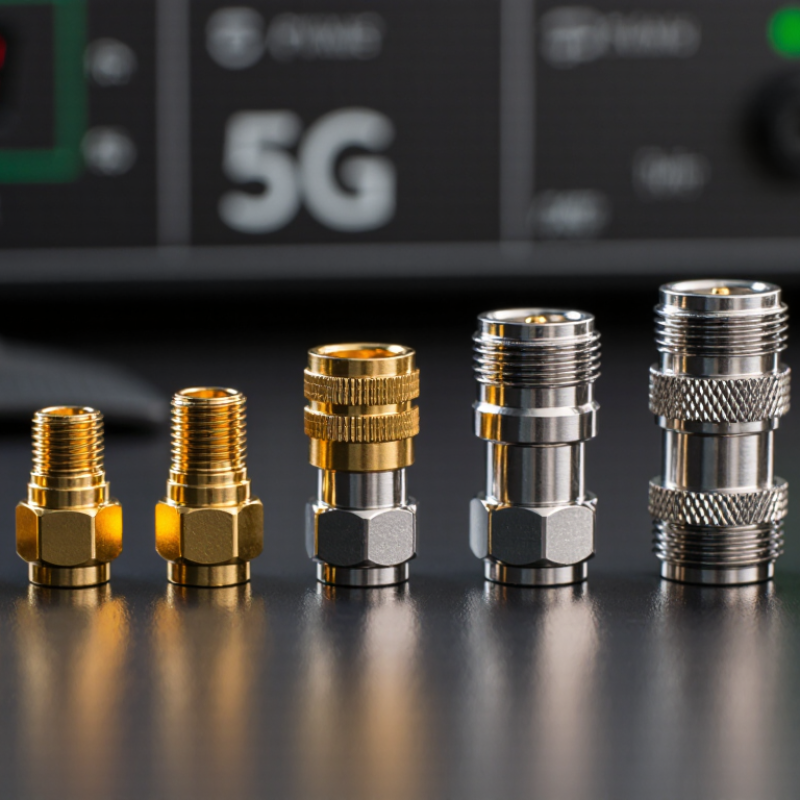
Global buyers often compare seven leading RF coaxial connector types: SMA, SMB, SMC, N, TNC, BNC, and MCX. Each type balances frequency range, size, sealing, and installation effort differently. SMA connectors suit compact microwave assemblies and test equipment. Their threaded coupling resists vibration, but small threads demand careful alignment. SMB connectors use a snap-on interface for fast assembly. They save panel space, although repeated handling may reduce confidence in field conditions. SMC connectors add threads to a compact body. They work well where vibration is present, but installation takes longer.
N connectors support larger coaxial cables and outdoor radio systems. Their threaded design and sealing options can handle demanding environments when torque is controlled. TNC connectors resemble BNC units but use threads instead of bayonet locking. This choice improves vibration resistance in mobile equipment. BNC connectors remain practical for instruments, cameras, and low-to-medium frequency links. Their quick coupling is convenient, yet accidental rotation can interrupt a connection. MCX connectors fit miniature assemblies, including navigation modules and compact wireless devices. They reduce board space, though their small mating parts need careful inspection. Buyers should verify impedance, operating frequency, cable size, insertion loss, and environmental rating. Datasheets matter more than familiar names. In my testing experience, failures often occur at the cable termination, not the shell. No connector is perfect. Sample testing can expose weaknesses before volume purchasing.
7 Best RF Coaxial Connectors for Global Buyers
Seven leading RF coaxial connector types compared by representative maximum operating frequency.
SMA offers the highest frequency capability among these widely used connector families, while N and 7/16 DIN connectors are commonly selected for outdoor and higher-power systems. BNC and SMB connectors are often preferred for general-purpose instrumentation and compact equipment. Values represent common 50-ohm versions; actual limits vary by connector design, cable assembly, and manufacturer specification.
International Standards, Compatibility, and Purchasing Considerations
7 Best RF Coaxial Connectors for Global Buyers?
International Standards, Compatibility, and Purchasing Considerations
The seven practical choices include N, SMA, SMB, SMC, BNC, TNC, and 7/16 DIN connectors. None is universally best. Selection depends on frequency, impedance, power, environment, and installation space. N and 7/16 DIN connectors suit outdoor systems and higher power. SMA supports compact, high-frequency assemblies. BNC offers quick locking for instruments and test equipment. TNC provides threaded security where vibration is a concern. SMB and SMC save space, but their mechanical strength differs.
International buyers should request compliance documents linked to the IEC 61169 connector series. Confirm the exact part standard, not only a general “IEC compliant” statement. Check 50-ohm or 75-ohm impedance carefully. A mismatch can increase reflection loss and reduce signal quality. For outdoor products, verify sealing performance, corrosion testing, and the relevant IP rating under IEC 60529. RoHS and REACH declarations may also be needed for certain markets.
Compatibility requires more than matching connector names. Inspect gender, keying, cable size, plating, coupling style, and maximum frequency. Ask for insertion-loss curves and return-loss data across the operating band. I have seen assemblies fit mechanically but fail electrically because the cable dielectric was different. Datasheets can be incomplete. Request samples, perform torque and vibration checks, and test mating cycles before placing a large order. Keep certificates, lot numbers, and inspection records for traceability. A low purchase price may hide inconsistent plating or weak crimp control. That risk deserves a second review.