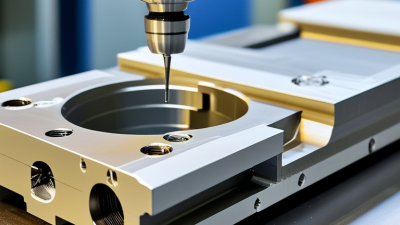
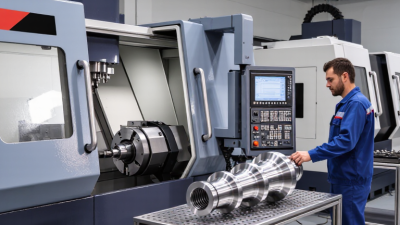
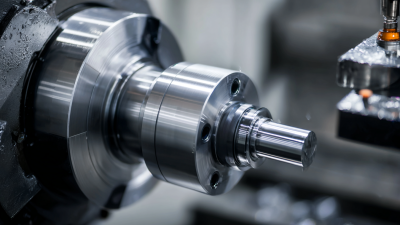
2026 Top High Precision Machining Suppliers
High precision machining is becoming a strategic capability, not merely a subcontracting service. Aerospace, medical, semiconductor, and energy manufacturers now demand tighter tolerances, traceable materials, and stable repeatability across global production runs. Fortune Business Insights reports that the global CNC machine market was valued at approximately USD 83.99 billion in 2023 and is projected to expand substantially through 2030. This growth reflects stronger investment in automated, digitally monitored production.
The 2026 Top High Precision Machining Suppliers overview examines manufacturers through practical and measurable criteria. These include dimensional accuracy, five-axis capacity, inspection equipment, material expertise, delivery performance, and quality certifications. ISO 9001 supports process consistency, while AS9100 and ISO 13485 can indicate sector-specific discipline. NIST research also emphasizes measurement traceability and process control as essential foundations for reliable advanced manufacturing.
A supplier may machine titanium beautifully yet struggle with documentation. Another may offer impressive tolerances but lack production capacity. Real performance is rarely visible in a brochure. It appears in inspection reports, tool-wear records, surface-finish readings, and parts that fit correctly after thousands of cycles.
That matters more than marketing language.
This guide combines published industry research with buyer-focused evaluation. Supplier rankings can still change by application, region, and batch size. No single list is perfect. Our review therefore treats technical claims carefully and encourages direct verification through sample parts, capability studies, and recent customer references. The strongest suppliers are not simply those with modern machines. They are partners that repeatedly convert engineering drawings into dependable, traceable components.
2026 High-Precision Machining Suppliers: Scope, Terms, and Market Criteria
2026 High-Precision Machining Suppliers: Scope, Terms, and Market Criteria
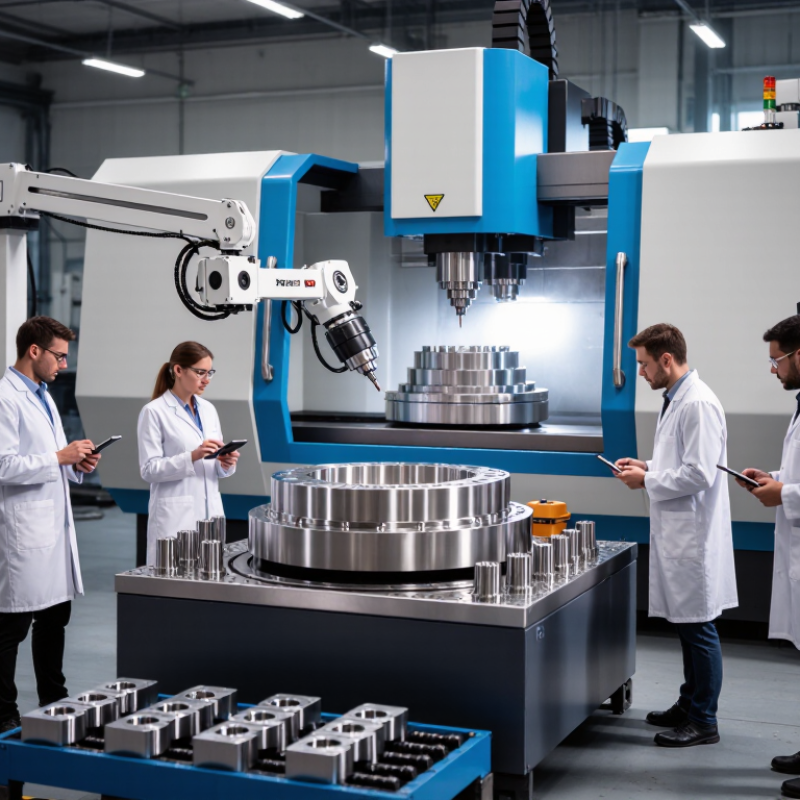
High-precision machining covers CNC milling, turning, grinding, Swiss machining, and complex five-axis work. The scope should state materials, part size, tolerance ranges, surface finishes, and production volume. A supplier making titanium housings faces different risks than one producing small steel shafts. Ask for process capability data, not broad claims.
Important terms include accuracy, repeatability, runout, geometric tolerancing, and first-article inspection. Accuracy describes closeness to the intended dimension. Repeatability shows whether the process performs consistently. Reliable suppliers use calibrated gauges, coordinate measuring machines, inspection plans, and traceable records. During supplier reviews, I also examine tool-wear controls and how operators respond to failed measurements. A polished facility helps, but documented evidence matters more. No supplier is perfect. Even strong processes need review.
Tips:
Request sample inspection reports and realistic tolerance examples. Check whether quoted tolerances match the chosen material and process. Confirm capacity before approving a large order. Discuss revision control, packaging, and communication standards early. A short technical call can expose unclear assumptions. Ask who owns final inspection data. Small details often prevent expensive rework. Yet, I would not judge capability from equipment age alone; skilled process control can outperform impressive machinery.
Industry Benchmarks: ±0.005 mm Tolerance, 5-Axis CNC, and ISO 9001
2026 Top High Precision Machining Suppliers
In 2026, high precision machining is measured by repeatable results, not impressive claims. A ±0.005 mm tolerance demands stable machines, controlled temperatures, and disciplined inspection. Five-axis CNC equipment can reduce setups and protect alignment between complex surfaces. However, five-axis capability alone does not guarantee accuracy. Tool wear, fixture movement, and thermal growth still influence every part.
Reliable suppliers document how they achieve these benchmarks. Their quality systems should follow ISO 9001 principles, with controlled procedures, trained operators, and traceable records. Ask for inspection reports, calibration dates, and measurement methods. A coordinate measuring machine can verify critical dimensions, but the process must match the part’s real operating conditions. Surface finish, material hardness, and geometric tolerances deserve equal attention.
Look for evidence from production, not only sample parts. Process capability data can reveal whether ±0.005 mm is normal or merely possible. Small details matter: clean workholding, verified tool offsets, and temperature records near the machine. Even experienced suppliers may miss a weak step in their inspection plan. That deserves honest discussion. A capable partner explains limits clearly, reports nonconforming parts, and adjusts the process before problems reach assembly. Past project experience also matters, especially with difficult alloys and thin-wall components.
2026 High-Precision Machining Industry Benchmarks
Reference benchmark profile: ±0.005 mm dimensional tolerance, five-axis CNC capability, and ISO 9001 quality-system certification. Values use their native units and are intended for specification comparison rather than direct ranking.
Supplier Ranking Method: Quality, Capacity, Lead Time, and Cost Metrics
2026 Top High Precision Machining Suppliers
Supplier Ranking Method: Quality, Capacity, Lead Time, and Cost Metrics
Ranking high precision machining suppliers requires more than comparing online claims. Our evaluation begins with quality evidence, including inspection records, CMM reports, calibration schedules, and process capability data. We examine Cp and Cpk results for critical dimensions. We also review nonconformance rates and corrective action response times. Shop-floor experience matters here. A polished certificate cannot replace consistent parts from recent production runs.
Capacity receives a practical score. We assess machine availability, five-axis capability, material handling, and backup equipment. A supplier may own advanced machinery but lack skilled operators or stable scheduling. That weakness affects delivery. Lead time includes quotation speed, programming, setup, production, inspection, and shipping preparation. We compare promised dates with documented performance across several orders. One late project should not define a supplier, but repeated delays should lower its ranking.
Cost is measured against total value, not unit price alone. We include tooling, inspection, rework risk, packaging, and expedited freight. Lower quotes sometimes hide higher operational costs. The ranking can use weighted metrics, such as quality at 35%, capacity at 25%, lead time at 20%, and cost at 20%. These percentages are useful, but not universal. A critical medical or aerospace component may require a different balance. Our method still needs refinement when data is incomplete, especially for smaller suppliers with limited historical records.
An anonymized procurement benchmark for precision machining suppliers, scored by quality, production capacity, lead time, and cost.
2026 Top High Precision Machining Suppliers - Supplier Ranking Method: Quality, Capacity, Lead Time, and Cost Metrics
| Rank |
Supplier Code |
Quality
Reject Rate |
On-Time Delivery |
Monthly CNC
Capacity |
Standard Lead Time |
Relative Cost
Index |
Weighted Score |
Quality
Certification |
| 1 |
Supplier A01 |
0.42% |
98.6% |
42,000 machine hours |
12 working days |
108 |
93.1 |
ISO 9001 |
| 2 |
Supplier B07 |
0.48% |
97.9% |
56,000 machine hours |
14 working days |
101 |
92.4 |
ISO 9001 |
| 3 |
Supplier C03 |
0.55% |
98.1% |
31,500 machine hours |
11 working days |
112 |
91.8 |
ISO 9001 |
| 4 |
Supplier D12 |
0.63% |
97.4% |
68,000 machine hours |
16 working days |
96 |
90.7 |
ISO 9001 |
| 5 |
Supplier E05 |
0.71% |
96.8% |
24,000 machine hours |
10 working days |
104 |
89.9 |
ISO 9001 |
| 6 |
Supplier F09 |
0.76% |
96.5% |
47,500 machine hours |
15 working days |
94 |
89.2 |
ISO 9001 |
| 7 |
Supplier G14 |
0.84% |
95.9% |
19,500 machine hours |
9 working days |
117 |
87.8 |
ISO 9001 |
| 8 |
Supplier H02 |
0.91% |
95.6% |
73,000 machine hours |
18 working days |
91 |
87.1 |
ISO 9001 |
| 9 |
Supplier J11 |
1.05% |
94.8% |
36,000 machine hours |
13 working days |
88 |
86.4 |
ISO 9001 |
| 10 |
Supplier K06 |
1.18% |
94.2% |
28,500 machine hours |
17 working days |
85 |
84.9 |
ISO 9001 |
|
Scoring method: Quality 35%, Capacity 25%, Lead Time 20%, and Cost 20%.
Reject rate and lead time are scored with lower values preferred; on-time delivery and capacity are scored with higher values preferred.
The relative cost index uses 100 as the benchmark market cost, with lower values indicating stronger cost competitiveness.
|
All supplier identifiers are anonymized. Capacity is expressed in available CNC machine hours per month, and lead time refers to standard production orders after drawing and specification approval.
Top Supplier Profiles: Materials, Processes, Sectors, and Certifications
The 2026 top high precision machining suppliers stand apart through measurable capability, not attractive claims. Their profiles should explain materials, processes, served sectors, and current certifications. A useful supplier profile names aluminum alloys, stainless steels, titanium, engineering plastics, and difficult nickel-based materials. It also identifies machining centers, turning equipment, grinding, wire EDM, and inspection methods.
Details matter. A reliable supplier can discuss tolerances, surface finishes, batch sizes, and realistic lead times. Look for evidence from coordinate measuring machines, calibrated gauges, and documented first-article inspections.
Production experience in aerospace, medical devices, robotics, energy, and industrial equipment often reveals process maturity. However, sector experience alone proves little. Ask how the supplier controls heat treatment, tool wear, contamination, and revision changes.
Certifications add structure, but they need careful reading. ISO 9001 supports quality management, while AS9100 or ISO 13485 may fit specific industry requirements. Confirm the certificate’s scope, expiration date, issuing body, and production location. The best profiles also describe traceability from incoming material certificates to final inspection reports.
No supplier is perfect. Even strong workshops may struggle with urgent redesigns or unusual materials. That weakness deserves honest discussion. A small tolerance on paper can become a large cost during production. Supplier evaluations should therefore combine certificates, inspection records, sample parts, and direct technical conversations.
Due-Diligence Checklist: AS9100, CMM Inspection, and Traceability Records
Selecting a high-precision machining supplier requires more than reviewing a capability brochure. I check the AS9100 certificate scope, site address, expiration date, and certification status in the IAQG OASIS database. The 2023 ISO Survey reported more than 20,000 aerospace quality certificates worldwide, so certification alone does not prove process control. Scope matters.
Request recent CMM inspection reports for similar parts. Each report should identify the machine, probe system, calibration status, temperature conditions, datum structure, and measurement uncertainty. NIST guidance treats uncertainty as essential to reliable dimensional decisions. A result showing 25.000 mm is incomplete without tolerance context. I also compare the report with the drawing revision and signed first-article records.
Traceability should follow material from the mill certificate to the shipment label. Check heat numbers, purchase orders, outside-processing certificates, operator records, and nonconformance dispositions. SAE AS9100D requires control of documented information and product identification, but supplier practice can still vary. Ask for a redacted traveler and perform a backward trace on one serial number. It should take minutes, not hours. My own checklist is not perfect; it can overvalue paperwork and miss unstable processes. A short technical audit often reveals more than polished quality manuals.