2026 Top MIG TIG Welder Types How to Choose the Best?

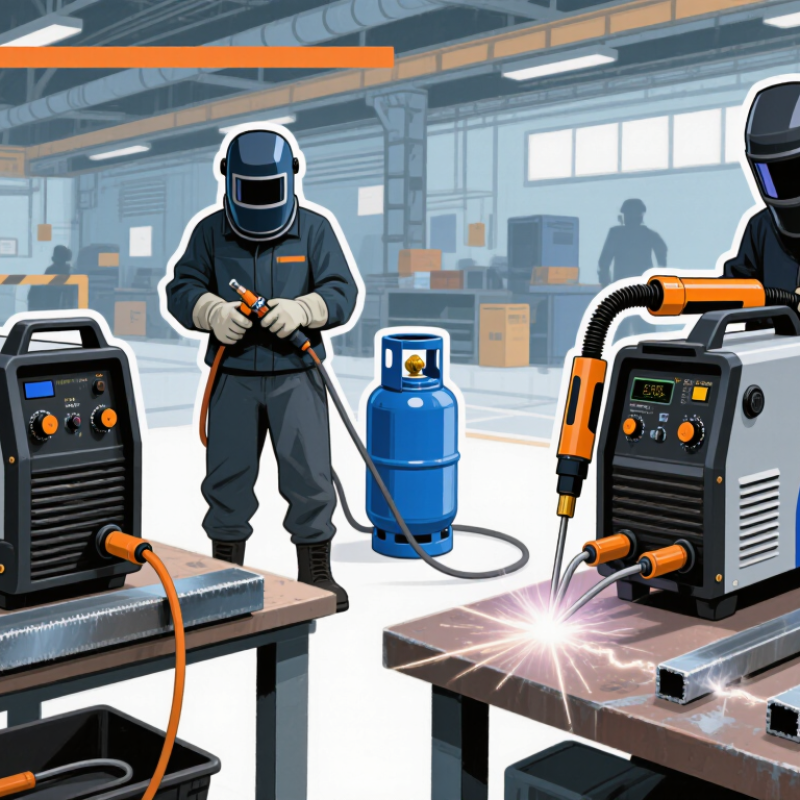
Choosing welding equipment in 2026 requires more than comparing amperage, price, and brand names. A Mig Tig Welder can support fabrication, automotive repair, stainless steel work, and light industrial production. However, MIG and TIG solve different problems. MIG offers faster deposition and easier continuous welding. TIG provides cleaner control, sharper heat management, and better results on thin or visible joints.

Industry data supports careful equipment selection. The American Welding Society estimates that the United States may need 330,000 new welding professionals by 2028. This labor shortage increases interest in machines that reduce setup time and simplify operator training. Fortune Business Insights also projects continued growth in the global welding equipment market through the early 2030s. These trends encourage manufacturers to develop inverter machines, dual-process platforms, pulse controls, and more efficient power systems. Yet market growth does not make every machine suitable for every workshop.

Standards still matter. ISO 4063 identifies MIG and TIG processes as distinct welding methods, while OSHA guidance emphasizes ventilation, electrical safety, eye protection, and fire prevention. A reliable choice should match material thickness, duty cycle, wire or tungsten requirements, input power, and service support. A small garage may value portability and a 120-volt option. A fabrication shop may need stable three-phase output and a higher duty cycle. I would not claim one machine is universally best. That is where many buying guides become too confident. The right decision comes from real workpieces, measured power needs, operator skill, and the quality of the manufacturer’s technical support.
2026 Top MIG TIG Welder Types How to Choose the Best?

What Are MIG and TIG Welders, and How Do They Differ?

MIG and TIG welders create strong joints, but they work in noticeably different ways. MIG welding uses a continuously fed wire electrode. The wire melts into the joint while shielding gas protects the hot weld pool. This method is fast, practical, and easier for many beginners.

TIG welding uses a non-consumable tungsten electrode. The operator controls the arc with a torch and adds separate filler metal when needed. This gives excellent control over heat, bead shape, and appearance. TIG suits thin stainless steel, aluminum, and detailed repair work. It is slower, though. The process also demands steadier hands and cleaner surfaces.

A practical comparison makes the difference clearer. MIG feels like guiding a small, controlled stream of metal along the joint. TIG feels more like drawing with heat. MIG often handles production work and thicker steel efficiently. TIG rewards patience on delicate parts. Material thickness, joint position, surface cleanliness, and required appearance should guide the choice.

I have found that speed can hide poor preparation. A fast weld is not automatically a reliable weld. Beginners may also underestimate gas flow and torch angle. Small setting changes can affect penetration, spatter, and distortion. Checking a test piece first remains a sensible habit.

Good ventilation, suitable protective equipment, and correct machine settings are essential for every welding process.

Which MIG and TIG Welder Types Are Available in 2026?

In 2026, MIG and TIG welders are available in several practical configurations. MIG welders commonly use solid wire with shielding gas for clean steel, stainless steel, and aluminum work. Flux-cored MIG machines work without external gas, making them useful outdoors or in windy conditions. Some models support both wire systems, although changing settings takes patience.

TIG welders include DC, AC/DC, pulsed, and inverter types. DC TIG suits steel, stainless steel, and copper. AC/DC TIG is better for aluminum because alternating current helps break through surface oxide. Pulse control reduces heat input and can improve thin-sheet welds. High-frequency starts provide cleaner arc ignition, while lift starts are simpler and often more affordable. Small machines may support foot pedals, remote controls, or torch-mounted amperage adjustment.

The best type depends on material, thickness, workplace, and operator experience. For repair work, a dual-process machine can save space and handle varied jobs. For precise visible welds, TIG offers excellent control, but it demands slower hand movement and cleaner preparation. MIG is usually faster for frames and repeated joints. I would not call one process universally superior. In real workshops, the “best” choice can change after one awkward repair, a long extension cable, or unexpected aluminum contamination. Check duty cycle, amperage range, input power, gas compatibility, and service documentation before buying. Safety testing and proper ventilation remain essential.

How Do Welding Materials and Applications Affect Your Choice?

Choosing between MIG and TIG welding starts with the material, not the machine’s appearance. MIG welding suits carbon steel and thicker sections because its continuous wire feeds quickly and supports productive fabrication. TIG welding offers finer control for stainless steel, aluminum, and thin sheet metal. It can produce clean, precise beads, but it demands steadier hand movement and better surface preparation.

Material thickness changes the decision. Thick steel frames may need MIG’s higher deposition rate, while a thin aluminum panel can benefit from TIG’s controlled heat. Joint position matters too. Overhead or awkward repairs may require adjustable current, stable arc control, and a manageable torch. I have found that higher amperage is not always better. Excess heat can warp sheet metal or weaken the surrounding area. A test weld often reveals mistakes that specifications cannot.

Tips: Match the wire or filler rod to the base metal. Clean oil, rust, and oxide layers before welding. Check shielding gas selection and flow, especially with aluminum. For frequent production work, consider duty cycle and wire-feed stability. For detailed repair work, prioritize low-current control and pedal response. Record the settings that work. Your first choice may need revision after testing. That is normal. A practical welder should fit the material, joint design, workspace, and operator’s real skill level.

Which Features Determine Welder Performance, Safety, and Ease of Use?

Choosing between MIG and TIG welding in 2026 requires more than comparing amperage. Performance depends on arc stability, duty cycle, control accuracy, and material compatibility. MIG welders should offer steady wire feeding and adjustable voltage. TIG machines need precise amperage control and a reliable high-frequency start. Pulse settings can reduce heat distortion on thin stainless steel or aluminum. However, advanced controls cannot fix poor preparation or incorrect shielding gas.

Safety features deserve equal attention. Thermal overload protection helps prevent damage during demanding work. A stable ground connection reduces arc interruptions and shock risks. Clear warnings, insulated handles, and a balanced torch improve daily confidence. In a busy workshop, an easy-to-read display matters more than decorative functions. Test every control with gloves on. Small buttons can become frustrating.

Ease of use also affects weld quality. A lightweight machine is easier to move, but extreme lightness may suggest limited cooling capacity. Check the rated duty cycle under realistic conditions, not only the highest advertised setting. I have found that simple machines often produce better results when operators understand them fully. Still, this view is imperfect. A beginner may benefit from preset programs, while an experienced welder may prefer manual control. Inspect cable length, connector strength, fan noise, and replacement consumable access before buying. Practical details often decide whether a welder performs well after months of use.

How Can You Select the Best MIG or TIG Welder for Your Needs?

Choosing the best MIG or TIG welder in 2026 starts with the material, not the machine’s advertised power. MIG welding suits steel fabrication, repairs, and longer seams. It uses a continuous wire, so beginners often gain stable results sooner. TIG welding gives cleaner control on stainless steel, aluminum, and thin sheet. The process is slower, but the weld bead can look precise and refined.

Check the required amperage, duty cycle, and input voltage before buying. A welder rated for 200 amps may not deliver that output continuously. In a workshop test, a 160-amp unit handled 3 mm steel comfortably, but it struggled during repeated long welds. That detail matters. Look for adjustable wire speed, inductance control, and clear voltage settings on a MIG model. For TIG, high-frequency start, a foot pedal, and AC capability are valuable when working with aluminum.

Your power supply and workspace also shape the decision. A compact machine may fit a home garage, yet its short cables can become frustrating around large frames. Gas choice, torch quality, and replacement consumables affect long-term cost. Do not ignore operator comfort. I once selected a powerful welder with awkward controls and used it less than expected. That was a poor decision. Test the controls, inspect the manual, and match the machine to your actual projects, not imagined ones.

2026 Top MIG and TIG Welder Types: How to Choose the Best?

Typical operating-current ranges help match a welding process to the material thickness, heat control, and project speed you need.

MIG welding commonly covers approximately 30–300 A and is generally faster for fabrication and thicker materials. TIG welding commonly starts at lower currents, around 5–250 A, providing finer heat control for thin stainless steel, aluminum, and precision work. Actual ranges depend on the welder, electrode or wire size, shielding gas, material, joint design, and duty cycle.

Let's Build Together

Contact Us: Call 435-563-3503

-OR-  Fill in the form below and we will call you back.

Copyright © 2025CNC Fabrication. All Rights Reserved.