2026 Top Combination Sweeper Scrubber Machines for Buyers
Choosing the right machine in 2026 means looking beyond a product name or a single headline specification. A Combination Sweeper Scrubber can collect loose debris and wash floors in one pass, helping teams manage daily cleaning across warehouses, workshops, retail spaces, and other large facilities. Yet performance depends on the floor, the debris, and the work schedule. A machine that handles fine dust well may not be the best fit for heavy, damp residue.
This guide introduces leading options for buyers and explains what to compare before requesting a quote. Look closely at sweeping and scrubbing width, solution and recovery tank capacity, battery runtime, turning radius, and access to replacement parts. Picture a narrow aisle after a busy shift: compact steering and reliable debris pickup may matter more than maximum tank size. On an open concrete floor, coverage and operating time may carry more weight. Small details count.
Specifications need context. Published runtime can change with brush pressure, floor conditions, and operator habits, so ask suppliers how they test it. Confirm that the proposed brushes and squeegees suit your surfaces, and check service support in your region. A larger machine is not automatically more productive. Not always. The best choice balances cleaning results, operator comfort, maintenance needs, and total ownership cost. Some comparisons remain imperfect because test conditions differ; buyers should verify claims with a site assessment or practical demonstration before making a decision.
Understand How One-Pass Sweeping and Scrubbing Combines Two Cleaning Tasks
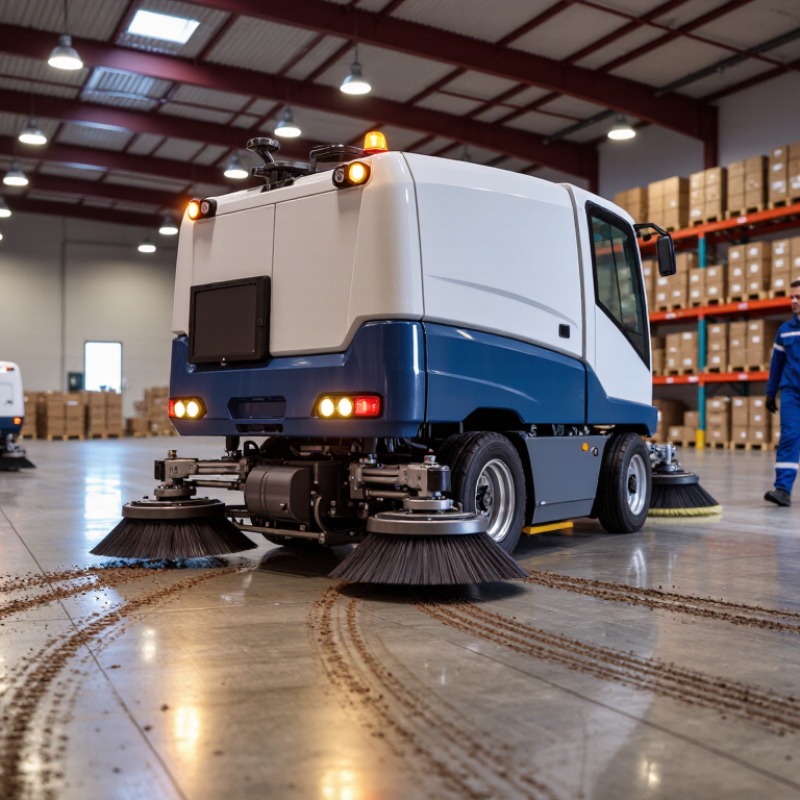
A combination sweeper scrubber collects loose debris and washes the floor in one pass. Side brushes guide dust, grit, and small scraps toward the collection system. Then, the scrub deck applies solution and loosens marks. A rear squeegee picks up the dirty liquid, leaving the surface drier for routine traffic. One pass. This can reduce repeated routes through warehouses, retail aisles, and loading areas.
The two tasks work best when the floor and machine settings match. Large scraps or tangled packaging may need removal before cleaning. Fine dust, tracked-in soil, and light spills are better candidates for combined operation.
Buyers should compare cleaning width, tank capacity, and turning radius against their floor plan. Operators also need to adjust brush pressure, solution flow, and speed to limit streaks. Check the recovery tank and squeegee during longer shifts; blocked pickup can leave damp lines behind.
That detail is easy to miss. One pass does not suit every floor.
Tips: Test the machine in a low-traffic corner. Check whether debris is collected before solution reaches the floor. If water remains, slow down or inspect the squeegee. Record settings that work, then review them when floor coatings or soil levels change. That assumption deserves a check.
Compare Cleaning Width, Tank Capacity, and Theoretical Output in m²/h
For a combination sweeper scrubber, cleaning width sets the theoretical reach of each pass. A 1.0-meter path at 5 km/h gives a calculated output of 5,000 m²/h. That figure is a ceiling, not a promise. Turns, obstacles, overlap, and refilling all reduce real productivity. Check whether listed width refers to the full working path or only the scrub deck. A few centimeters can matter in narrow aisles.
Tank capacity affects how long a machine can work before stopping. Compare solution and recovery tank sizes together, then consider the debris hopper if the model collects dry material. A large solution tank may extend a shift, but it can also add weight and make tight turns less comfortable. On a dusty warehouse floor, a clogged filter or frequent hopper emptying may interrupt work sooner than expected. Measure the route before deciding. It helps.
Theoretical output in m²/h is useful for comparing machines, provided the test conditions are similar. Ask what travel speed and cleaning width were used to calculate the figure. Then estimate practical coverage from your own floor plan, including loading bays, racks, and turns. One detail is easy to miss: operators may slow down near wet patches or busy crossings. I would leave a margin in any estimate; my first calculation is often too optimistic. A short supervised trial can reveal whether the tank capacity and working width suit the actual route.
Estimate Real-World Coverage from Width × Travel Speed × 1,000
For a combination sweeper scrubber, the width × travel speed × 1,000 estimate offers a quick way to compare theoretical coverage. Use cleaning width in meters and travel speed in kilometers per hour. A machine with a 1-meter path moving at 5 km/h calculates to 5,000 square meters per hour on paper. That is the ideal case. Real floors are rarely so tidy.
Allow for turns, overlap, and time spent around pallets or doorways. A broad cleaning path may look efficient in an open warehouse, yet become awkward between racks. Wet patches, debris, and operator visibility can also slow progress. Check whether the stated width reflects the full machine or only its working path. Small distinction, big impact. I would treat the formula as a screening tool, not a promise.
To estimate practical output, map a representative area and time a full cleaning pass, including pauses and refills. Note the floor condition, aisle width, and number of obstacles. Then compare measured coverage with the calculation. The gap may be larger than expected. It is worth questioning the estimate, especially when buying for a site with mixed layouts.
Check Safety Compliance Against IEC 60335-2-72 for Commercial Floor Machines
For buyers comparing combination sweeper scrubber machines in 2026, cleaning capacity is only part of the decision. IEC 60335-2-72 addresses safety for commercial floor-treatment machines, including equipment with powered movement. Check that the documentation names the exact model and configuration you plan to buy. A test report for a similar machine may not cover different batteries, attachments, or controls.
Look closely at practical safeguards. Can the operator reach the emergency stop while seated or walking behind the machine? Do the brakes hold on a damp ramp? Check guarded brushes, moving parts, electrical protection, and instructions for handling cleaning solution and recovery water. Ask for relevant test records and the standard edition used; confirm how it applies in your market. Details matter.
Ask for a hands-on demonstration on a representative floor. Watch the machine turn around a shelf, cross a floor joint, and stop with a full recovery tank. Verify that warning labels are readable and routine checks are clear. A brochure can sound reassuring. It is not a substitute for evidence. I would still inspect the delivered unit, because setup and wear can change how safety features work.
2026 Top Combination Sweeper Scrubber Machines for Buyers
IEC 60335-2-72 Safety Compliance: Buyer Evidence Checklist
How to read this chart: No model-specific test reports or supporting documents were provided, so the evidence supplied is zero for each check. This means compliance is unverified—not that any machine has failed. Request and review documentation for the exact machine configuration before purchase.
Compare Noise Ratings in dB(A), Battery Runtime, and Cost per 1,000 m²
2026 Top Combination Sweeper Scrubber Machines for Buyers
Compare Noise Ratings in dB(A), Battery Runtime, and Cost per 1,000 m²
A quiet machine can still sound harsh in an empty warehouse. Compare dB(A) ratings measured at the operator’s position, with the same floor, speed, and brush setting. NIOSH’s Criteria for a Recommended Standard: Occupational Noise Exposure sets 85 dB(A) over eight hours as its recommended exposure limit. That is a workplace reference, not a machine pass mark. Small differences matter. Ask whether a quoted rating comes from a standardized test or a real cleaning run.
Battery runtime is equally context-dependent. A full tank, rough concrete, heavy debris, and frequent turns can shorten the shift. Record usable cleaning time, recharge time, and area completed before recharging. Test it wet. A single showroom demonstration is not enough; repeat the run on a representative route and note missed edges or slower corners.
For cost per 1,000 m², divide the operating cost of a measured shift by the area cleaned, then multiply by 1,000. Include labor, electricity, water, pads or brushes, maintenance, and battery replacement—not just the purchase price. ISSA’s 612 Cleaning Times resource can help frame productivity estimates, but field timing is more reliable for a specific site. Cost figures may look precise; they still depend on local wages and floor conditions. Keep the assumptions beside each quote.
2026 Top Combination Sweeper Scrubber Machines for Buyers - Compare Noise Ratings in dB(A), Battery Runtime, and Cost per 1,000 m²
Planning ranges only: figures represent typical machine-class benchmarks, not specifications for a particular model. Actual noise and runtime vary with operating mode, floor condition, battery age, and measurement method. Estimated operating cost assumes labor at $22 per hour plus approximately $5–$10 per 1,000 m² for energy and routine consumables; it excludes equipment purchase, financing, and major repairs. Costs are calculated using effective cleaning productivity, which is generally lower than theoretical maximum productivity.