
2026 Best CNC Milling Services for Global Buyers?
Choosing the best CNC milling services in 2026 takes more than comparing hourly rates. Buyers need evidence that a supplier can hold tolerances, communicate clearly, and deliver parts consistently across borders. A milled aluminum housing may look simple on a screen. In production, cutter access, clamping, surface finish, and inspection records can change the result. Small details matter.
Quality expert W. Edwards Deming’s often-cited observation, “Quality comes not from inspection, but from improvement of the production process,” offers a useful lens for evaluating CNC milling suppliers. It is not a CNC-specific rule, but it highlights why buyers should ask about process controls, not just final checks. Look for clear capability data, material traceability, realistic lead times, and sample inspection reports. Ask how a provider handles design changes, packaging, and shipping updates. Then compare answers against the part’s actual requirements.
This guide examines service quality, pricing, machine capabilities, communication, and international logistics. It also considers when a local supplier may be safer than a lower-cost option farther away. No ranking can fit every project. A prototype shop may excel at fast revisions but struggle with repeat production. That is a limitation worth admitting. Use the comparisons as a starting point, verify important claims directly, and request a manufacturability review before committing to a large order.
What CNC Milling Services Offer and How the Process Works
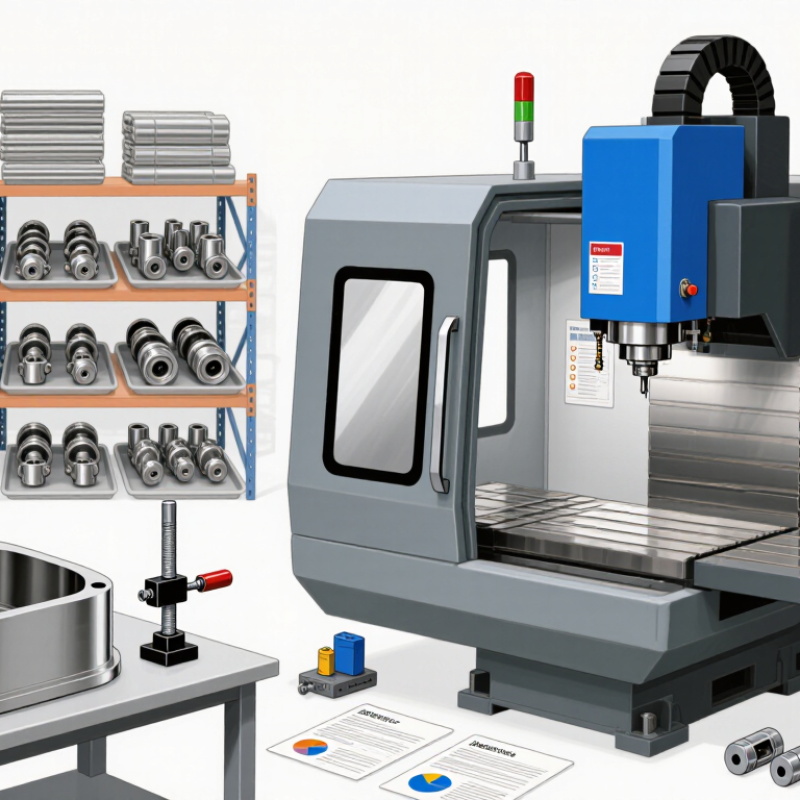
CNC milling services turn digital designs into accurate parts by removing material with rotating cutting tools. Buyers can request prototypes, small batches, or production runs in metals and engineering plastics. Typical work includes pockets, slots, drilled features, and contoured surfaces. The provider reviews the CAD model, tolerances, material, and order quantity before quoting. Clear drawings reduce avoidable delays.
Tips: Identify critical dimensions and required surface finishes. Share the part’s function and operating environment. Ask how inspection results are recorded. A simple tolerance note may not be enough.
After approval, a machinist plans toolpaths and selects fixtures, cutters, and cutting speeds. The stock is secured, then material is removed in controlled passes. Operators may check dimensions with calipers, micrometers, or coordinate-measuring equipment. Finished parts can be deburred or receive other agreed finishing before inspection and packing. The sequence varies with geometry and material. Thin walls may vibrate; deep pockets can require multiple tool changes. Not every design is easy to mill. Reviewing a first article may reveal issues the model did not show, such as limited tool access or clamping marks. That review takes time, but it can prevent a costly repeat batch.
2026 Best CNC Milling Services for Global Buyers? — What CNC Milling Services Offer and How the Process Works
| Service or Stage | What It Offers | Typical Uses | Indicative Capability or Output | What Buyers Should Confirm |
|---|---|---|---|---|
| CNC Milling Service Options | ||||
| 3-axis milling | Cutting along the X, Y, and Z axes; suitable for many prismatic parts and features accessible from one setup. | Plates, brackets, housings, pockets, slots, and flat-faced components. | Often a cost-effective choice for simpler geometry. Tolerances depend on material, part size, setup, and inspection requirements. | Ask which faces require machining and whether additional setups will affect alignment or cost. |
| 4-axis milling | Adds a rotary axis, allowing a workpiece to be indexed or rotated during machining. | Parts with features on multiple sides, radial patterns, or curved surfaces around an axis. | Can reduce manual repositioning and improve feature-to-feature consistency when the part is set up appropriately. | Confirm which rotary operations are continuous and which are performed as indexed positions. |
| 5-axis milling | Uses three linear axes and two rotary axes to reach multiple orientations, sometimes in a single setup. | Complex contours, angled features, impellers, molds, and parts with several machined faces. | May reduce setups and improve access to complex geometry; it does not automatically guarantee tighter tolerances. | Provide a 3D model and identify critical datums, tolerances, and surface-finish requirements. |
| Prototype and low-volume machining | Machining for design validation, fit checks, functional testing, or small initial quantities. | Product development, replacement parts, pilot builds, and custom components. | Often accommodates design changes more readily than dedicated tooling-based processes. | Check minimum order quantities, programming or setup charges, and whether a first-article inspection is available. |
| Production milling | Repeat machining for recurring or larger orders, with process planning focused on consistency and throughput. | Ongoing component supply and repeatable assemblies. | Repeatability depends on the production plan, workholding, tool management, process control, and inspection. | Request the proposed inspection plan, batch traceability options, and capacity or lead-time assumptions. |
| Finishing and inspection | Optional deburring, surface finishing, dimensional checks, and documentation alongside machining. | Parts with appearance, assembly, corrosion-resistance, or verification requirements. | Possible finishes include anodizing for suitable aluminum alloys, plating, passivation for suitable stainless steels, and bead blasting. | Specify finish standard, color or appearance, masked areas, inspection dimensions, and required reports. |
| How the CNC Milling Process Works | ||||
| 1. Send the design | Submit a dimensioned drawing and, when available, a 3D CAD file. Identify material, quantity, tolerances, and finish. | Creates the basis for manufacturability review and quotation. | Common exchange formats include STEP for 3D geometry and PDF for drawings; confirm accepted formats with the supplier. | Make sure drawing units, revision, datums, and critical features are clear and consistent. |
| 2. Review and quote | The supplier assesses geometry, material, machining strategy, inspection needs, and production quantity. | Identifies cost drivers and potential design adjustments before machining. | Quote terms commonly distinguish part price, setup or programming charges, finishing, inspection, and shipping. | Compare scope and assumptions—not price alone—including lead time, tolerances, and included documentation. |
| 3. Program and set up | Toolpaths are prepared, cutting tools selected, and the workpiece secured in a suitable fixture. | Establishes how the part will be machined and located. | Setup count and workholding depend on part geometry, machine configuration, and access to features. | Agree on datum strategy and clarify whether a sample or first-article approval is needed. |
| 4. Machine the part | The CNC machine removes material according to the programmed toolpaths. | Produces the specified shapes, holes, pockets, and profiles. | Actual cycle time and achievable results vary with material, geometry, tooling, machine condition, and process plan. | For critical dimensions, state tolerances explicitly rather than relying on a general assumption. |
| 5. Finish and inspect | Parts may be deburred, finished, and checked against the drawing using suitable measuring equipment. | Verifies dimensional and appearance requirements before dispatch. | Inspection may include sampled checks or documented first-article inspection, as agreed. | Define inspection coverage, acceptance criteria, and report format before production. |
| 6. Pack and ship | Completed parts are packaged for transport and shipped with agreed commercial and quality documents. | Delivers parts to domestic or international destinations. | Transit time, duties, taxes, and import requirements depend on destination, shipping method, and agreed delivery terms. | Confirm packaging protection, shipping responsibility, customs documentation, and delivery address details. |
Note: CNC milling capabilities and tolerances are supplier-, machine-, material-, geometry-, and inspection-dependent. Any capability figures or acceptance limits should be confirmed against the part drawing and the supplier’s written quotation before ordering.
Related Posts
-
How to Optimize CNC Milling Processes for Maximum Efficiency
-
10 Expert CNC Milling Tips for Maximizing Efficiency and Precision in Production
-
Top Benefits of CNC Milling for Precision Manufacturing in Modern Industry
-
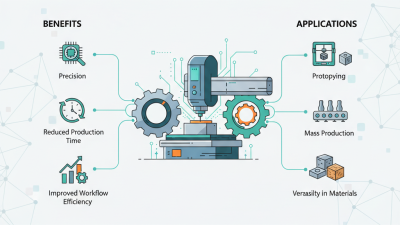
Why Choose a CNC Milling Machine: Benefits and Applications Explained
-
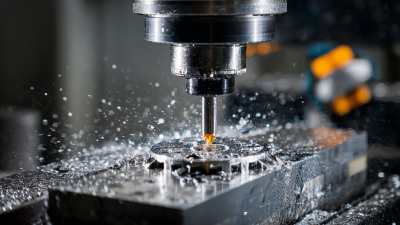
The Future of CNC Milling Innovation Shaping Manufacturing Today
-
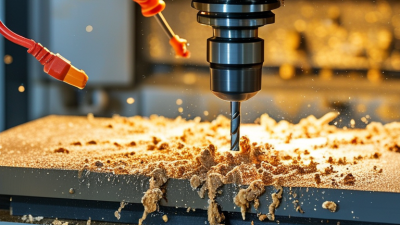
How to Choose the Right CNC Milling Machine for Your Needs?
Let's Build Together


Contact Us: Call 435-563-3503
-OR- Fill in the form below and we will call you back.