2026 Best String Wound Filter Cartridges for Global Buyers

For global buyers, choosing the right String Wound Filter Cartridges requires more than comparing prices. Applications may involve drinking water, industrial process fluids, chemicals, oils, or prefiltration systems. Each environment demands different materials, micron ratings, dimensions, and pressure limits. A cartridge that performs well in a clean water line may fail quickly in a high-sediment process.

This 2026 guide examines leading options through practical purchasing criteria. We consider polypropylene, cotton, polyester, and other common media choices. We also assess core size, end-cap design, temperature resistance, flow capacity, and dirt-holding performance. Details matter. Nominal and absolute ratings are not interchangeable, yet product listings sometimes present them too loosely. Buyers should request current datasheets, batch information, and compatibility evidence before placing large orders.

Reliable selection also depends on supplier experience and manufacturing control. Look for traceable materials, consistent winding density, documented quality checks, and clear replacement guidance. Independent laboratory testing can strengthen confidence, especially when filtration performance affects sensitive equipment. However, no shortlist is perfect. Real-world water quality, installation conditions, and maintenance habits can change results. A lower-cost cartridge may appear attractive, but frequent replacement can increase labor, waste, and downtime. Conversely, an expensive option may offer little value without verified performance. This guide helps international purchasers compare credible products with a careful, evidence-based approach. Always confirm specifications with the manufacturer before final approval.
2026 Best String Wound Filter Cartridges for Global Buyers

What Are String Wound Filter Cartridges?

What Are String Wound Filter Cartridges?

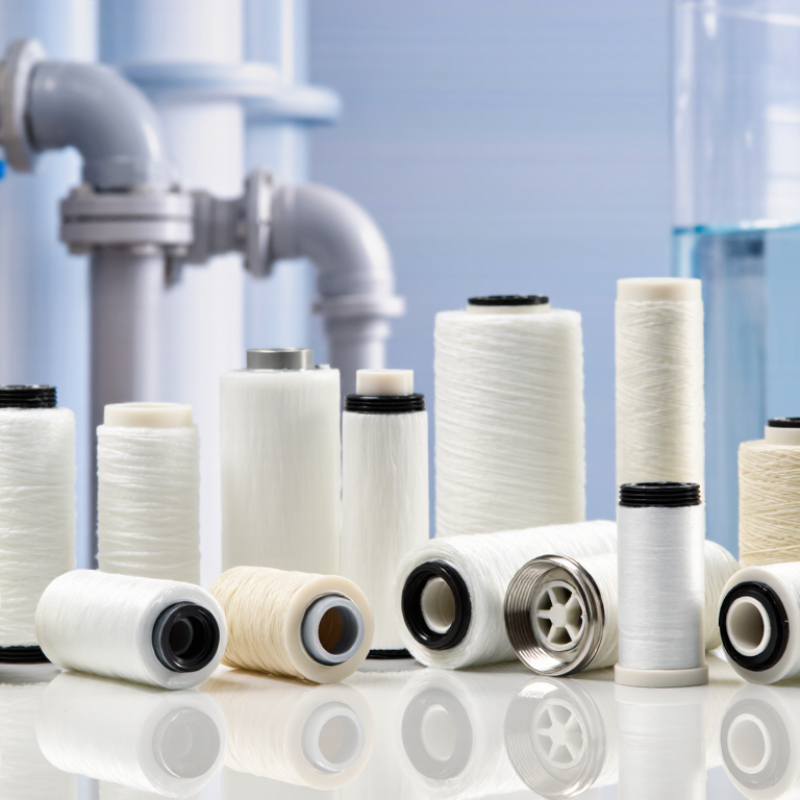
String wound filter cartridges are depth-filtration elements made by wrapping yarn around a central support core. The winding pattern creates small passages that trap suspended particles throughout the cartridge. Unlike surface filters, they can hold contaminants across several layers. This design is useful for reducing sand, rust, silt, and other visible debris in water and industrial liquids. The cartridge may use polypropylene, cotton, or other compatible fibers. Material selection matters because temperature and chemical exposure can change performance.

In practical filtration work, technicians often inspect the winding density before installation. A tighter outer layer can capture finer particles, while a looser structure may provide better flow. Cartridges are commonly selected by length, outside diameter, connection type, and nominal or absolute micron rating. These ratings should be checked carefully. They are not always directly comparable between suppliers. A cartridge marked with a smaller micron value is not automatically the best choice.

Flow rate, pressure drop, liquid temperature, and contaminant concentration also affect service life. A heavily loaded cartridge may show rising differential pressure before the liquid looks visibly dirty. That detail is easy to miss. Buyers should review test data, material certificates, and operating limits with a qualified filtration engineer. Field experience also shows that poor housing seals can undermine a good cartridge. The filter is only one part of the system.

How String Wound Filter Cartridges Work

String wound filter cartridges remove suspended solids through a depth filtration process. A continuous yarn is wrapped around a central core, forming controlled passages between layers. Larger particles collect near the outer surface. Smaller particles move deeper into the winding and become trapped.

The winding pattern affects performance. Tight layers provide finer filtration, while looser layers allow greater flow and lower pressure loss. In real operation, water temperature, viscosity, and particle shape also matter. A cartridge rated at one micron may not perform identically in every liquid. Ratings can be misleading without test conditions. I have seen operators replace cartridges too late, after pressure increased sharply and flow became unstable. Monitoring differential pressure gives a clearer maintenance signal.

Tips: Confirm the required micron rating, flow rate, cartridge length, and core compatibility before ordering. Inspect the cartridge for loose yarn or damaged ends. Install it in the correct flow direction. Start with a clean housing and check for bypass leakage. Replace the cartridge when pressure reaches the equipment manufacturer’s limit, not only when flow stops. Keep records of service life; the pattern often reveals changing water quality. A simple log helps. One practical improvement is testing a sample cartridge under actual operating conditions, because laboratory results may not reflect field performance.

Key Specifications for Selecting Filter Cartridges

2026 Best String Wound Filter Cartridges for Global Buyers

Key specifications begin with the micron rating, but that number can mislead.

A nominal 5-micron cartridge may allow smaller particles through. Ask for the test method and beta ratio. The cartridge’s length, outside diameter, core design, and end configuration must match the housing. A small mismatch can cause bypass or leakage. Polypropylene suits many industrial water applications, while cotton may need closer chemical and microbial review.

Flow capacity should be checked at a stated pressure drop, not at “maximum flow.” WHO’s 2022 Guidelines for Drinking-water Quality recommend turbidity below 1 NTU where effective disinfection is required. This makes upstream particle control important, but it does not make a string-wound cartridge a disinfectant. Select temperature and pressure limits with a safety margin.

I have seen procurement sheets overvalue flow rate and overlook differential-pressure loading. That is an expensive mistake.

Source-water variation also matters.

The UN World Water Development Report 2024 notes that agriculture accounts for about 70% of global freshwater withdrawals. Buyers should therefore review seasonal sediment, hardness, oil exposure, and cleaning chemicals before choosing fiber material. Request batch traceability, extractables data, and third-party testing against relevant NSF/ANSI requirements.

“Food grade” alone is too vague. It needs a documented standard and application limit. A practical pilot test remains useful, even when the laboratory data looks perfect.

Best String Wound Filter Cartridge Materials and Applications

2026 Best String Wound Filter Cartridges for Global Buyers

Best String Wound Filter Cartridge Materials and Applications

String wound filter cartridges use layered fibers to capture suspended particles. Their winding pattern creates controlled passages and useful dirt-holding capacity. Polypropylene suits general water treatment and many industrial liquids. Cotton can support selected applications requiring natural fibers, but it needs careful biological control. Polyester offers stronger resistance to repeated handling and moderate heat. Glass fiber performs well when fine filtration and dimensional stability are important. No material fits every process.

For municipal water, polypropylene cartridges commonly remove sand, rust, and pipe debris. Food processing may require approved materials and documented cleanliness. In metalworking, polyester can handle some coolants and lubricating fluids. Chemical service demands compatibility checks against concentration, temperature, and exposure time. A smaller micron rating is not always better. It may increase pressure loss and shorten service life. Technicians should inspect cartridge collapse, channeling, and uneven discoloration during replacement. These details often reveal upstream problems.

Tips: Confirm the liquid chemistry before purchasing. Check temperature and differential-pressure limits. Request test data, batch traceability, and a clear micron-rating method. Keep spare cartridges sealed and dry. Record inlet pressure, outlet pressure, and replacement dates. One detail is often missed: real field performance can differ from laboratory claims. Review the first replacement cycle carefully.

2026 Best String Wound Filter Cartridges for Global Buyers - Best String Wound Filter Cartridge Materials and Applications

Filter Cartridge Material Typical Micron Rating Common Core Material Typical Temperature Limit Recommended Fluid Compatibility Typical Applications Key Selection Considerations
Polypropylene (PP) String 1–100 µm Polypropylene or compatible thermoplastic core Up to approximately 80–90°C, depending on construction Water, dilute acids, dilute alkalis, salts, and many aqueous chemicals Pre-filtration for process water, chemical solutions, plating baths, cooling water, and general industrial liquids Low extractables and broad chemical resistance; verify compatibility with strong oxidizers, aromatic solvents, and elevated temperatures.
Cotton String 1–100 µm Stainless steel, polypropylene, or other compatible core Usually up to approximately 60–80°C, depending on design Water, oils, fuels, and selected non-aggressive liquids General-purpose liquid clarification, oil filtration, hydraulic protection, and removal of suspended solids Good dirt-holding capacity and economical operation; not preferred for highly oxidizing chemicals or applications requiring very low extractables.
Polyester (PET) String 1–100 µm Polypropylene, polyester, or stainless steel core Up to approximately 120°C, subject to cartridge design Water, oils, hydrocarbons, and many industrial chemicals Industrial process fluids, solvent-compatible pre-filtration, paints, coatings, and oil-based liquids Higher thermal capability than many natural-fiber options; confirm resistance to specific solvents and operating pressure.
Glass Fiber String 1–100 µm Stainless steel or chemically compatible rigid core Often approximately 120–250°C, depending on binder and hardware High-temperature oils, selected chemicals, and demanding industrial liquids Hot oil systems, chemical processing, high-temperature pre-filtration, and applications requiring dimensional stability Strong temperature resistance and structural stability; check fiber shedding, binder compatibility, and downstream cleanliness requirements.
Inorganic Fiber String 1–75 µm Stainless steel or other high-temperature core Approximately 150–250°C in suitable constructions Selected high-temperature oils, chemicals, and process liquids Thermal oil circulation, specialty chemical processing, and high-temperature industrial filtration Suitable for demanding thermal conditions; material selection must consider chemical exposure, fiber integrity, and housing temperature rating.
Polypropylene with Graded Density Winding 1–75 µm Polypropylene or compatible thermoplastic core Up to approximately 80–90°C Water, acids, alkalis, salts, and many aqueous process chemicals High-capacity pre-filtration, reverse-osmosis protection, groundwater treatment, and industrial water reuse Progressive pore structure can improve contaminant loading and service life; nominal versus absolute performance must be confirmed with test data.
Polyester with Graded Density Winding 1–75 µm Polypropylene, polyester, or stainless steel core Up to approximately 120°C, depending on components Oils, hydrocarbons, selected solvents, and industrial process liquids Paint and coating production, metalworking fluids, fuel treatment, and oil circulation systems Useful where higher temperature or oil compatibility is needed; confirm pressure drop, solvent compatibility, and end-cap sealing materials.
Cotton with High Dirt-Holding Construction 5–100 µm Polypropylene, stainless steel, or other compatible core Usually up to approximately 60–80°C Water, lubricating oils, hydraulic fluids, and relatively mild liquids Hydraulic systems, machine-tool coolant, general industrial water, and bulk particulate removal Cost-effective for coarse and medium filtration; avoid use where microbial control, sterilization, or extremely low extractables is required.
Polypropylene with Stainless-Steel Core 1–100 µm Stainless steel Limited by the polypropylene media, typically up to approximately 80–90°C Aqueous chemicals, water, and applications needing a rigid support core Higher differential-pressure service, chemical processing, water treatment, and demanding pre-filtration Rigid core improves mechanical support; the overall cartridge rating is governed by the weakest component, including seals and end caps.
Stainless-Steel Wire Wound Media 5–100 µm Stainless steel Commonly above 250°C when the housing and seals are suitably rated High-temperature oils, water, gases, and selected aggressive process fluids Hot oil filtration, chemical processing, hydraulic protection, and reusable industrial filtration Can tolerate high temperature and may be cleanable; it is generally more expensive and may not provide the same fine retention as polymeric media.

Global Buying, Compliance, and Supplier Evaluation Criteria

2026 Best String Wound Filter Cartridges for Global Buyers

Global purchasing should begin with the liquid, not the catalog description. Define micron rating, flow rate, temperature, pressure, and chemical exposure before comparing suppliers. String material matters. Polypropylene, cotton, and glass fiber can behave differently in oils, solvents, and treated water. Shorter fibers may shed more easily. Ask for measurable test data.

Compliance requirements vary by destination and application. Request material declarations, batch traceability, certificates of analysis, and relevant food-contact or potable-water documentation when needed. Verify that testing covers the exact cartridge construction. A general factory certificate is not enough. Check labeling, packaging, language requirements, and export documents before shipment. Small errors can delay customs clearance.

Supplier evaluation needs evidence beyond a polished website. Review production controls, incoming-material inspection, winding consistency, end-cap bonding, and final integrity checks. Request samples from the intended production line, then test them under realistic conditions. Compare pressure drop after loading, not only initial flow. Audit reports can help, but they may hide outdated information. Ask for recent records.

No checklist catches everything.

A reliable supplier should explain limitations clearly. Be cautious when a seller promises universal chemical compatibility or unusually long service life. Build a written approval process with agreed tolerances, replacement criteria, and complaint handling. Keep one retained sample from each approved batch. This simple step supports investigations when field performance differs from laboratory results.

Let's Build Together

Contact Us: Call 435-563-3503

-OR-  Fill in the form below and we will call you back.

Copyright © 2025CNC Fabrication. All Rights Reserved.