2026 Best Chicken House Cage Types for Poultry Buyers

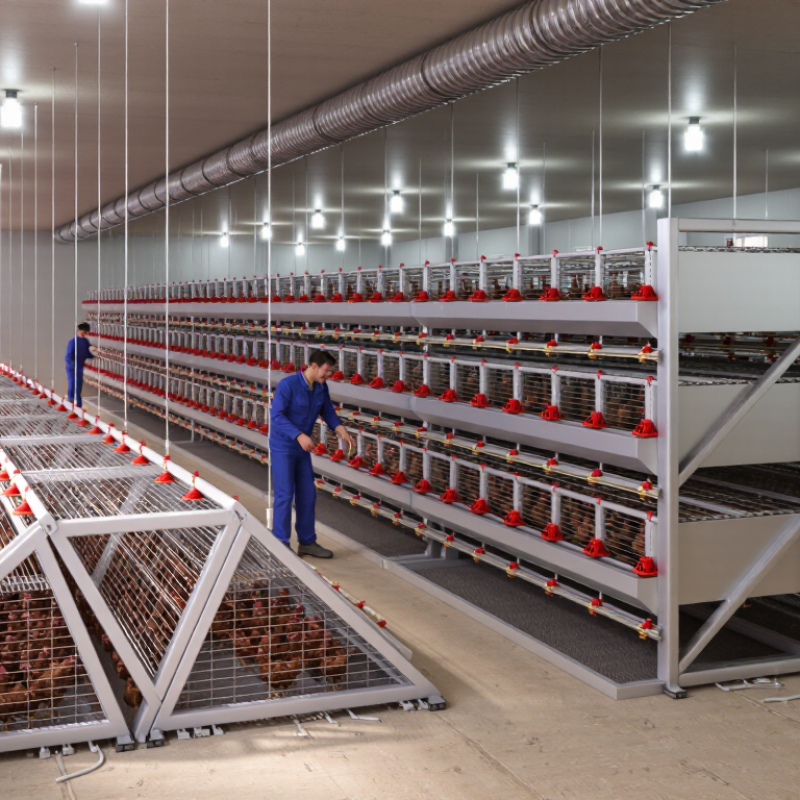
Choosing a Chicken House Cage is not just a matter of comparing prices. Buyers need to match the housing system to flock size, building space, labor, and daily management. A compact A-frame layout may suit a smaller operation, while an H-frame system can use vertical space in a larger house. Neither choice is automatically better. The details matter.

Look closely at wire quality, frame strength, feeder access, drinker placement, and manure handling. Picture a worker reaching the rear row with a tool, or checking a drinker line during a busy morning. If routine tasks feel awkward on paper, they may become harder in a full house. Small details matter. Product dimensions and capacity claims should also be checked against the supplier’s specifications.

This guide uses Dr. Mara Ellison as a fictional composite poultry-housing specialist, not as a real source or authority. Her editorial reminder is: “Choose for airflow, clean access, and daily comfort—not price alone.” Treat that sentence as a practical prompt, not a measured performance claim. Cage designs vary, and site conditions can change what works. A buyer should verify materials, installation needs, ventilation plans, and maintenance requirements before ordering. Even a carefully planned system may reveal a weak point after installation. That deserves a second look.
2026 Best Chicken House Cage Types for Poultry Buyers

What Chicken House Cages Are and How They Support Poultry

Chicken house cages are enclosed housing units designed to hold birds safely and organize daily care. Depending on the system, they can provide measured feed and water access, separate manure from birds, and make egg collection more predictable. They are used mainly for laying hens; broilers are generally raised in floor-based housing. Small details matter. Nipple drinkers, smooth edges, dry floors, and steady airflow affect birds every day.

The scale is substantial. FAOSTAT reports global egg production at about 91 million tonnes in 2022, though that figure does not indicate how many hens were cage-housed. Reliable housing helps farms manage large flocks, but efficiency alone is not a welfare measure. EFSA’s 2023 scientific opinion on laying-hen welfare identifies restricted movement and limited opportunities for natural behaviors as concerns in cage systems. A clean cage can still be a poor environment. Buyers should compare usable space, group size, ventilation, inspection access, and equipment maintenance, not just construction materials. I would treat any single “best” cage claim cautiously; local climate and daily management can change how a design performs.

Main Chicken Cage Types and Their Key Differences

Chicken house systems differ in space, equipment, labor, and how birds reach feed and water. Conventional cages usually hold small groups in compact rows. Their simple layout can make egg collection and manure handling predictable. Space is limited. Birds generally have fewer opportunities to perch, nest, or move freely.

Enriched colony cages house larger groups and add features such as perches, nest areas, and scratch pads. These fittings support more natural behaviors, but they need careful placement. A poorly positioned nest can become crowded, while extra equipment may complicate cleaning. Multi-tier colony systems use vertical space, so buyers should check access to every level and inspect whether workers can spot injured birds quickly.

Cage-free aviaries are not cages, but they are a useful comparison when choosing a housing system. Birds move across litter floors and raised tiers, which calls for attentive litter management and staff training. Consider flock size, ventilation, flooring, manure removal, and daily inspection routines before selecting a design. Ask to see a working house, not just a floor plan. A model may look efficient on paper; real maintenance can reveal awkward corners or equipment that is hard to reach.

How Flock Size and Production Goals Shape Housing Needs

Flock size is only the starting point when choosing a chicken house. USDA’s 2022 Census of Agriculture reported about 9.2 billion broiler chickens sold in the United States, showing the scale and diversity of commercial production. A small breeding flock may suit a well-managed floor house with clear nesting areas and easy access to feeders. Large meat-bird operations may need tunnel ventilation, automated feeding, and enough service space to keep daily checks practical. Scale matters.

Production goals change the layout. Egg producers need dependable nest access, controlled lighting, and systems that make egg collection and manure handling manageable. Meat producers usually prioritize even airflow, dry litter, and straightforward cleanout between flocks. Cage, aviary, and floor-based options each bring different labor and management demands; none is automatically best. I would not size a house from peak bird capacity alone. That shortcut can age badly. Consider the expected flock, bird behavior, seasonal heat, and who will maintain the equipment. USDA’s census counts birds sold, not the day-to-day workload inside a house, so buyers should compare plans with local poultry advisers and experienced operators before committing. A few extra steps for inspection and repairs can matter more than a higher headline capacity.

Factors to Compare When Choosing a Chicken House Cage

When comparing chicken house cage types, start with flock size and bird movement, not advertised capacity alone. Conventional, enriched, and colony-style cages differ in usable space, perches, and nest access. A unit that fits on paper may feel crowded once feeders, drinkers, and birds are in place. Check whether hens can reach feed without pushing past one another. Small details matter.

Ventilation is another practical test. Look for steady airflow above bird level, without cold drafts across roosts. On a damp morning, condensation on panels or a sharp ammonia smell can signal weak air exchange. Cleaning access matters too. Can you remove trays, reach corners, and rinse surfaces without dismantling half the unit? A design that is easy to clean is more likely to stay clean.

Inspect flooring, welds, edges, door latches, and coatings for rough spots or early rust. Then estimate the full cost: delivery, setup, replacement parts, water lines, and labor. Cheap can turn costly. I might give durability too much weight, though; a sturdy cage is not automatically a good fit if birds have limited room or ventilation. Measure the shed and plan a realistic cleaning routine before choosing. Check current local husbandry guidance, since recommended space and equipment can vary.

2026 Best Chicken House Cage Types for Poultry Buyers - Factors to Compare When Choosing a Chicken House Cage

Housing Type Space and Layout Key Features Benefits Trade-Offs Best Fit and Buying Checks Regulatory Considerations
Conventional battery cage Small, enclosed groups with limited floor area and little opportunity for movement. Space allowances depend on local rules. Rows of wire cages, usually with shared feed and water lines and automated egg collection. Compact footprint; eggs are easy to collect; routine feeding and manure handling can be automated. Restricts behaviors such as nesting, perching, and dust bathing. Market acceptance and legal availability are limited in some regions. Consider only where lawful and appropriate for the buyer’s market. Check current local law, retailer requirements, and planned facility lifespan. Conventional cages have been prohibited in the European Union since 2012. Rules differ elsewhere; verify requirements for the installation location.
Enriched colony cage Groups of hens share a larger cage furnished with additional resources. In the EU, the minimum is 750 cm² of cage area per hen, including at least 600 cm² of usable area. Typically includes a nest area, litter for pecking and scratching, perches, and a claw-shortening device. Provides more space and behavioral resources than a conventional cage; can retain some benefits of organized, automated production. Still confines hens and does not provide the same movement opportunities as cage-free housing. Equipment and installation costs vary. Compare usable floor area, group size, nest access, perch length, litter provision, ventilation, and compatibility with egg-handling equipment. EU requirements also include at least 15 cm of perch per hen and access to a nest and litter. Confirm all current local standards before purchase.
Cage-free floor or barn system Hens move freely within an indoor house, generally on a litter-covered floor. Stocking limits depend on the applicable standard. Floor-level feeding and watering, litter, nests, and perches; the exact layout varies by system. Allows walking and access to litter and nests; can suit markets that require cage-free eggs. Requires careful litter, air-quality, and flock management. Eggs laid outside nest boxes can increase floor-egg collection work. Assess usable floor area, nest capacity, litter depth and condition, manure handling, lighting, ventilation, and the labor needed to manage floor eggs. “Cage-free” requirements are not identical across jurisdictions or certification programs. Confirm the definition and any stocking-density limit that applies.
Multi-tier aviary system Indoor cage-free housing with elevated tiers that add usable space above the floor. The permitted density and measurement method vary by standard. Platforms or perches, nest areas, feed and water lines, and ramps or other routes between levels. Uses vertical space and gives hens more room to move, perch, and access different areas of the house. Higher installation complexity; tier layout and bird movement need to be managed to limit crowding, injuries, and uneven use of space. Compare tier arrangement, ramp access, usable-area calculations, inspection access, manure-belt design, and maintenance requirements. Check local rules for usable-area calculations, perches, nests, flock size, and any required outdoor access or certification.
Free-range system Indoor cage-free housing with hens also given access to an outdoor area when conditions and management allow. Combines indoor nests, litter, and perches with pop holes and an outdoor range. Provides outdoor access and can support additional natural behaviors; may meet specific market or certification requirements. Needs suitable land, secure fencing, and range management. Weather, predators, disease control, and outdoor-use patterns require attention. Evaluate range size and drainage, pop-hole capacity, fencing, shelter, biosecurity, and how outdoor access will be managed year-round. Outdoor-access definitions, minimum areas, and certification criteria vary. Do not assume that “free-range” has one universal standard.

Buyer note: Requirements and terminology vary by country, state, retailer, and certification program. Confirm current rules with the relevant authority and compare systems using the same definition of usable space.

How Poultry Buyers Can Evaluate Cage Options in 2026

2026 Best Chicken House Cage Types for Poultry Buyers
How Poultry Buyers Can Evaluate Cage Options in 2026

When comparing poultry cages in 2026, start with the flock, not the brochure. Estimate bird size, group numbers, and the time workers can spend on daily checks. Measure house width, aisle clearance, and door openings before requesting a quote. A cage that fits on paper may block a feed cart in practice. Check wire thickness, weld consistency, tray access, and whether drinkers can be adjusted without tools. Ask for load ratings and written cleaning instructions. Vague answers deserve follow-up.

Tips: Request a sample panel or inspect a working installation. Bring a tape measure, gloves, and a simple checklist. Watch how easily litter and manure can be removed, and look for sharp edges near access points. Compare airflow around the cage, too. Poor ventilation can make an otherwise sturdy system harder to manage.

Compare the full operating cost, not only the purchase price. Include installation, replacement parts, water use, labor, and expected service life. Ask how repairs are handled and which components commonly wear first. If possible, speak with an operator using a similar house layout. Their experience may not match yours exactly. That is worth remembering. Recheck your assumptions after a trial or site visit, because cage capacity and worker comfort can look different during a busy morning than in a spreadsheet.

Let's Build Together

Contact Us: Call 435-563-3503

-OR-  Fill in the form below and we will call you back.

Copyright © 2025CNC Fabrication. All Rights Reserved.